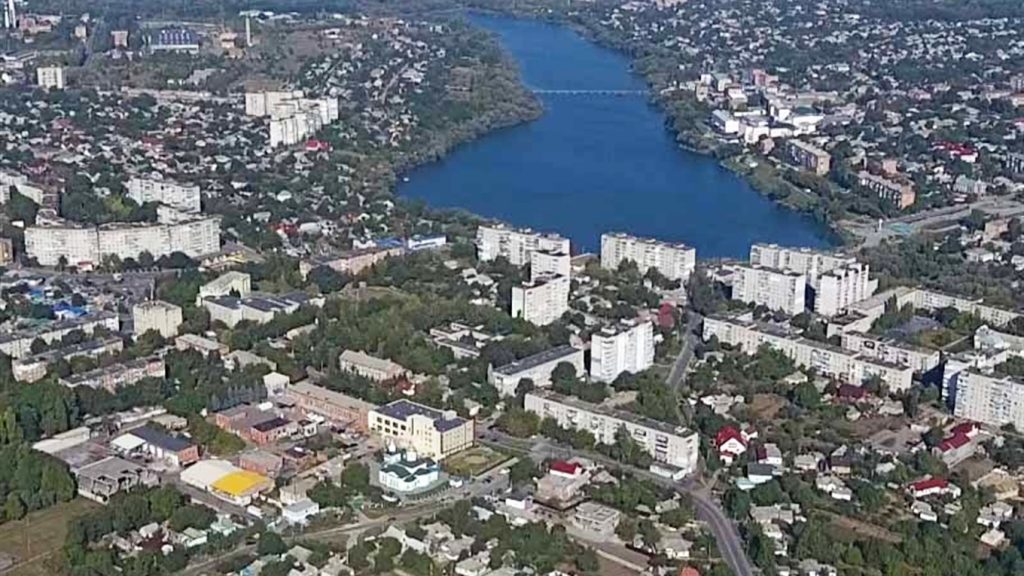
Uman attracts all admirers of architecture, beauty, and nature, as it is home to one of the most remarkable sites in Ukraine—the National Dendrological Park Sofiyivka. This outstanding landscape park, renowned for its carefully designed композиції, romantic grottoes, waterfalls, and classical sculptures, is considered one of the finest examples of garden art in Eastern Europe.
In addition, once a year the city welcomes tens of thousands of religious Jewish pilgrims from the United States of America and from the State of Israel. They travel to Uman to visit the grave of Rabbi Nachman of Bratslav, who is venerated as a righteous spiritual leader and a master of Kabbalah, the Jewish mystical tradition. His burial site has become one of the most significant places of pilgrimage for followers of the Bratslav Hasidic movement.
The city of Uman also benefits from a highly advantageous geographical location. Near the city runs the international Kyiv–Odesa highway, which forms part of a major European transport corridor, providing convenient access for visitors from across Ukraine and abroad.
1. The National Dendrological Park Sofiyivka
The park, covering nearly 180 hectares, is located in the northern part of Uman. It was founded in 1796 by the Polish magnate Stanisław Szczęsny Potocki. His wife, Zofia, was deeply impressed by the Arcadia park owned by her friend Helena Radziwiłł, and for this reason Potocki decided to present his beloved with a park of her own.
To carry out this ambitious project, the Polish engineer Ludwik Metzel was invited to oversee the work. Within just a few years, on what had been almost treeless land, a magnificent park was created and named in honor of Potocki’s wife—Sofiyivka.
According to the vision of its creators, the park serves as a landscape interpretation of Homer’s epic poems The Iliad and The Odyssey. Each landscape composition conveys a specific idea or refers to a particular myth or event. This concept is not surprising, as Zofia was of Greek origin, and Potocki sought to offer her a symbolic fragment of her homeland.
After the confiscation of all Potocki estates in 1832, Sofiyivka underwent significant changes. New buildings and pavilions were erected, the territory of the park was expanded, and the plant collection was enriched with more than one hundred rare species of trees and shrubs.
During the Second World War, the park suffered extensive damage. After the war, restoration, modernization, and expansion works were carried out. The most substantial conservation and reconstruction efforts, however, were implemented during the final two decades of the twentieth century.

2. The Mysterious Underground Chambers of the Basilian Monastery
The corridors, refectories, and monastic cells of the Basilian monastery are more than two hundred and fifty years old, making a powerful impression on visitors. For this reason, the underground chambers have become one of the most fascinating tourist routes in Uman.
Visitors are welcomed by a monk who serves as a guide. He conducts an engaging tour and recounts the history and daily life of the monastic community. The monastery itself was built in 1766 and almost immediately became an important educational center of the Kyiv region. Approximately four hundred students studied here, educated in the spirit of Catholicism and the defense of the Church.
The year 1768 proved especially tragic for the monastery. Through underground passages, the Haidamaks—armed insurgent groups active in the region during the eighteenth century—entered the city and carried out a brutal massacre. Jewish leaseholders, Greek Catholic clergy, and members of the Polish nobility were killed, and their bodies were thrown into wells. A similar tactic had been used earlier in 1674, when Ottoman forces likewise exploited underground passages to gain access to the city.
Although the underground structures were discovered in the nineteenth century, systematic research began only in the 1930s. They became a fully developed tourist route only in the twenty-first century.

3. The Uman Local History Museum
The history of the Uman Local History Museum dates back to 1906, when Danylo Shcherbakivskyi, a teacher at the local boys’ gymnasium, founded and developed a society of antiquities enthusiasts. He later became a distinguished art historian and archaeologist while continuing to collect valuable and intriguing artifacts. This initiative led to the formation of the first museum collection, and the society eventually evolved into a fully established museum. Its official opening took place in 1917. In 1924, the institution was granted state status and provided with a new exhibition building, which it continues to occupy today.
TThe museum suffered enormous losses during the Second World War, when most of its collections were looted. German troops removed paintings by Polish, Dutch, and Spanish artists, antique furniture, a numismatic collection, valuable archaeological finds, and a collection of porcelain.
TThe museum resumed its activities on March 30, 1944. Today, its holdings comprise approximately fifty thousand diverse exhibits.

4. Little Israel – The Tomb of Rabbi Nachman
Uman, like most district centers in Ukraine, is ordinarily a small and tranquil town. That tranquility, however, is transformed in September, when the city fills with thousands of Jewish pilgrims arriving not only from across Ukraine, but also from Israel and many other countries around the world.
Hasidim—followers of Hasidism, a spiritual movement within Judaism that emerged in the eighteenth century—come to Uman with the primary purpose of visiting the tomb of Rabbi Nachman of Bratslav, a site regarded as sacred. Every year, at least several tens of thousands of adherents of Hasidism gather here. They believe that one should visit the grave of one’s spiritual teacher at least once in a lifetime in order to receive blessing and protection after death, as well as prosperity for the coming year. For this reason, during the Jewish New Year, Uman becomes one of the most significant pilgrimage destinations in the world for followers of Rabbi Nachman.

5. The “Trypillian Culture” Reserve
In 2002, the historical and cultural reserve “Trypillian Culture” was established in Cherkasy Oblast. The reserve encompasses archaeological sites of eleven ancient settlements belonging to the Trypillian civilization, whose origins date back more than five thousand years. Some of these settlements are remarkable in scale, especially considering that they belong to the Neolithic period.
For example, according to aerial photography data, approximately 2,700 structures once stood on the territory of the Talianky settlement. Archaeological research has determined that Trypillian houses were two-storied buildings: the ground floor was used for household and economic purposes, while the upper level served as living quarters.
In the village of Lehedzyne, where the administration of the reserve is located, a full-scale reconstruction of several Trypillian dwellings has been created. Situated in an open landscape, they give the impression of an authentic ancient settlement. Visitors can also view archaeological finds related to the Trypillian culture, including everyday objects decorated with characteristic ornamental patterns, as well as original and distinctive ceramics.

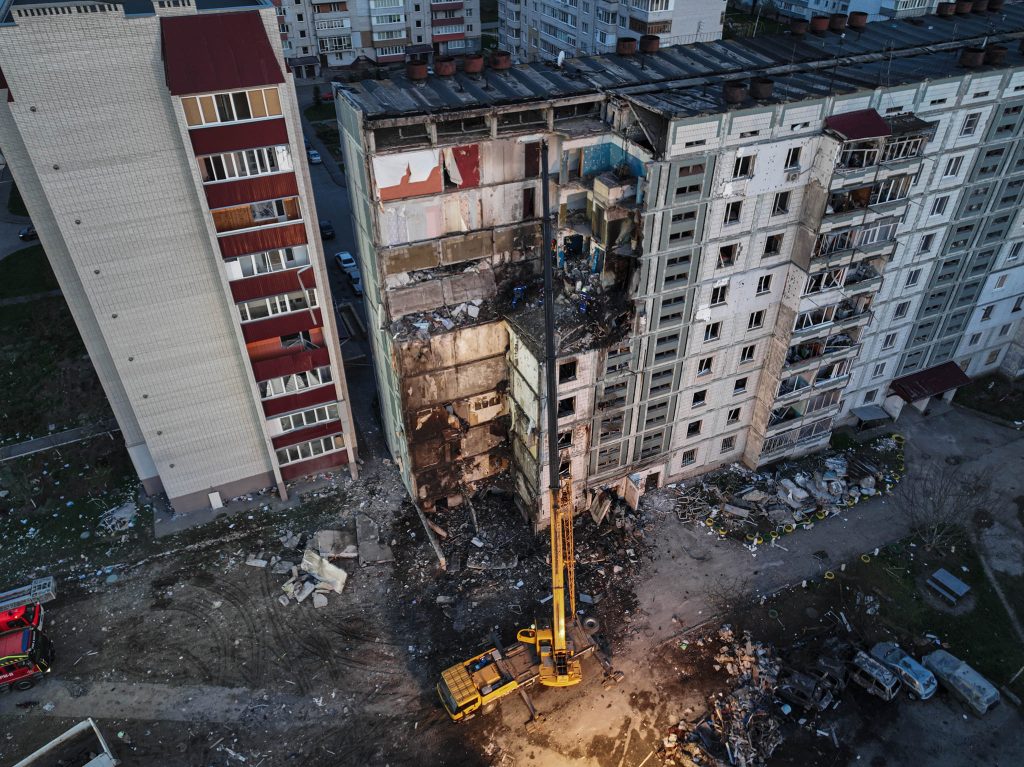
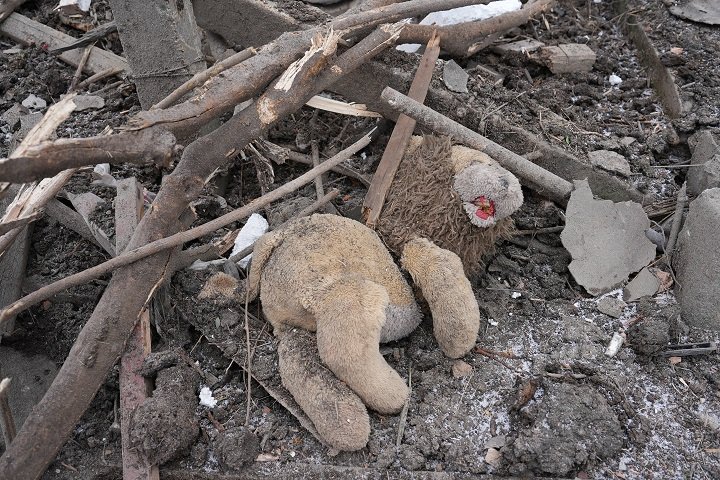
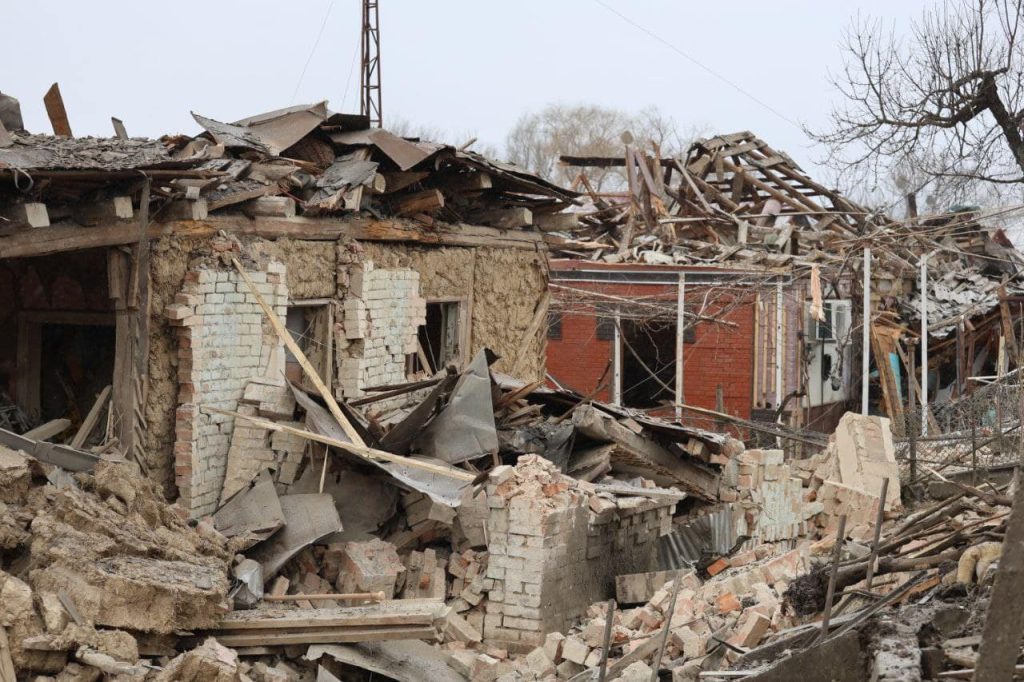

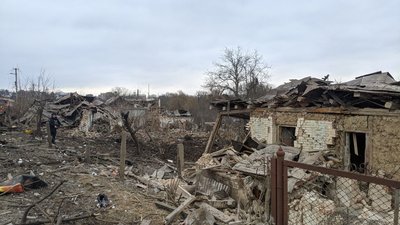
Since 2022, Uman has been subjected to intense shelling by the Russian aggressor. Russian terrorist forces destroy civilian facilities, historical monuments, hospitals, schools, and kindergartens. But the city lives on…
Tourist website of Uman