Menu Close

Eno Tourism (winemaking). Odesa. Southern Ukraine

An autochthonous or local grape variety (from Ancient Greek “auto” – “self” and “chthon” – “earth,” meaning local or indigenous) is a grape variety that has historically been cultivated and developed in a specific geographical region. These varieties are the result of long-term natural selection and adaptation to local climatic and soil conditions. Autochthonous varieties reflect the unique terroir of their origin, giving wines a distinctive local character. Such wines often add cultural significance to a particular winemaking region.
By tasting autochthonous wines, we taste history, as they contain the genetic code and cultural heritage of the region, reflecting unique climatic conditions and winemaking traditions passed down from generation to generation.
The true strength of autochthonous grape varieties lies in their ability to reflect the terroir of the place where they originated. And terroir is the crown of winemaking. It includes all the characteristics of the soils, climate, flora, and fauna surrounding the vineyards and wineries. The winemaker’s skill is to perfect what nature has bestowed.

Ukrainians can take pride in the fact that, since approximately the sixteenth century, the white grape variety Telti Kuruk has been cultivated on the territory of our country. Wines produced from this variety possess a unique aromatic and flavor profile. They display a luxurious light straw color with golden hues, an elegant floral and honeyed aroma, complemented by notes of white berries—mulberries and currants—as well as orchard fruits such as peaches, quince, and apples. In some examples, hints of exotic feijoa and lemongrass can also be perceived. Telti Kuruk wines are distinguished by a harmonious, pleasant, and full mineral taste with well-balanced acidity.
Telti Kuruk is used to produce dry white wines and is also included in blends for sparkling wine production.
It is known that the history of Telti Kuruk began in the sixteenth century, during the “Turkish period,” on the territory of present-day Shabo in the Odesa Region. The oldest and largest vineyards of this variety are located there, covering more than forty hectares. The Shabo winery began reviving Telti Kuruk in 1972, starting with seven hectares of plantings. The vineyards grow in the area of the Dniester Liman, on the sandy soils of Shabo.
In the fifteenth and sixteenth centuries, the Turks planted vineyards of the Telti Kuruk variety. This dry white wine has a unique flavor profile that is difficult to compare with anything else.
Telti Kuruk grows exclusively on sandy soils, which impart distinctive taste characteristics to the grapes. Remarkably, the grapevine is the only plant capable of thriving in sand. In its flavor, one can detect notes of lime, quince, sea buckthorn, and a light sweetness. The wine is characterized by freshness and crispness, making it ideal for gastronomic experimentation and food pairing.
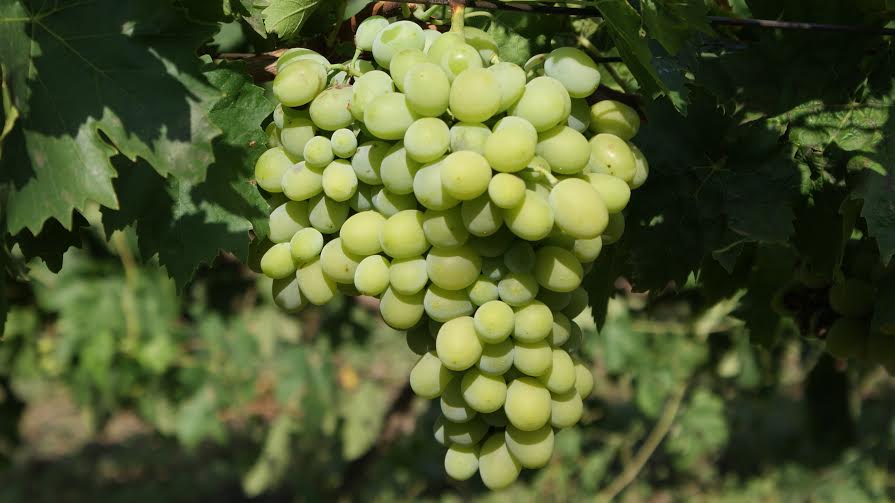
The name Telti Kuruk originates from the unusual shape of its grape cluster, which in Turkish translates as “fox tail”.
This autochthonous variety has remained consistent in its organoleptic properties for centuries, making the wine truly exceptional. It survived the phylloxera epidemic that destroyed most vineyards in Europe, and it also endured the “dry law” period in the Soviet Union, when vineyards were ruthlessly uprooted by the authorities.
It was from Telti Kuruk that the first Ukrainian wine with a Controlled Designation of Origin, analogous to the French Appellation d’Origine Contrôlée, was created. This was achieved by the Shabo winery.
In 2024, the age of the oldest Telti Kuruk vines reached fifty-two years.
Today, Telti Kuruk is cultivated only in the south of Ukraine: in addition to Shabo, it is grown at the Tairov Institute in Odesa, in the vineyards of the Beykush winery, and in the “Vinograd Odesa” nursery.
Beykush cultivates Telti Kuruk on the cape of the same name, whose shores are washed on one side by the Berezan Liman and on the other by the Beykush Bay. This microclimate imparts generous aromatic qualities and a mineral character with notes of exotic fruits to the wine.
Food pairing
Young, vibrant versions of Telti Kuruk pair well with delicate fresh cheeses, seafood, and fresh salads. Aged, fuller-bodied Telti Kuruk wines with pronounced acidity ideally complement dishes with cream. From Ukrainian cuisine, try them with varenyky filled with cottage cheese and butter, banosh, knedli in cream sauce, Chicken Kyiv, and crucian carp in sour cream.
Telti Kuruk is unlike any other, and this is its strength and potential. Experiment with pleasure.
Odesa Black is a flagship variety of the South of Ukraine on the country’s wine map. Producers across different parts of the Odesa Region create excellent wines from this variety, which win awards at international tasting competitions. Odesa Black is a unique autochthonous variety that thrives in Ukrainian conditions and distinguishes our country on the global stage. The history of the origin of Odesa Black and its characteristics were described to the magazine “Drinks. Technologies and Innovations” by Iryna Kovalova, Director of the National Scientific Center “V. E. Tairov Institute of Viticulture and Winemaking”.
The variety “Odesa Black” was created by breeder-scientists of the National Scientific Center “V. E. Tairov Institute of Viticulture and Winemaking” in 1948 through the crossing of the French varieties Alicante Bouschet and Cabernet Sauvignon. The variety originated from a single selection among several hundred seedlings. After long-term study, it was included in the Register of Plant Varieties of Ukraine and, starting from 1972, began to gain recognition and popularity among Ukrainian viticulturists and winemakers.
The breeding program that resulted in the Odesa Black variety was aimed at creating varieties analogous to classical ancient European varieties (in the case of Odesa Black, this is Cabernet Sauvignon), while at the same time possessing better quality characteristics than those that Cabernet Sauvignon could achieve under Ukrainian conditions. The breeders succeeded in obtaining a so-called analogue of the French variety Cabernet Sauvignon, but with its own exclusive features. Odesa Black, unlike Cabernet Sauvignon, is better adapted to the conditions of Ukraine. This is very important for the development of sustainable viticulture.
Odesa Black inherited a delicate, soft nightshade flavor from Cabernet Sauvignon, as well as a high tannin content, deeply colored juice, and sloe-like notes from Alicante Bouschet.
The Odesa Black variety is used for the production of a wide range of wine products: from high-quality red table wines and semi-sweet wines to dessert wines of the “Cahors” type. The flavor profile of the wine is multifaceted—nightshade tones, soft tannins, chocolate, and prunes, all combining into a rich and refined taste. Wines made from the Odesa Black variety win medals (including at international competitions), conquer the Ukrainian market, and have strong potential for further recognition worldwide.
The Odesa Black variety is cultivated mainly in the Odesa, Mykolaiv, and Kherson regions. It is also known to viticulturists and connoisseurs of red wines in the Czech Republic and Austria under the name Alibernet. In fact, among Ukrainian-bred varieties, Odesa Black is the only one that, at one time (according to 2008 data), exceeded 2,000 hectares of plantings.
Today, it is difficult to imagine the creation of Ukraine’s “wine portrait” without the Odesa Black variety. Wine routes in Ukraine and wine tourism are impossible without it. The properties of this variety have attracted the interest of nutritionists working in the field of functional nutrition, and its antioxidant properties have drawn the attention of those developing biologically active supplements. At the National Scientific Center “V. E. Tairov Institute of Viticulture and Winemaking,” Odesa Black was one of the first varieties to receive a DNA passport as protection of intellectual property rights, developed by the institute’s scientists.
Food pairing
Odesa Black is a red dry wine with an intense flavor, often featuring notes of black berries, plum, cherry, and spices. Due to its strong character, it pairs best with rich dishes.
Best food pairing for Odesa Black:
Grilled meat: Ideal with roasted red meat, steaks, and shashlik, as the tannins of the wine harmonize with protein-rich foods.
Game: This wine enhances the flavor of game and duck.
Aged cheeses: Sharp and hard cheeses (such as Parmesan and Cheddar) complement the fruity and spicy profile of the wine.
Hearty Ukrainian dishes: Stewed meat or dishes with rich sauces.
Desserts: The wine pairs well with dark chocolate or cherry desserts.
Odesa Black can display both a young, fruity character and an aged profile (twelve months or more), making it a versatile accompaniment to a rich table.
Sukholymanskyi White is not merely a technical grape variety; it is a true symbol of Ukrainian winemaking, with its own unique history, character, and special “soul.” If you have ever tasted wine made from this variety, you will certainly remember its lightness and the aroma of steppe herbs.
The history of Sukholymanskyi White began in 1949 within the walls of the V. E. Tairov Institute of Viticulture and Winemaking, located near Odesa. Breeders sought to create a variety ideally suited to the climate of the Northern Black Sea region—sunny, yet marked by unpredictable winters and dry summers.
Its “parents” were the refined aristocrat Chardonnay and the unpretentious local variety Plavai. From Chardonnay it inherited nobility and aromatic richness, and from Plavai—high yield and resilience to local conditions. The variety was named after the Sukhy Liman, near which the experimental vineyards were located.
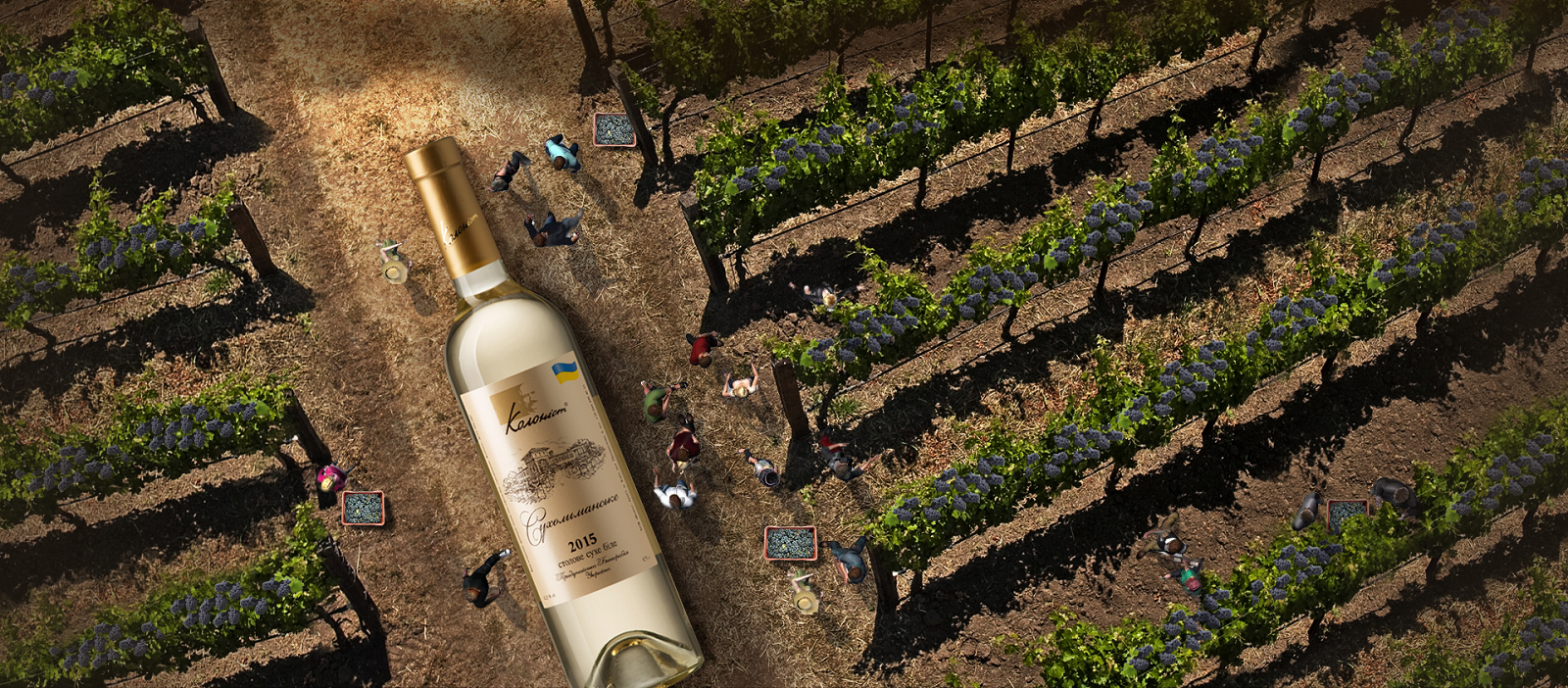
Sukholymanskyi White ripens approximately in the middle or toward the end of the month. The vines of this variety are characterized by vigorous growth—they seem to strive to occupy as much space as possible. The leaves are large, almost round, with a characteristic waviness. The clusters are very aesthetically pleasing: medium-sized, dense, sometimes with a small “wing.” The berries are small, perfectly round, covered with a thin layer of bloom. When sunlight falls upon them, they become translucent, shimmering with greenish-yellow hues. The pulp is juicy, and the juice is so harmoniously balanced in sugar and acidity that growers often enjoy tasting it straight from the vine, despite it being a wine variety.
When the grapes reach the hands of a skilled winemaker, they are transformed into a wine that cannot be confused with any other. Sukholymanskyi White is a wine of emotion. From the very first aroma, one senses the essence of a Ukrainian summer. It evokes the scent of freshly cut grass, blooming acacia, and wildflowers. If the grapes are harvested slightly later, notes of ripe pear, white plum, and even sweet hints of melon appear. On the palate, the wine is very fresh and pure. It has moderate acidity that does not bite, but rather pleasantly refreshes. The finish is soft, with a light minerality and a subtle spicy bitterness that adds complexity.
Winemakers value this variety for its versatility. From Sukholymanskyi White they produce:
Still dry wines — the classic expression, where the floral profile is most pronounced.
Sparkling wines — thanks to its good acidity, the variety is well suited for producing light sparkling wines (using the Prosecco or Pet-Nat method).
Aged wines — some wineries experiment with aging in oak barrels, which adds creamy and nutty notes to the wine.
Food pairing
Sukholymanskyi White is an ideal companion for a summer dinner. It does not dominate the food, but enhances it.
It pairs perfectly with Black Sea fish (such as red mullet or flounder) and seafood.
It beautifully complements young cheeses such as brynza or mozzarella.
Light salads with white poultry meat and grilled vegetables become even more enjoyable when paired with a glass of chilled wine.
Today, as the world seeks unique “autochthonous” flavors, Sukholymanskyi White is becoming a hallmark of Ukraine. It is not merely a grape; it is our answer to globally popular varieties. It tells a story of southern sunshine, free winds, and the skill of Ukrainian scientists.
Today, this variety is experiencing a true renaissance. Many artisanal wineries in the Odesa and Kherson regions are placing their focus on it, proving that Ukrainian wine can be stylish, modern, and at the same time deeply rooted in tradition.
In Vylkove, the culinary stereotype “fish must be paired with white wine” does not apply, because the local red wine “Novak” perfectly complements fish dishes. Just as it is impossible to imagine a Lipovan without a boat, it is equally impossible to imagine Vylkove’s Lipovan fish cuisine without a glass of good “Novak.” Lipovan fish cuisine is not only about deliciously prepared dishes, but also about the distinctive way the table is set, its location, culinary traditions, and the overall atmosphere of enjoying food. Without a carafe of red “Novak,” a Vylkove dining table resembles an elegant gentleman without a hat. Everything seems to be in place and presented in the best way, yet something is missing. There is no sense of completeness.
What, then, is Vylkove “Novak,” and what makes it special? Without delving into the complexities of winemaking, it can be said that “Novak” is produced from the grape variety “Noah,” which belongs to a refined group. Over time, the word “Noah” transformed into the more easily pronounced “Novak.” That is the theory; however, we will focus more on practice.
In Vylkove, everything is grown by the water, near the water, and even above the water. Grapes are no exception. Rows of vines on the islands of Vylkove lie almost directly along river channels. Moreover, vineyard plots are divided every 10 to 15 meters by narrow canals called eriks, which connect the river channels with the wetlands located beyond the gardens. Above these “garden eriks,” special vine supports known as “povity” are often constructed—usually wooden frameworks designed to hold the vines.
Furthermore, cultivated land plots on the islands of Vylkove are located exclusively along the banks. In the delta, only these areas are relatively elevated and are rarely flooded, even during high water. In addition, since these plots are formed from Danube silt, they are the most fertile. From the second half of September, when the grapes begin to ripen, Vylkove and the surrounding island areas are filled with a distinctive strawberry aroma. Indeed, ripe Vylkove Novak grapes smell of strawberries. The same light strawberry note can be found in truly good Vylkove wine. If you accidentally spill it on your hands, they will retain the pleasant scent of this berry for a long time. The aroma on the hands is even stronger than in the wine itself. However, the “Novak” must be authentic—produced by a skilled and, most importantly, generous winemaker.
There are as many varieties of “Novak” in Vylkove as there are winemakers. Wine is produced here in almost every household. Moreover, even the same master may produce a different wine each time. It does not matter that it is made from the same grape and according to the same technology—the range of color, taste, and strength in Vylkove wine is remarkably wide. As in any craft, Vylkove has a group of recognized “elite” winemakers. Their first-class “Novak” is produced almost every year. Despite the higher price, such wine is purchased first for special occasions and also as local gifts.
There is another important characteristic of the “Novak” grape: if it is planted far from water, in traditional dry vineyard conditions, it will never yield a good harvest. The vine will develop poorly, the leaves will yellow early, and the berries will lose their strawberry aroma. For this reason, true “Novak” can be cultivated only in the Danube Delta, on well-watered, humus-rich Danube silt soils. Mineral fertilizers are unnecessary here: the Danube silt, from which the vineyard beds are formed and continually replenished through the surrounding eriks, contains everything required for effective agriculture and viticulture.
In addition, Novak is resistant to almost all common vine diseases, and therefore it is never treated with chemical preparations. Due to its unique characteristics, “Novak” has acquired a second name—“wetland wine.” Under this name, it is known at European cocktail receptions following international conferences and meetings. Experienced tourists, with a smile, say: “We know your wine: it drinks easily, the aroma is excellent, but afterward the mind remains clear while the legs refuse to move.” Therefore, a glass of good “Novak” paired with a local fish dish is just right. As it is written in the Bible, wine may be consumed, but one should not become intoxicated.


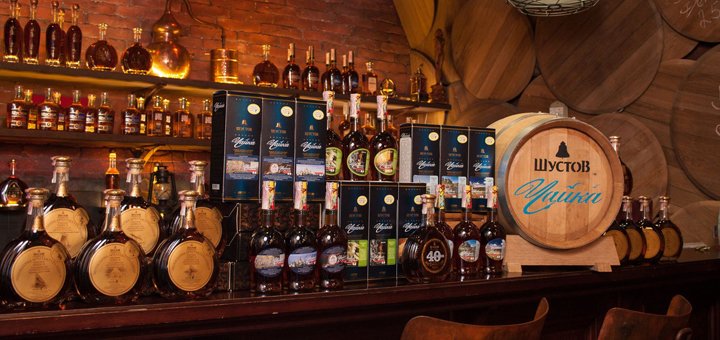
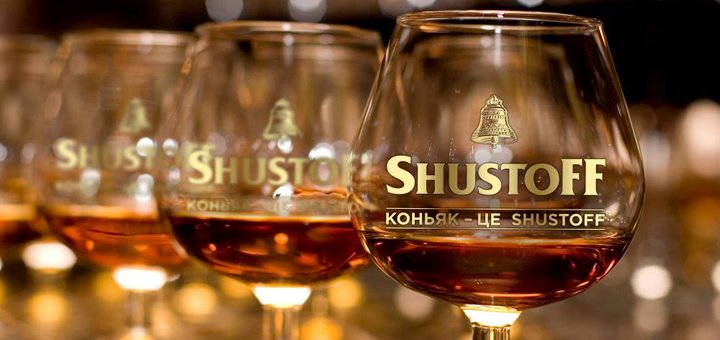
The Odesa Cognac Factory “Shustov” is a Ukrainian enterprise for full-cycle brandy production, located in Odesa. It specializes in the production of brandy and related products under the trademark “Shustoff.” It is one of the most powerful enterprises in the industry in Europe.
The enterprise was founded in 1863 in Odesa by the trade and industrial association “Shustov and Sons”.
The factory is a full-cycle brandy production enterprise using the classic French (Charente) technology. The factory owns extensive areas of elite vineyards (about 1,000 hectares). In the company’s nurseries, such grape varieties as Chardonnay, Rhine Riesling, Sauvignon Blanc, Pink Traminer, Pinot Noir, Pinot Meunier, Pinot Blanc, Cabernet Sauvignon, and Merlot are cultivated.
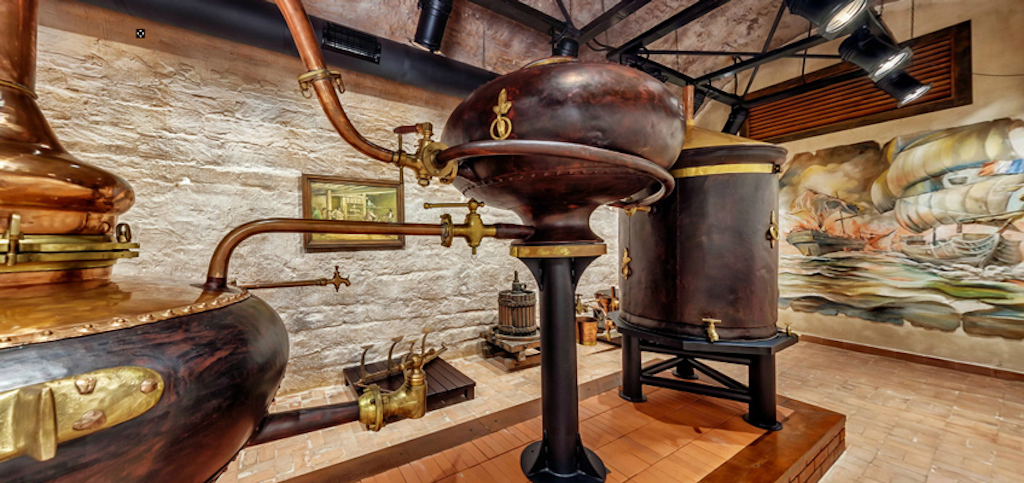
During the distillation season, the factory has the capacity to distill up to 1,000 liters of absolute alcohol per day — which equals 10,000 bottles of brandy. The distillation workshop of the factory is one of the largest in Europe. The new workshop is equipped with alembic stills made of red copper, manufactured in France. The equipment was fully assembled and launched into production by the French company “Prulo.”
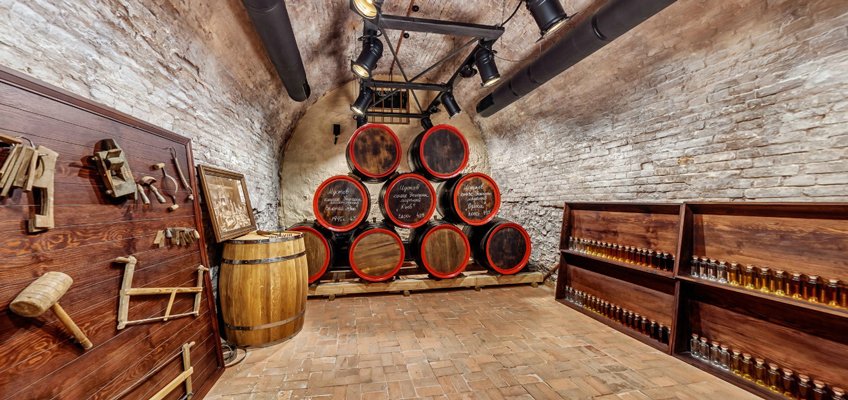
The factory currently operates about 15,000 barrels in which brandy is aged. This is the largest barrel stock in Ukraine. Among them are casks that are more than 100 years old.
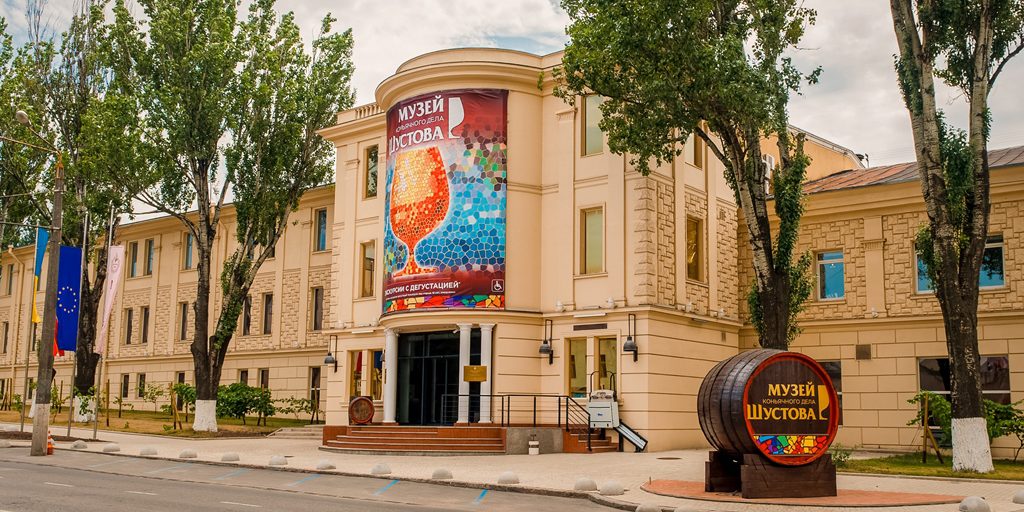
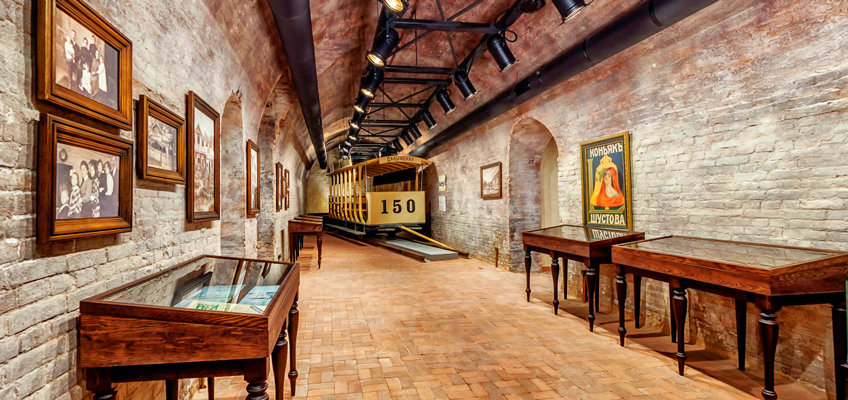
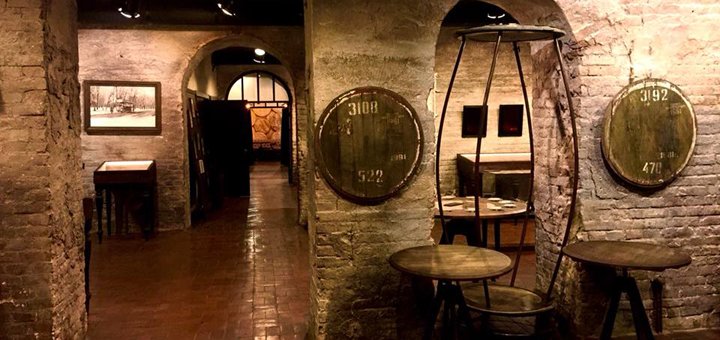
N.L. Shustov Cognac Museum is located in historical part of Odesa – in the old cellars at Odesa cognac factory. We invite you to learn more about one of the largest Cognac Houses of Ukraine, where experienced specialists will dedicate you to the secret of creating a noble drink and help you to understand the science of tasting. You will make an unforgettable journey in time and touch the “Angels shares” during the visit the shop of aging and blending cognac spirits, and we will slightly open the veil of the mystery of the birth of cognac and share the unknown stories of old Odesa.
Only in N.L. Shustov Cognac Museum. You will have opportunity to blend cognac spirits of different age to get your own, perfect blend. You will get samples of cognac spirits from 6 to 34 years old and will try to mix them in order to get perfect blend, that you will take with you. At home you will hold incredible tasting with your friends of the only one of the world brandy by your own recipe. The brandy created by you is poured into a bottle in volume of 0,25 liter with a label which you sign personally.

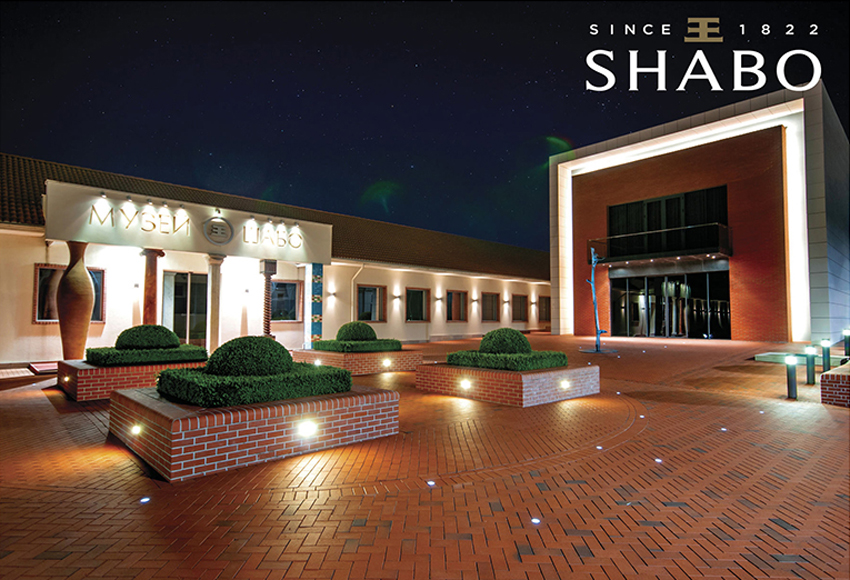
In “Wine culture center Shabo” the theme of the culture of wine is revealed comprehensively and with great emotional force. Duration of the excursion with a tasting – about 3 hours, guests are accompanied by highly professional guides.
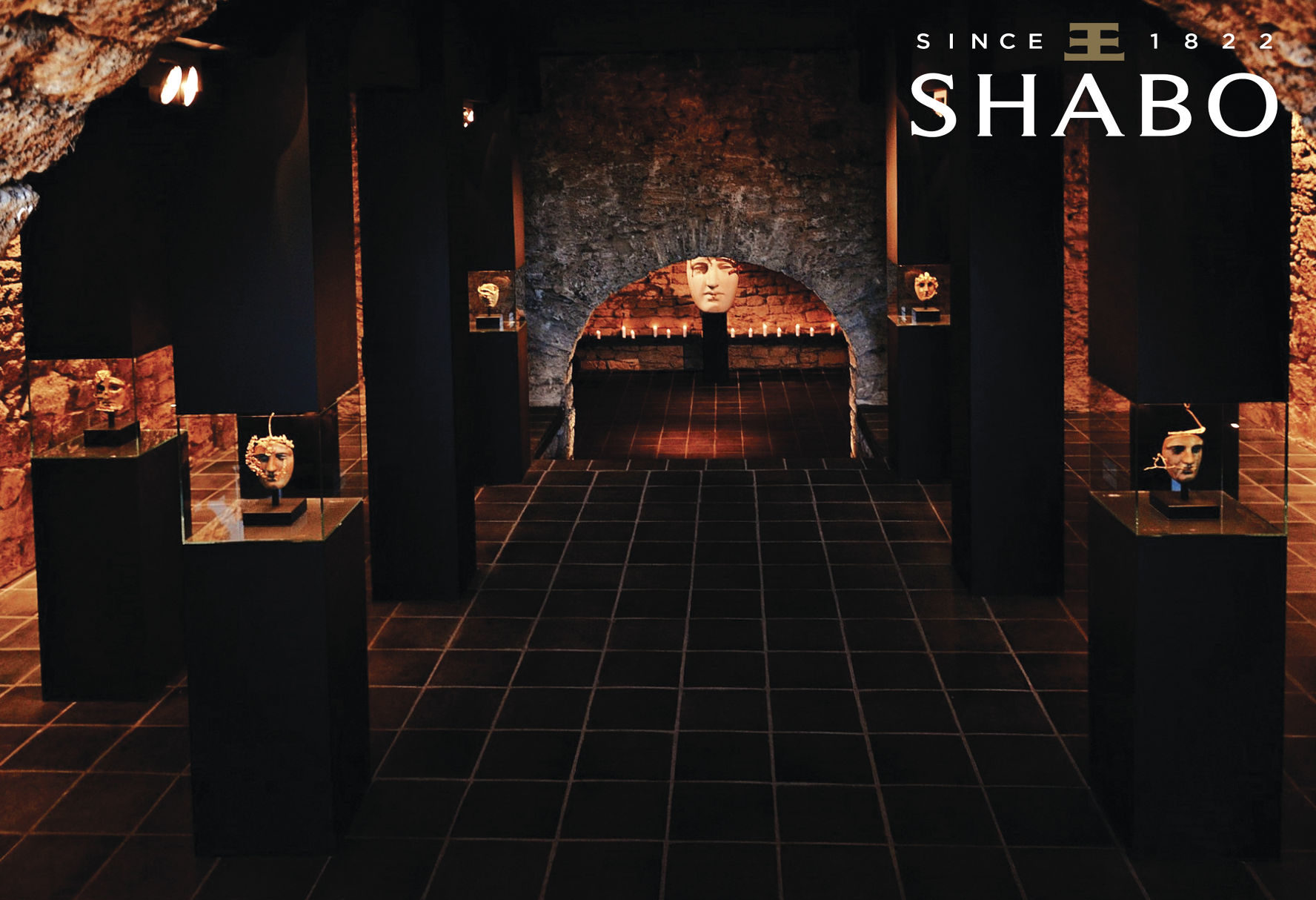
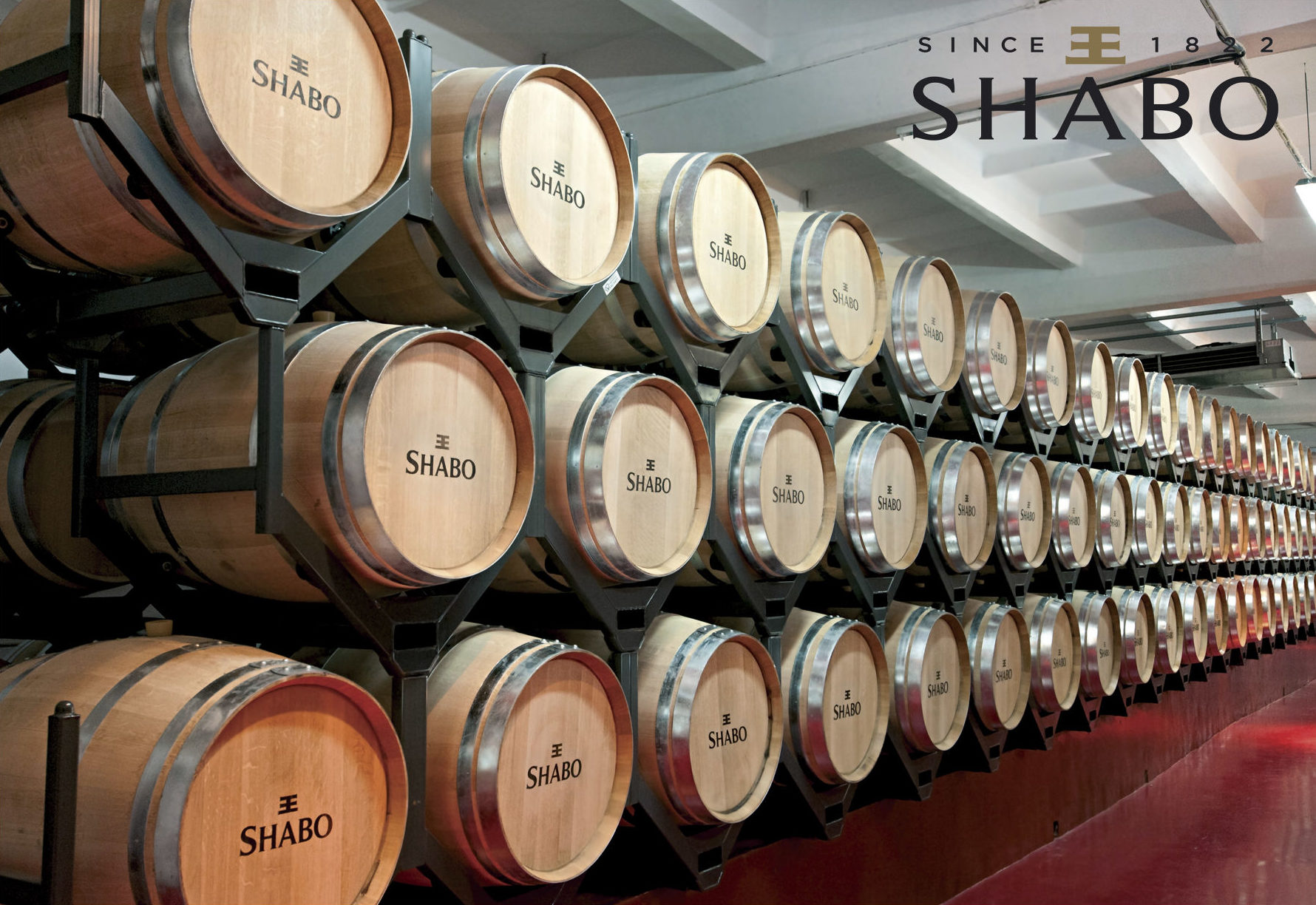
Excursion programs are fascinating and varied. Everything breathes history here, everything inspires by here and now. Connoisseurs of fine drinks, during their visit of magnificent old objects – bicentenary Royal, Sherry, two-story cellars, underground wine storages, etc., have an opportunity to learn about history of wine and the identity of the terroir Shabo.
No one will be indifferent to majestic architectural complexes, unique objects of contemporary art, unusual landscape design exposition located on the territory of the ” wine culture center Shabo “: the only vineyard monument in Ukraine, the art ensemble “Trilogy of the vine”, the Shabo Art Center gallery, multimedia sculpture Fountain of Dionysus, museum labyrinth, Georgian marani, two museum cinemas, alpine slide, museum “Shabo” and etc.
The winemakers of the company “Shabo” have no secrets from their consumers. Therefore, doors of all divisions of the company are open before guests: a state-of-the-art grape receipt and processing facility, a huge underground wine storage, elite Shabo wine section, a powerful Shabo brandy and grape vodka production complex, and Shabo Sparkling Wine House. Moreover, all that is right next to Shabo terroir vineyards.
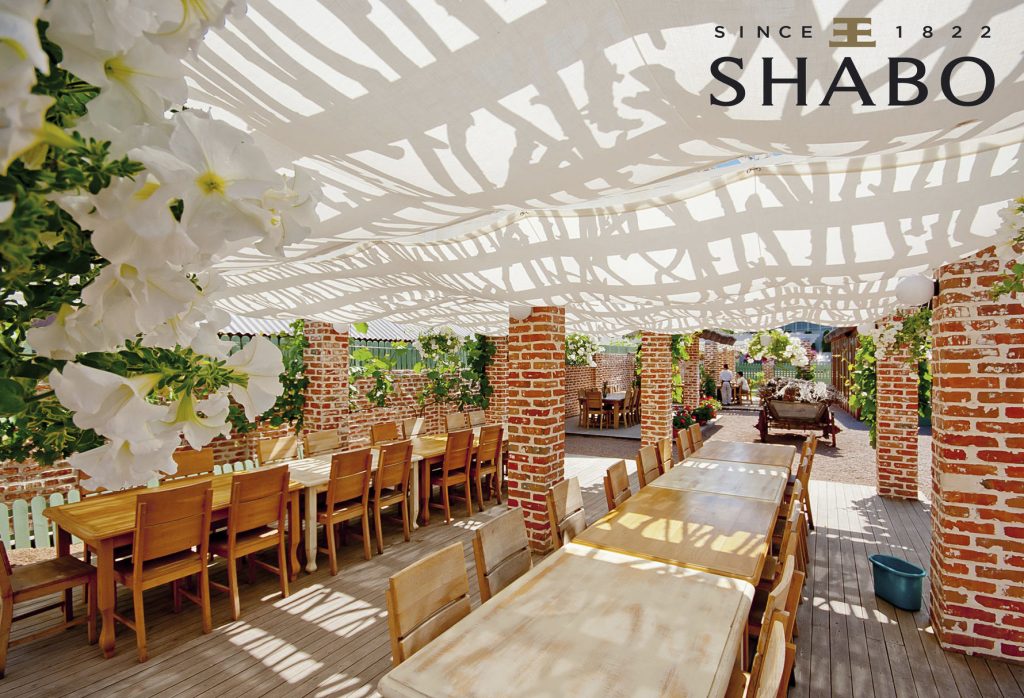
For the convenience of our guests, Shabo has an original store offering the entire range of Shabo products, which includes over 80 brand names of the highest-quality beverages and where you can also buy souvenirs. Next to Shabo Wine Culture Center is Shabo Court, a cozy restaurant where you can wash down any meal with an excellent choice of Shabo’s still and sparkling wines, vermouths, brandies and grape vodkas.

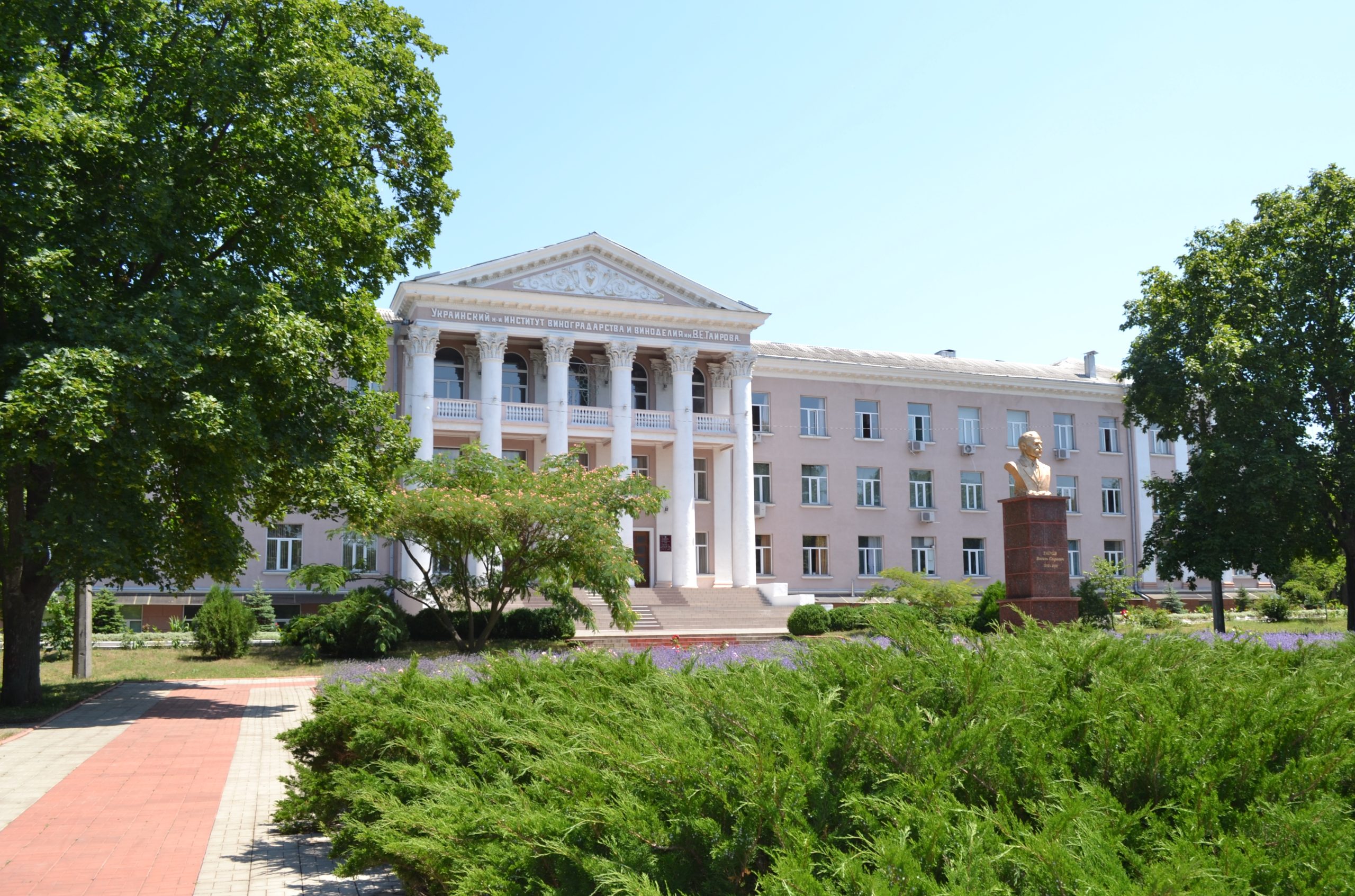
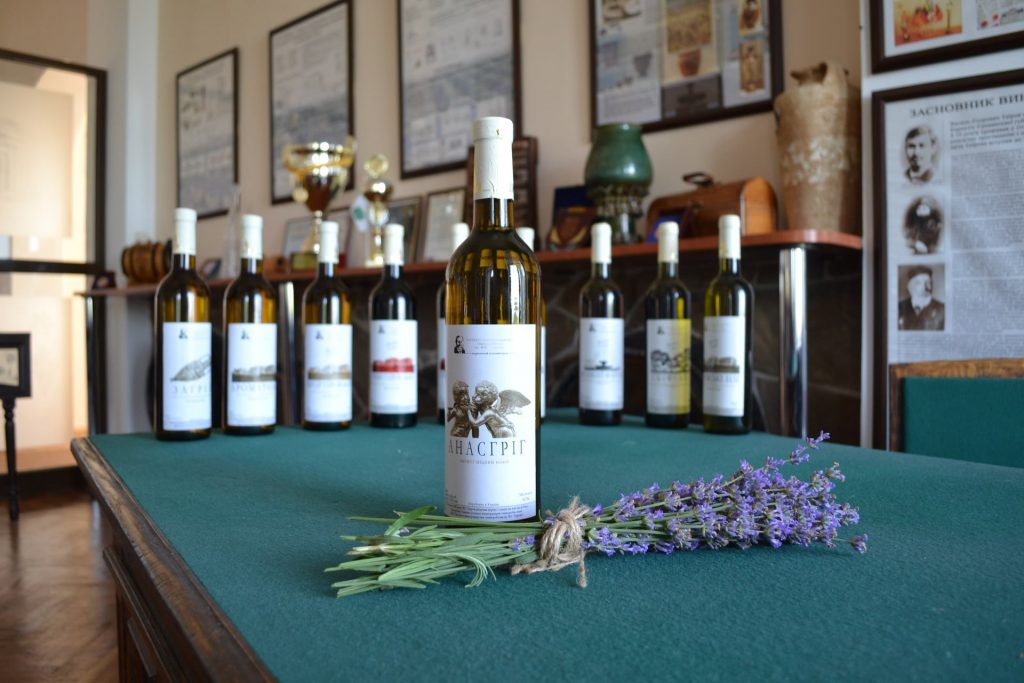
The V. Tairov Institute of Viticulture and Winemaking was established in 1905 as the experimental farm “Winemaking Station of Russian Vine Growers and Winemakers”. Its founder was the editor of the magazine “Bulletin of Winemaking”, an enthusiast of viticulture development—V. Tairov. At the initial stage, a small cellar was equipped, and a library was assembled. From 1910 to 1912, the construction of a complex of buildings for the station was completed on the shores of the Sukhyi Lyman, and a research vineyard (3 hectares) was established, along with a grafting workshop. In 1931, the station was reorganized into the Ukrainian Research Institute of Viticulture and Winemaking. A museum of viticulture and winemaking was opened to mark its 100th anniversary, showcasing the main directions of the development of the domestic winemaking school.
→The introduction to the National Scientific Center “V. Tairov Institute of Viticulture and Winemaking,” the oldest and most renowned research center in the scientific world for viticulture and winemaking, begins with a tour. During this excursion, guests learn about the history of the institute, visit the Museum of the History of Viticulture and Winemaking in Ukraine, established in 2005 for the institute’s 100th anniversary, and explore the beautiful dendrological park surrounding its main building.
→Then, guests move to the underground gallery, where they exchange the sun’s brilliance for the cool twilight of the cellar and discover the ancient wine collection.
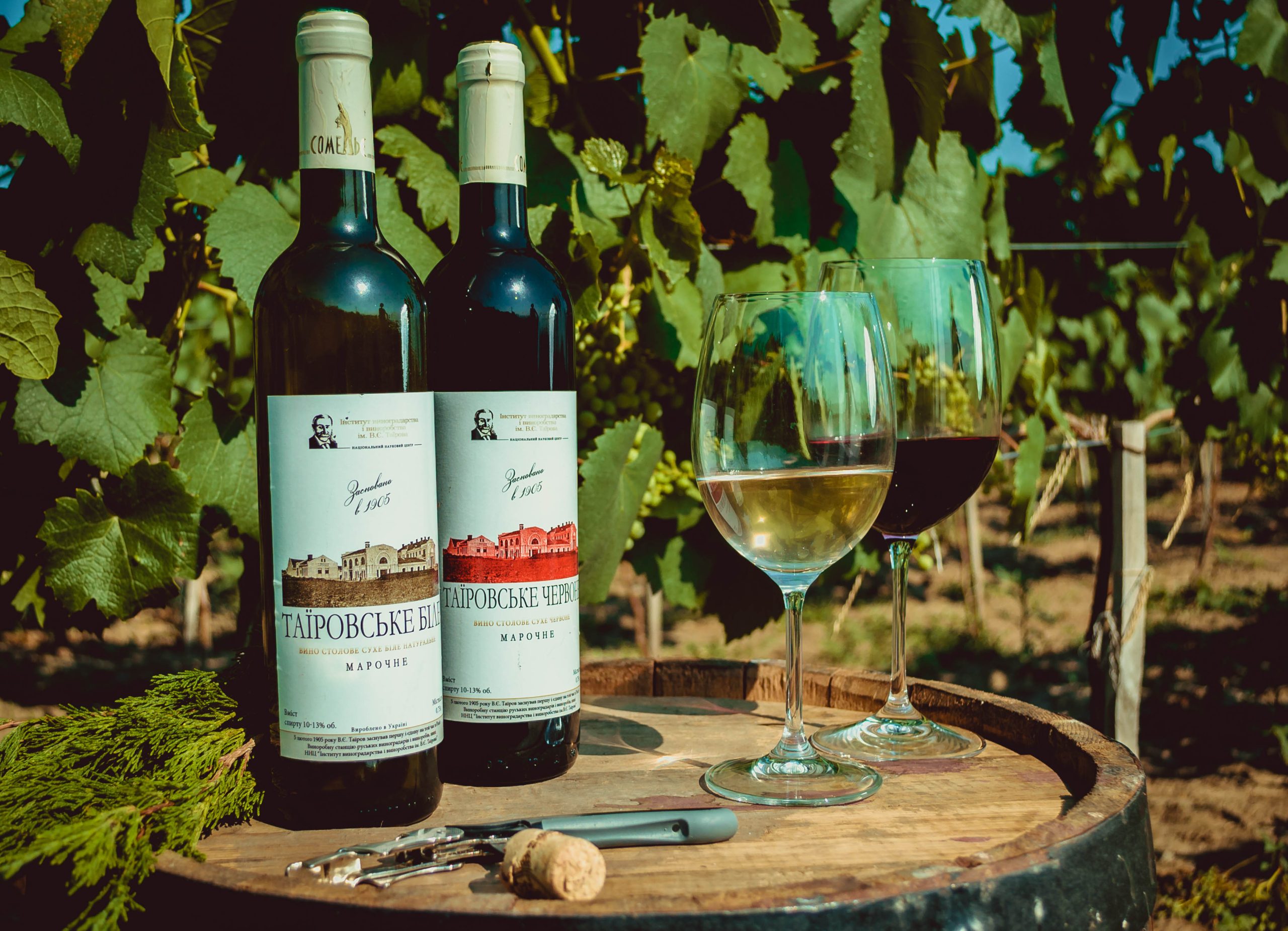
→From the wine cellar, guests ascend the spiral staircase to the tasting room, where they will be introduced to elite, original brands of wine created through the inspired work of the institute’s staff and united under the brand “Tairov Wines”.
The wines offered for tasting are the result of the work of the winemaking scientists at the Research Center. Over the past five years, these wines have received more than 50 gold and silver medals at various international competitions, the European Quality Mark in Brussels, the International Quality Mark “Higher Sample,” the “100% Natural” conformity mark, and have been awarded numerous other honors. A standard snack is provided at the tasting: cheese, crackers, and nuts. Additionally, there is an option to order cold and hot appetizers and main courses. During the grape harvest season (July to September), the institute’s winemakers are ready to offer a tasting of fresh grapes—showcasing the best varieties from the Institute’s selection.
→At the end of the tasting, those interested are offered the opportunity to order lunch or dinner from a local restaurant (the order is delivered to the tasting room), featuring dishes from Odesa cuisine.

PRESTIGE GROUP is a national alcohol holding of Ukraine with a full production cycle. The holding includes more than 1,500 hectares of vineyards and modern production facilities: three primary grape-processing plants (in the villages of Nadezhdivka, Zoria, and Kulevcha in the Odesa Region), as well as the full-cycle winery Private Joint-Stock Company “ODESAVYNPROM” (village of Rozivka, Odesa Region). It is precisely thanks to the full production cycle that product quality is controlled at every stage of its manufacture.
Since 2017, PRESTIGE GROUP has been the owner of the legendary wine trademark “ODESA”, and since 2019 — “FRENCH BOULEVARD”.
The mission of the holding is to create high-quality, honest Ukrainian wine at affordable prices for people. Wine for Ukrainians and for the world.
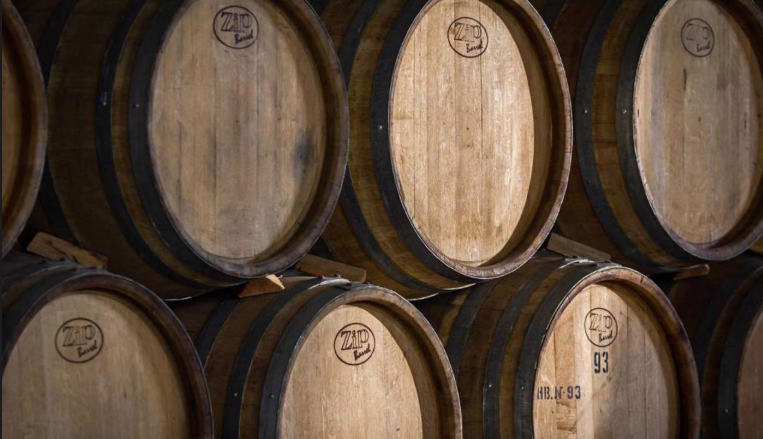
The main production facilities are located in the village of Rozivka, Bilhorod-Dnistrovskyi District, Odesa Region — Private Joint-Stock Company “ODESAVYNPROM”, which is equipped with new and modern equipment from Della Toffola Group, Bucher Vaslin, and Zip Technologies.
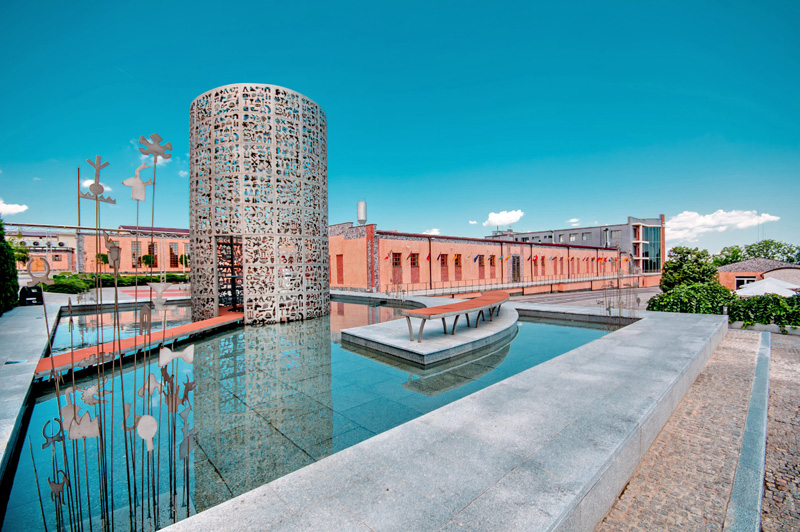
“ODESA” wines are produced exclusively from vineyards located in an ideal microclimatic winemaking zone in the south of the Odesa Region. This region has already become known as the “Ukrainian Champagne,” as the wines born from these vineyards are truly hedonistic, in the best traditions of Champagne.
“FRENCH BOULEVARD” is a brand that combines innovative technologies with the best traditions of winemaking. As a result of this synergy, decadent wines are created: harmonious, perfectly balanced, and possessing impressive taste and aroma characteristics.
10 French Boulevard is a wine location since 1857. It was at this address, in 1857, in the old catacombs leading to the sea, that the Belgian consul and professor of medicine Victor Enno and the French merchant François Nouveau opened cellars for the production and storage of wines, which for many years were known to the residents of Odesa as the “Nouveau cellars.” Later, the oldest winemaking enterprise of Ukraine, “ODESAVYNPROM” — the direct successor of the “Nouveau cellars” — was located here, and today it is the branded wine shop of the PRESTIGE GROUP alcohol holding.

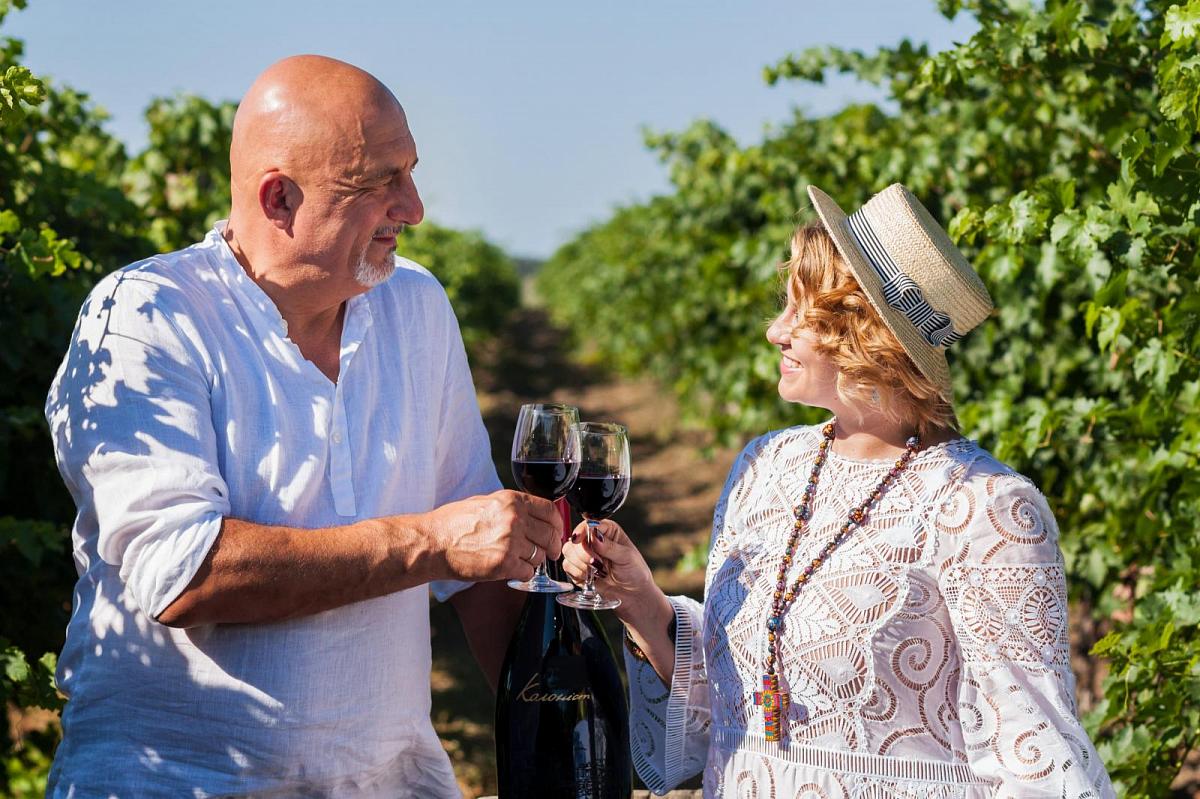
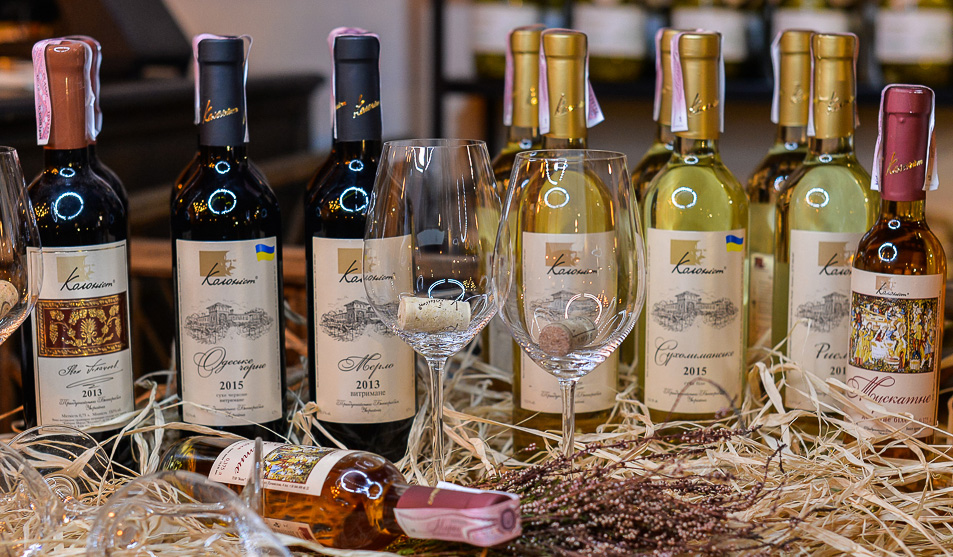
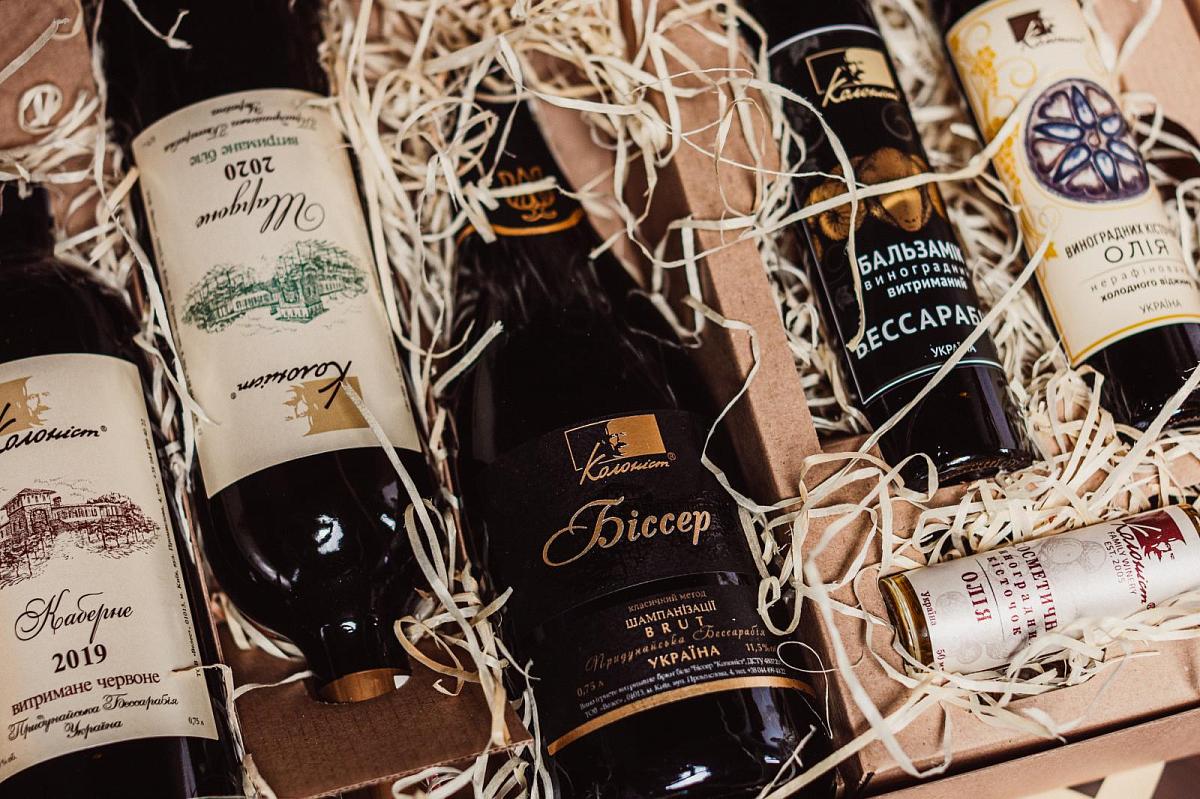
“Kolonist” represents Plachkov family’s pride, the result of their ongoing devotion and the expression of love and passion for the land and its generosity. The Plachkov family founded their own winery in 2005 in order to produce premium local wines.
Kolonist winery is situated in a famous Ukrainian wine producing region – Danubian Bessarabia (the South of Odessa region), where viticulture has been established since the Greeks and the Thracians first discovered these fertile soils.
“Kolonist” tooks its name from the Bulgarian colonists who inhabited this area in the XIX century. The founder and the owner of the company – Ivan Plachkov – is a descendant of this nationality who made a great contribution into turning this burned steppe into a prosperous and fertile land.
Kolonist wines are made from grapes grown on the south-western slopes of the biggest fresh-water lake in Ukraine – Yalpug. Due to the slopes, vineyards receive double sun rays from the sun and reflected ones from the surface of the lake, they are also well blown around with the winds. 30 hectares of vines are pruned by the Guyot and Cordon methods, grow on the loam soils which are rich in minerals with deep layers of lime. This modern pruning systems provide low crop capacity, which in combination with with special terroir give high-quality grapes. Each grapevine bears only a few bunches (harvested manually) which has rich flavour and gives wine strength, harmony and elegancy. Geographical position at the same latitude with Bordeaux in France and Piedmont in Italy gives an excellent opportunity to grow grapes in perfect climate conditions. The combination of a unique terroir, modern equipment from France, Germany and Italy and the traditional French 100-year-old oak barriques gives the Kolonist a right to be proud of its high-quality wines.
In 2008 a famous enologist from Bordeaux, France, Mr. Olivier Dauga joined Kolonist. He and his wife Kati Sokazo came into the process of honest wine-making with a great enthusiasm. This cooperation appeared to be very successful and today Kolonist wines can be found not only in the best restaurants, various wine shops or wine bars in Ukraine, but also in France, Great Britain and Poland.
Kolonist wines have been represented twice in the Parliament of UK, in the Embassies of Belgium, France, Poland, Bulgaria, Greece and Germany, in the Embassy of Ukraine to the United Kingdom of Great Britain and Northern Ireland.

Juice grapes, tender sea, incredible wine and great mood… Best of the best, that hospitable land of natural winemaking!
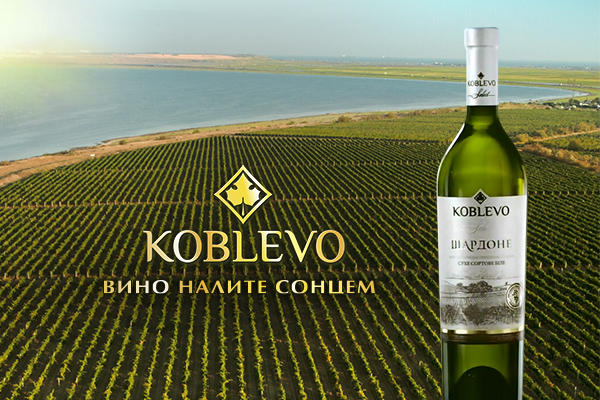
The full experience of the soul of wine and feeling of the highest pleasure from the taste of this sun drink of Gods, are only possible in certain places. One of this wonderful places, where nature gives birth to the best grapes and talented winemakers produce perfect wines – is Koblevo. It is located in wonderful corner of nature between Black Sea and Tylihul Estuary
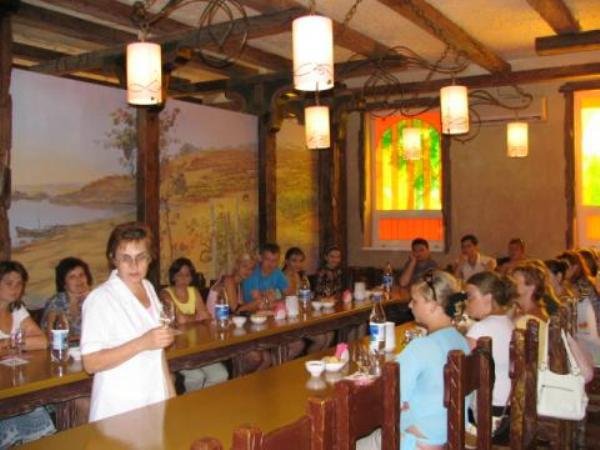
PJSC “Koblevo” open doors of tasting tour for all guests of sunny coast – connoisseurs of fine art and and those who are just discovering the noble drink.
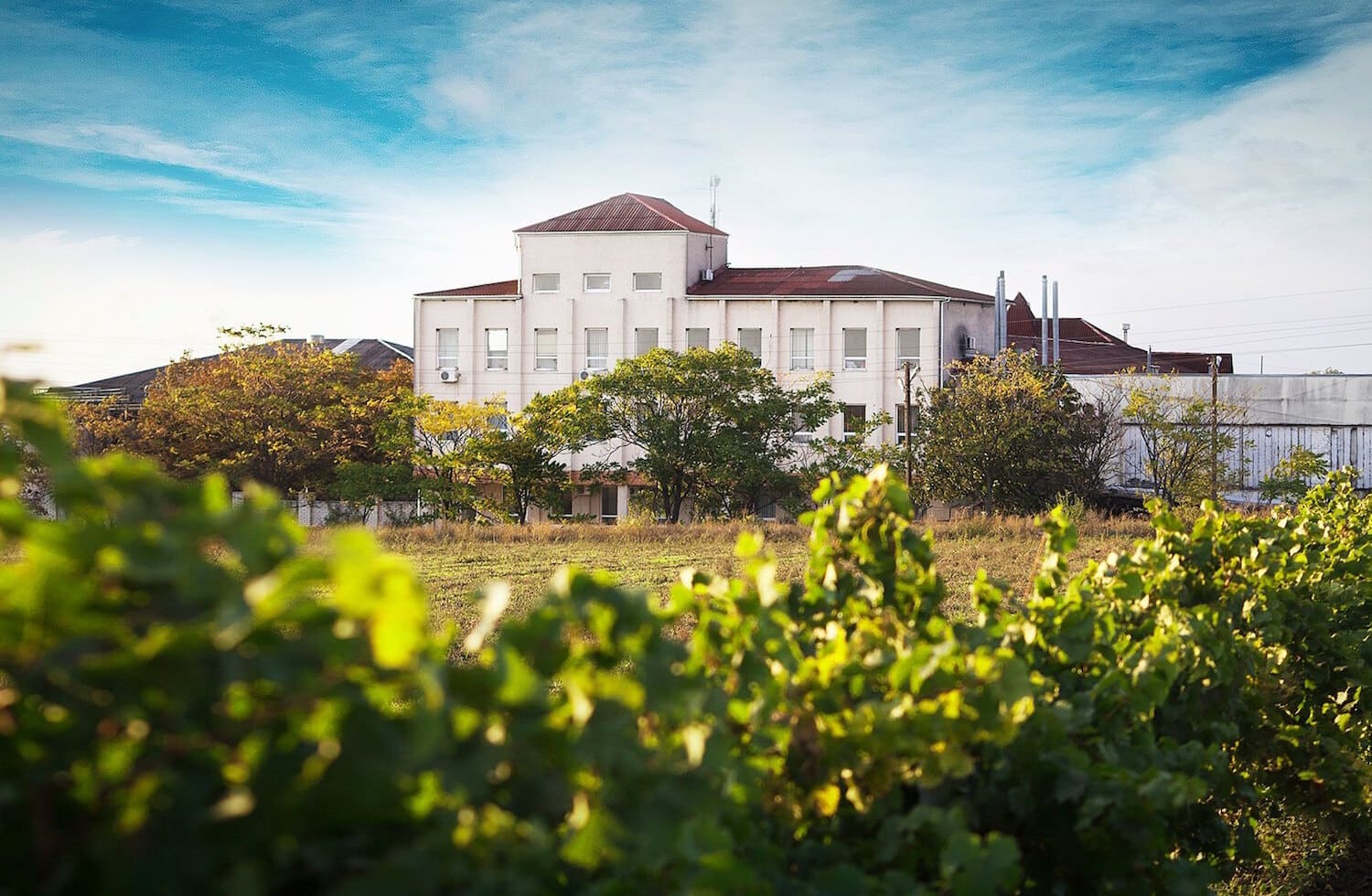
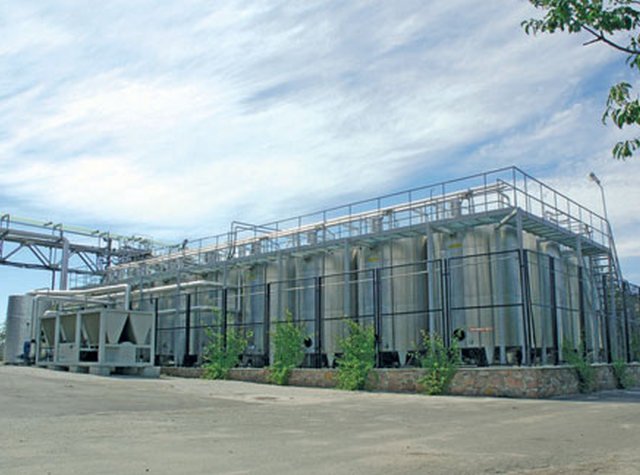
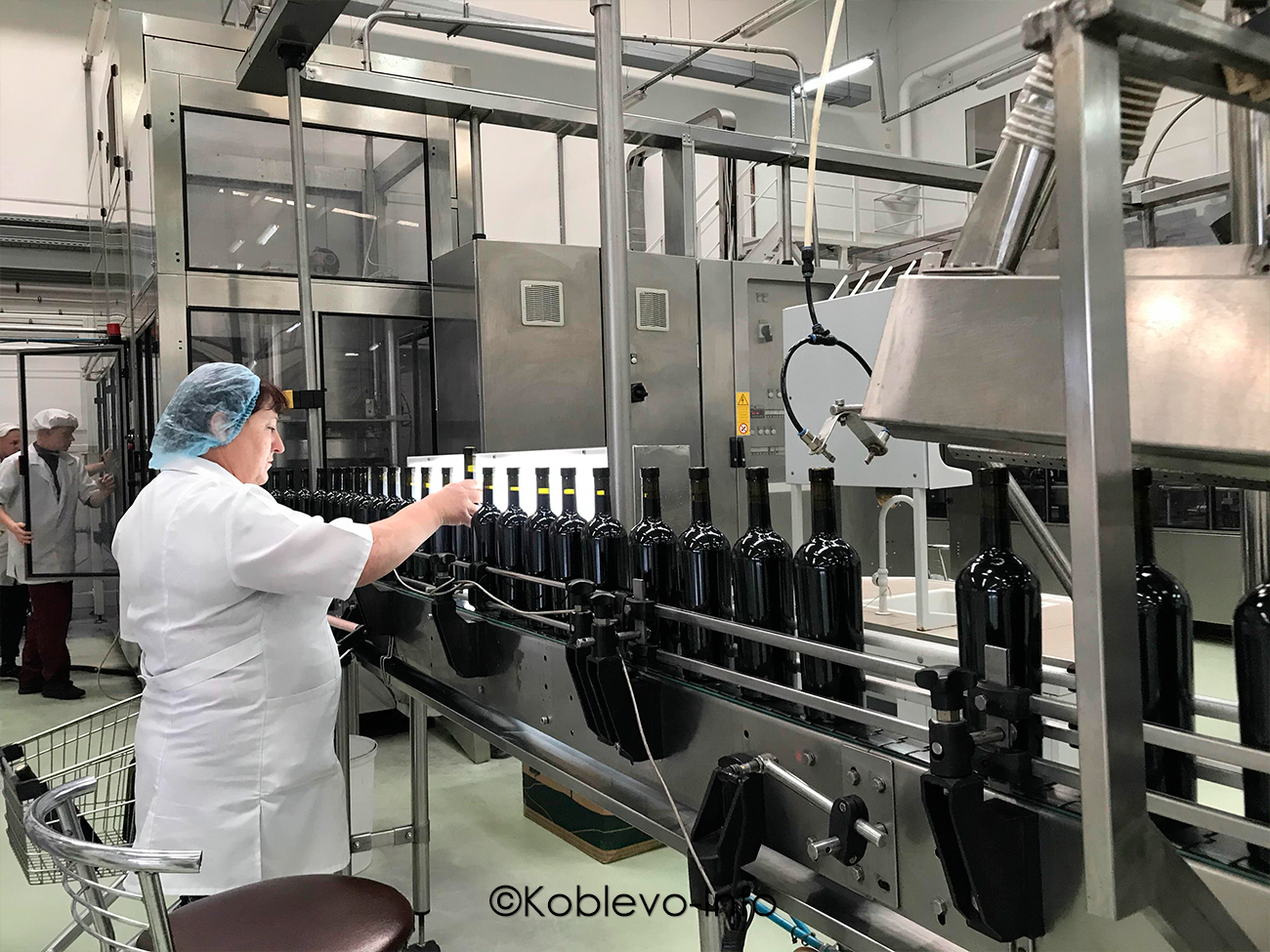
Every year the company is visited by thousands of guests from Ukraine, Moldova, France, Italy, Switzerland, China, Germany and another countries. Tasting tour in Koblevo is giving amazing opportunity to see the whole process of production of His Majesty: from cultivation graves and its primary processing to fermentation, filtration, cold processing and at the end pouring wine in a bottles.
The best winemakers of “Koblevo” are not just telling about variety of wine and dishes. They also teach you all the subtleties of proper tasting, explain you rules of combining different wines and dishes. After all is really important , that this honorable drink emphasize the taste of dishes, but didn`t join in the fight for the taste effect.

Endless vineyards, warm steppe wind and of course the best Besarabian wines! Enotourism is not only a Bordeaux chateau, it is also a vacation in Ukrainian Besarabia near Lake Yalpug. From grape vines to aging in oak barrels and bottle seals, experienced winemakers and oenologists will guide you on an exciting journey into the world of wine.
In the tasting rooms, at the winery, you can fully feel all the colors of the terroir of Lake Yalpug by tasting unique samples of wines from different years of harvest. This vertical tasting will not leave indifferent any wine lover.
The winery is part of the Road of Wine and Taste of Ukrainian Besarabia: more than 50 delicious locations are ready to open their real fascinating Besarabia for everyone. This route will connect local tourist and gastronomic establishments from Odessa to Izmail: you will have the opportunity to visit various wineries, taste local wines, visit the production of local delicacies and restaurants with traditional cuisine – only carefully selected locations with a high level of service.

Just twenty kilometers from the center of the city of Odesa is located one of the largest winemaking enterprises in southern Ukraine, Vintrest, a sector leader in technological advancement since 2004.
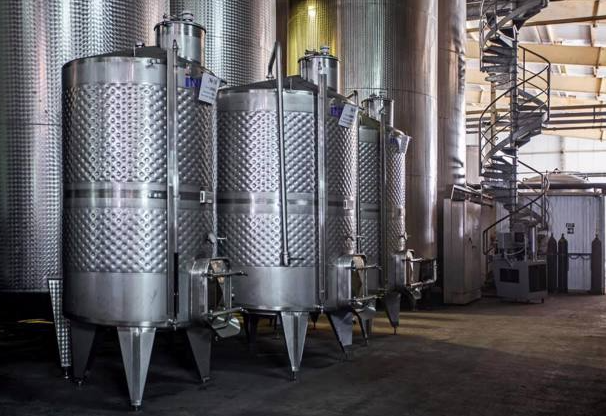
State-of-the-art equipment from internationally recognized manufacturers, including Bucher Vaslin, Zip Technologies, Velo, and Della Toffola, together with cooperation with suppliers of premium oenological materials such as Enogrup, Lallemand, and Institut Œnologique de Champagne, ensures a European standard of winemaking at every stage of production.
The company cultivates more than 140 hectares of certified French-selected planting material of European grape varieties, including Cabernet Sauvignon, Merlot, Pinot Noir, Pinot Meunier, Chardonnay, Sauvignon Blanc, Traminer, Riesling, and Pinot Gris. These vineyards were planted between 1998 and 2006 and are situated in the very heart of a unique area in southern Ukraine, within Odesa District. Proximity to the sea, combined with a mild and temperate climate and fertile mineral-rich soils, creates ideal conditions for producing refined light white wines and full-bodied, high-quality red wines. Following manual harvesting, the grapes are delivered to the winery within no more than twenty minutes, where the winemaking process begins immediately.
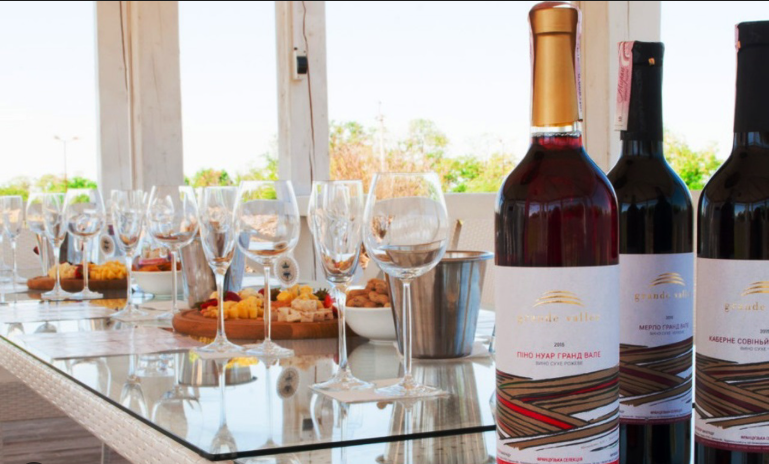
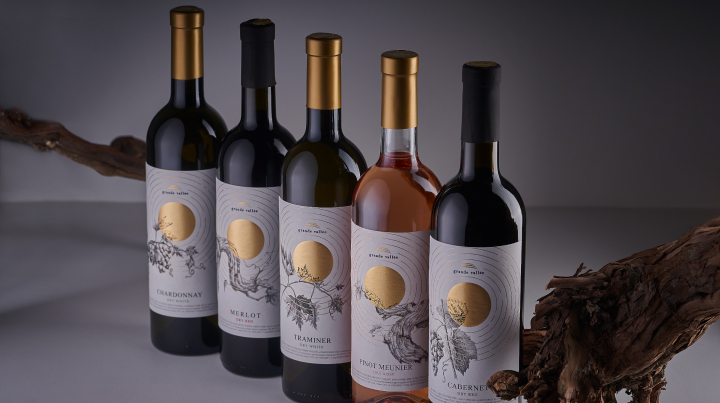
Since 2015, Vintrest has produced its finest wines under its own trademark, “Grande Vallée,” named in honor of the region in Odesa where the vineyards are located; translated from French, the name means “Great Valley.” Since 2018, the Grande Vallée range has expanded to include sparkling wines of its own production, crafted both according to the traditional method and by the Charmat method, also known as the tank fermentation method.
A high standard of viticulture and strict adherence to all technological requirements of wine production ensure a full, balanced, and harmonious taste in every wine.
“Grande Vallée” is a Ukrainian wine with French roots.

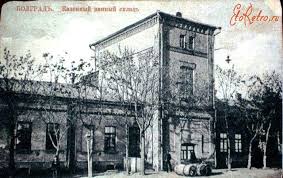
The history of Bolhrad wine dates back to 1900, as evidenced by the architectural ensemble of old Bolhrad, into which the State Wine Warehouse is elegantly integrated, having been one of the city-forming enterprises. The fertile soils of the lands owned by landowner Davydov, merchant Vasyliev, and others were and still are the foundation for cultivating a wide range of grape varieties that form the basis for producing some of the finest wines in Ukraine. After the October Revolution and the change of regime, large agricultural enterprises became part of the plant, including the “Suvorov State Wine Farm,” which was among the leading grape-growing enterprises not only in the Odesa Region but throughout Ukraine. Although the history of the plant dates back to 1900, it is officially considered that the enterprise under the name “Bolhrad Winery” was established in 1945 by an order of the People’s Commissariat of Food Industry of the Ukrainian SSR dated April 28, 1945.
A new stage in the development of the well-known brand began in 1990, when the legendary plant became a lease enterprise under the trademark “TM Bolgrad”. Today, the Bolhrad winery represents a well-established cycle of production and product distribution with quality control at every stage. A creative approach complements the traditions of old winemakers, and thanks to modern technologies, the products fully comply with national standards.
The modern plant produces truly valuable beverages that are appreciated both in Ukraine and abroad. Wines of the Bolhrad winery have received two bronze and three silver medals at exhibitions in Turkey, Slovakia, and Hungary. The company’s management does not rest on its achievements: the enterprise continuously implements new technologies, striving to expand its potential.
Today, it is a Ukrainian enterprise whose main activity is the production and sale of alcoholic beverages, including wines, brandies, vermouths, and sparkling wines. The company is one of the largest operators in the Ukrainian winemaking industry and owns the trademarks “Marelli,” “Bolgrad,” and “Cardial”.
For more than twenty-five years, the company has combined centuries-old winemaking traditions with modern technologies in its products. The creation of high-quality beverages is supported by nature itself: the grapes are cultivated in an environmentally clean area of the Odesa Region. The slopes along the shore of the largest freshwater lake in Ukraine appear to be perfectly suited for grapevines. Lake Yalpuh creates a unique microclimate by balancing humidity and air temperature. The berries receive twice as much sunlight — both direct and reflected from the water surface. The open landscape ensures natural air circulation, allowing the grape clusters to ripen richly without the need for chemical treatment.
The wines of the Bolhrad winery embody the best that nature has to offer and express it in distinctive bouquets that captivate even the most discerning connoisseurs. A wide assortment allows everyone to find their preferred beverage: the catalogue includes sparkling and still wines, dessert, semi-sweet, and dry varieties, as well as red, rosé, and white wines.

Until 1946, the Palariiev family lived and successfully developed winemaking on the site of the present-day Moldovan village of Frumushika-Nova. In the spring of that same year, the residents of the village and five neighboring villages were forced to leave their homes due to the establishment of a military training ground by the Soviet authorities.
In the summer of 2006, on the site of the former military training ground and previously destroyed villages, Oleksandr Palariiev began the construction of the Ethnographic Rural Green Tourism and Family Recreation Center “Frumushika-Nova” and revived the traditions of the family craft.
Thus, today the modern winery “Frumushika Nova Family Winery” produces more than 35,000 bottles of wine annually.
Volodymyr Palariiev is a Ukrainian winemaker who obtained specialized higher education and earned a Master’s degree. Over more than 10 years of practice, he has made “Frumushika Nova Family Winery” a well-known producer both among professionals in Ukraine and among consumers. Volodymyr has visited numerous world-class wineries, where he exchanged experience with leading specialists. He consistently applies modern production technologies and a creative approach to product development.
The enterprise works with indigenous grape varieties, namely: Odesa Black, Sukholymanskyi White, and Citronnyi Magaracha.
In addition, the winery produces wines using the following technologies:
– Rosé wines produced by direct pressing of grape clusters, followed by must processing as for white wine. As a result, the wines are light and delicately pink;
– Sparkling wines produced by the traditional method of bottle fermentation (champagne method). The transformation from still to sparkling wine takes place entirely inside the bottle;
– “Not Filtered Wine” — a unique line of wines. The distinctive feature is that the wine does not undergo filtration before bottling, which ensures maximum richness of taste and preserves the wine’s aromatic intensity;
– Pet-Nat (Pétillant Naturel — natural sparkling wine). This is the traditional ancestral method of winemaking, which appeared long before the champagne method, in which the wine is bottled before the completion of its primary fermentation. The fermentation of natural sugars then finishes in the bottle, releasing bubbles. This method was developed in France in the sixteenth century. Pet-Nat is unfiltered and has a naturally cloudy appearance;
– Skin Contact Wine — one of the oldest methods of winemaking in the world, with a history of more than 8,000 years. This is white wine that becomes amber in color because the grape juice remains in contact with the grape skins for a period ranging from several days to one year. This gives the wine a more pronounced tannic character and a deeper color, varying from pale golden to deep bronze;
– Blanc de Noirs — a method of producing white wine from red grape varieties. It originated in France in the seventeenth century.
The products of “Frumushika Nova Family Winery” are exported to Germany, Bulgaria, Estonia, the United Kingdom, and Japan.

LLC “First Winemaking Station” is a small winemaking company founded in 2007, territorially located in the Odesa District of the Odesa Region, directly bordering the administrative center of the region — the city of Odesa.
The company operates on the market under the trademark “Winemaking Station.” The main production unit of the enterprise is located in the premises of the former Winemaking Station, established by V. Ye. Tairov in 1905 on the shore of the Sukhyi Liman near Odesa. Everything here is imbued with the history of the development of industrial viticulture and winemaking of the Northern Black Sea region, based on the scientific and practical research of V. Ye. Tairov and his associates.
LLC “First Winemaking Station” is the result of a harmonious combination of tradition and innovation, grounded in the unique natural conditions of the area.
The favorable ampelographic and ecological conditions of this region, which combine distinctive soil and climatic characteristics with geomorphological factors, including the particularities of the terrain and the parameters of geographical latitude and longitude, make it possible to cultivate a wide range of grape varieties and to produce high-quality wines of various types. These благоприятні conditions were known as early as the time of the ancient Greeks, who, already in the sixth century Before the Common Era, successfully cultivated grapevines here for winemaking. Scientific research conducted in recent years has confirmed the presence of unique ecological niches where grapes for premium wines can be grown.
The company utilizes vineyards located around the settlements of Baraboi and Liebental. The vineyards are situated on plains with an overall southern inclination, predominantly on southern, eastern, and southeastern slopes. The relief of the Ovidiopol District provides ideal conditions for grape cultivation due to the combination of effective drainage and an optimal amount of sunlight. The selection of grape varieties for cultivation is determined by the characteristics of the local terroir. At present, the main grape varieties used by the company include classic European red varieties — Cabernet Sauvignon, Merlot, Pinot Noir, Portugieser — and white varieties — Chardonnay, Rhine Riesling, Aligote, Irsai Oliver. Particular attention is given to the production and promotion of wines based on locally bred varieties — Sukholymanskyi White, Odeskyi Black, Muscat Odeskyi — developed by scientists of the V. Ye. Tairov Institute of Viticulture and Winemaking. In addition, such white grape varieties as Traminer Rose and Rkatsiteli are also used in wine production.
The quantity of grapes cultivated is strictly regulated. The main emphasis is placed on the qualitative characteristics of the grapes, which ensures the high quality of the final product.
Under the umbrella of the trademark “Winemaking Station,” more than 22 product names are produced, capable of satisfying even the most demanding consumer, including products that serve as prototypes of such wines as Marsala, Malaga, Tokay, Cahors, and Sherry.
Reputation above all is the principal guiding philosophy of this winemaking project. This principle, combined with seriousness of intent and thoroughness in action, has enabled LLC “First Winemaking Station” to firmly and достойно establish its niche in the market within a short period of time. The company’s positive reputation has been built on the high quality of wines produced in strictly limited volumes, while the customer has become the measure of the correctness of the chosen path. It is precisely for the customer that the company continues to improve, striving through wine to express the character of the land, the diligence of local people, the traditions and innovations laid down by V. Ye. Tairov, and the integration with global experience in grape cultivation and winemaking.

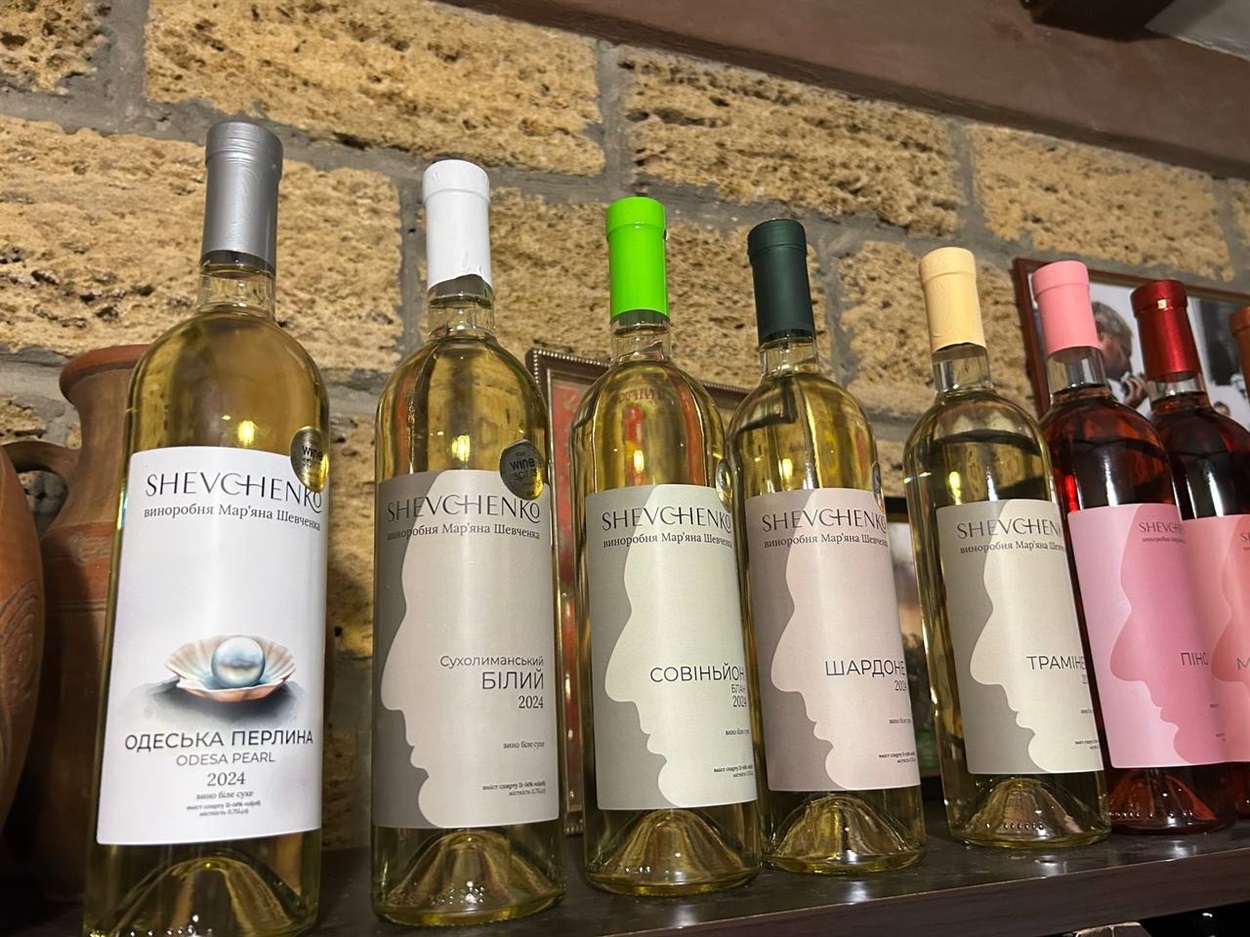
The family winery SHEVINO of Maryan and Nataliya Shevchenko began its history in 2012, when the first vines of European grape varieties were planted. Today, the vineyard area of the winery covers 0.5 hectares. The production volume amounts to about 6,000 liters per year.
The small winery SHEVINO is equipped with all the necessary technical facilities; stainless steel tanks and oak barrels are used for wine storage and aging. A spacious gazebo for tastings has been built among the vineyards, and there is also a wine cellar with a carefully curated collection. The special pride of the winery is the wines made from local grape varieties — “Sukholymanskyi Bilyi” and “Odeskyi Chornyi” — as well as the winemaker’s signature blends “Velvet of the Dniester” and “Black Sea Pearl”.
In 2022, the large-scale Russian invasion of Ukraine forced Maryan Shevchenko to suspend wine production and join the Armed Forces of Ukraine to defend his country. The Shevchenko family believes that their best wine is yet to come — the wine of “Ukraine’s Victory!”.
Currently, the Shevchenko family’s wines from previous harvests are taking part in charity auctions and helping support the Ukrainian army.

Odesos is a young winemaking project from the very heart of Ukraine’s wine region, founded in 2019. The name of the winery is closely connected with one of the versions of the origin of the city’s name, in honor of the ancient Greek colony of Odessos, located near the bay of modern Odesa. The winery was founded by Maksym Kushnir. His journey in winemaking began with the desire to bring the European experience of urban wineries (such as those in London or Porto) to Ukrainian soil. Maksym personally oversees every stage: from selecting grapes in the vineyards to designing the labels. The chief winemaker, Anton Yordanov, came to Ukraine from Bulgaria to produce high-quality Ukrainian wine of world-class standards.
The winery does not own vineyards but leases plots in the best microzones of the Odesa Region (the village of Prymorske, Izmail District). This allows the selection of the finest grapes for each specific vintage.
“Odesos” is known for its Limited Edition series, in which wines (Cabernet, Merlot) are aged in barrels previously used for whisky and bourbon, giving them unique smoky notes.

Eduard Gorodetsky worked for 20 years at the Odesa Cognac Factory, renowned for its century-old traditions and modern technologies. He began his career by washing barrels. Later, he obtained a degree in technology and worked as a technologist in the production of cognac spirits. Subsequently, he managed the production of sparkling wines and later became the head of production at the Odesa Cognac Factory. For the last five years, he served as Chairman of the Board of the enterprise.
It is a well-known fact that 70 to 85 percent of wine quality depends on the grapes. Eduard Gorodetsky also emphasizes this point. The winemaker notes that it is very important to select grapes that are in good condition, fully ripe, and of high quality. The next step is to preserve what nature has provided and to ensure that nothing is spoiled. According to Eduard Gorodetsky, this requires exceptional attention to every stage of the technological process. He purchases grapes for his wines from friends and colleagues. If everything had gone according to plan, vineyards would have already been planted near the newly built winery this autumn. However, these plans have had to be postponed. Eduard Gorodetsky explains that he produces wines from grapes grown in Bessarabia, in the Izmail and Bolhrad districts. According to the winemaker, these areas receive the most sunlight, allowing the grapes to ripen to their fullest potential.
Traditionally, grapes for My Wine by Eduard Gorodetsky begin to be processed in early September. The wine may be ready for bottling around January or February of the following year. Wines produced according to the Beaujolais method, that is, young wines, can be bottled as early as November. Classic wines are ready for consumption after the New Year, as Eduard Gorodetsky explains.
According to Eduard, the advantage of small winemakers is that they are completely free to produce wine in the way that best reflects their vision. If the wine is of high quality, it will undoubtedly find its consumer.
“There are many examples where a winemaker has a distinct personal style, and this style finds its audience, who return specifically for these wines. Therefore, if there is desire and perseverance, everything will succeed”.
At My Wine Bar, visitors can taste and purchase author’s artisanal wines, as well as enjoy conversations with friends over a glass of fine wine.

If you have ever taken a serious interest in wine, sooner or later the desire arises to make it yourself. It was precisely this passion that led to the creation of the Beykush Winery.
However, passion alone is not enough to produce great wine. It must be combined with science — studying the soil, climate, precipitation, temperatures, and wind direction. After that, it is necessary to select the optimal grape varieties, plan the planting, establish the vineyard, conduct long-term experiments, and only after several years enter the market with your own wines.
“Beykush” is a community of like-minded people for whom winemaking is not only a business, but also an opportunity to introduce people, through the taste of wine, to our region and its nature.
Beykush Winery began its journey with an in-depth study of the terroir — the land, climate, and natural conditions of Cape Beykush on the coast of the Black Sea. The founders assembled a team of like-minded individuals: scientists, agronomists, and experienced winemakers.
Years of meticulous work followed: soil research, selection of vine clones, and the establishment of the vineyard. In 2012, the first bottles of Beykush wines entered the market — and from the very beginning they received recognition among connoisseurs of high-quality Ukrainian wine.
The vineyard land is geologically part of the flat watershed between the Southern Bug and Berezan limans of the southern steppe, with dark chestnut loamy soils.
The vineyards are located literally a few hundred meters from the sea and are surrounded by water on three sides. The proximity of the limans and the sea acts as a large natural air conditioner, while the wind blowing through the vineyards significantly reduces the risk of fungal diseases in the vines.
The sun warms the vineyards for an average of 225 days a year. Significant differences between daytime and nighttime temperatures contribute to the active synthesis of aromas and to an optimal level of acidity in the grapes.
There are 11 hectares planted with French and Italian clones: white varieties — Chardonnay, Pinot Grigio, Riesling, Sauvignon Blanc, Rkatsiteli; red varieties — Pinot Noir, Merlot, Saperavi, Cabernet Sauvignon. In addition, there are experimental plots with Telti-Kuruk, Alvarinho, Timorasso, Tempranillo, Malbec, and Pinotage.
“We experiment and strive to produce interesting wines — not mass-produced, but unique, with a recognizable signature. Our wines are released in small batches and sometimes sell out quickly. In winemaking, we follow the principle of minimal intervention: we allow the wine to express as fully as possible the character of the variety and the terroir. Some wines are aged in oak barrels, others in amphorae according to ancient Georgian traditions. The result is wines with a complex, multi-layered character that reflect the spirit of the Black Sea steppe and the salty sea air of Cape Beykush,” says the owner of the brand.
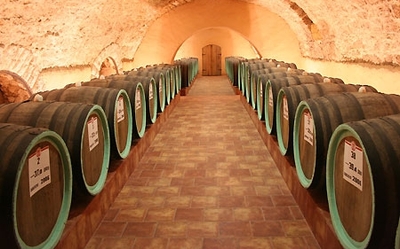
The harvest is carried out by hand at dawn, when the grapes are at their most aromatic and fresh. Each variety is harvested separately at a strictly defined stage of ripeness. Every stage is carefully controlled: from berry sorting to fermentation in stainless steel tanks and barrels. For special series, clay amphorae — qvevri — are used, providing the wine with unique natural filtration and a mineral character.
Tastings are temporarily not conducted due to the full-scale invasion of Russia into Ukraine.

“Ophiussa Winery” is a winery in Bilhorod-Dnistrovskyi, founded in 2022 by Yaroslav Andriiets. His idea is to produce high-quality wines that are as close to organic as possible. Previously, Yaroslav worked at the Tairov Institute of Viticulture and Winemaking, then at the company “Shabo,” and in 2021 he worked in California, in Napa Valley, where he mastered the technological nuances of organic winemaking.
The name of the winery refers to the island of Ophiussa, which likely existed in the middle of the Dniester Liman about two thousand years ago.
“Ophiussa” does not have its own vineyards and purchases all grapes from local farmers: from the villages of Popazdra, Chabanske, Shabo, and Starokozache. Among the grape varieties are Telti Kuruk (a Shabo indigenous variety), Muscat of Alexandria, Odesa Black, and others. The volume of wine production is 2 tons.

The Molchanov family obtained their first harvest and produced their first wine in 2016. Already in 2018, the novice winemakers became the holders of the first craft winemaking license in Ukraine. For this reason, Steppe Wines rightfully calls itself the first craft winery in Ukraine.
Steppe Wines is located in a historic area where, from 1900 to 1917, one of the largest châteaux in the Mykolaiv Region was situated, founded by Anatolii Bredykhin, a member of the City Duma, who was granted the right to produce wines under his own trademark. In 2012, the Molchanov family established their winery here and have been actively working to unite winemakers of Ukraine.
The Steppe Wines winery has planted a vineyard covering 6 hectares on the historic slopes of the Southern Bug River. Both Ukrainian and European grape varieties are cultivated here: Cabernet, Odesa Black, Chardonnay, Sukholymanskyi White, Pinot Gris, Pinot Noir, Saperavi, Rkatsiteli, and others. At the production facility, the wine ferments on wild yeasts, without additives or preservatives. “We produce high-quality Ukrainian wine!” — say the winemakers.
The founders of Steppe Wines initiated a wine festival and organize events, concerts, and excursions. Each year, the winemakers participate in the Uwines Awards tasting competitions, where professionals and connoisseurs select the best Ukrainian wines. The Steppe Wines collection includes a silver medal for Cabernet 2017 and two bronze awards for Chardonnay 2018 and Riesling 2018.

On the picturesque slopes of the Southern Bug River, where life once flourished in the ancient colony of Olbia, the vineyards of the family winery “Olvia Nouveau” are spread out. Founded in 2013 by former weightlifter Pavlo Magalyas, it combines respect for the centuries-old history of the region with a commitment to creating refined wines.
The name “Olvia Nouveau” symbolically emphasizes the winery’s connection with the ancient past. Olbia, founded by settlers from Miletus in the sixth century Before the Common Era, was one of the most important centers of trade and culture in the Northern Black Sea region. Its ruins, located near the winery, serve as a constant reminder of the greatness of past times.
At the vineyards of “Olvia Nouveau,” various grape varieties are cultivated, carefully selected for the local climate and soil. Among them are Johanniter, Cabernet Sauvignon, Odesa Black, Muscat Citron, and others. The vineyard area covers 10.6 hectares. The vines date from 2013. The winery offers a wide range of wines to satisfy every taste.
After the Russian invasion of Ukraine on February 24, this place, remote from civilization, lost its usual tranquility. “I am the winegrower closest to the front line,” Magalyas told the AFP agency, while behind him the rumble of Russian and Ukrainian artillery could be heard. Among the vines lay what appeared to be a casing from prohibited cluster munitions. Due to the rapid advance into southern Ukraine at the beginning of the invasion, Russian forces managed to seize control of the opposite bank of the river south of Mykolaiv. Thus, “Olvia Nouveau” “accidentally found itself at the epicenter of the war,” Magalyas explained. At first, shells exploded directly near the workers tending the vines. During “these very difficult months,” Magalyas counted at least 26 craters that destroyed parts of his vineyards. He also had to dig out fragments of a missile, as the winery continued its operations. Thanks to the arrival of powerful weapons provided by Western countries, Ukrainian forces managed to push back the Russian military. Now, the sounds of powerful explosions hardly cause the workers to raise their eyebrows. Magalyas says he never even considered leaving. “I invested all my savings in this vineyard. Now I no longer have money, but I have all of this,” he said, pointing to his land and winery, which produces 15,000 bottles of red and white wine per year. “We bothered no one, we worked quietly, and then the Russians came. Why the hell are they here?” Magalyas said firmly, speaking about the war that has taken the lives of “many friends.” Despite caring for the vineyards, Magalyas voluntarily enlisted as a sapper in the territorial defense.
Magalyas looks optimistically to the future of both himself and his winery. The worst thing, he says with a sarcastic smile, is that this year is “exceptional.” “This happens once every five years. The grapes give everything, and the wine will be excellent, perhaps only with a hint of gunpowder in the aftertaste,” he jokes.

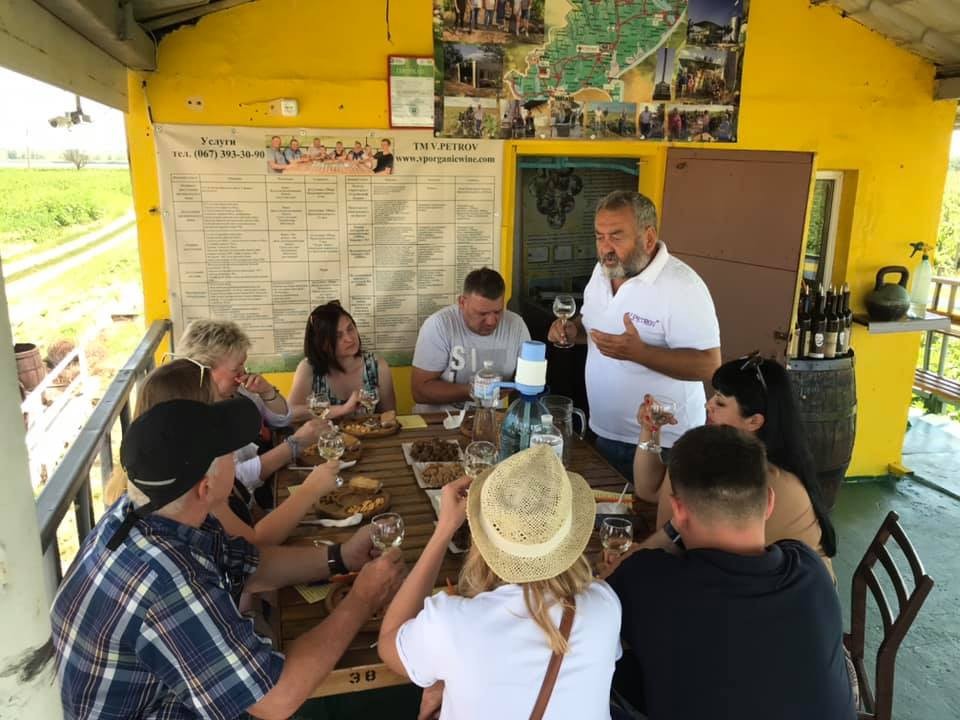
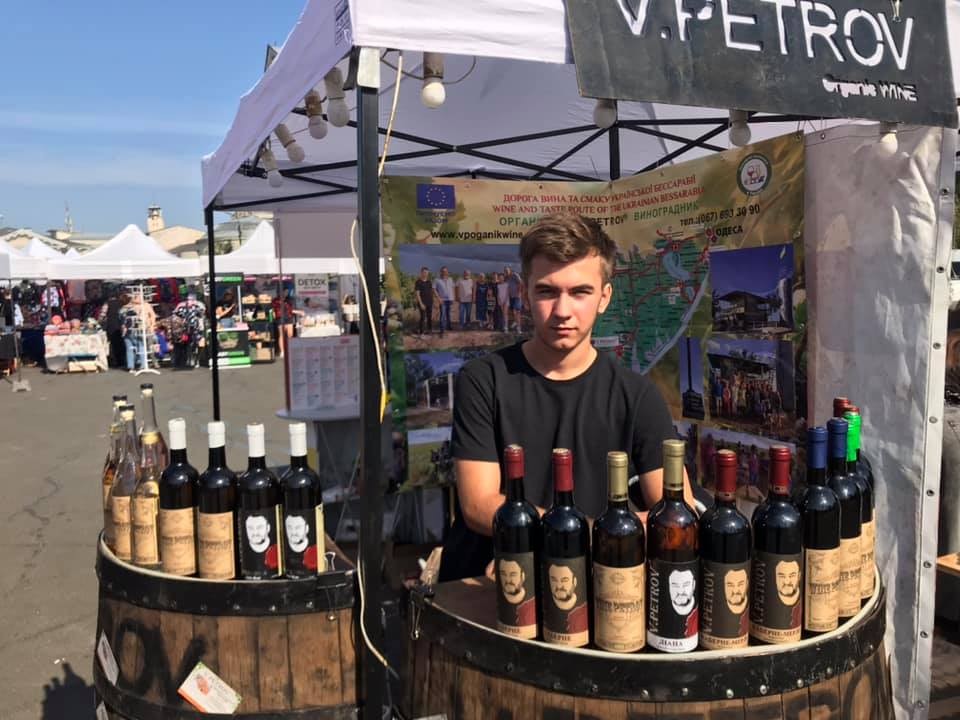
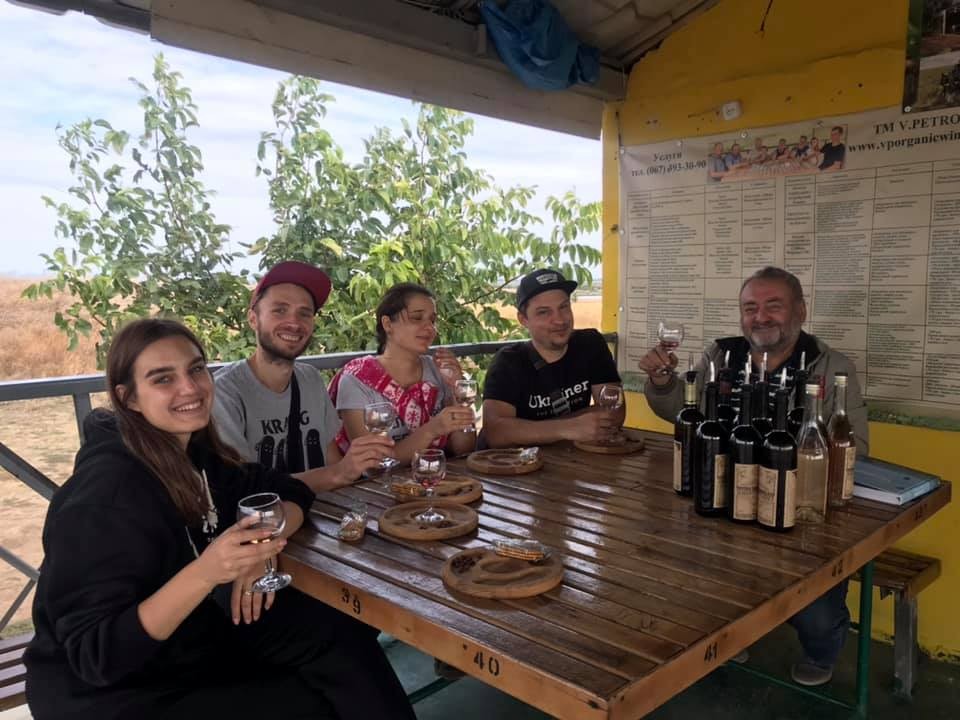
V. Petrov family winery of organic wines is located in the center of Ukrainian Besarabia and specializes in the production of natural wines in accordance with the international certificate Organic Standard Ltd. Vineyards with an area of 76 hectares were laid near the village of Ruchey by the farming family of Valery and Svetlana Petrovs. During the cultivation of grapes, they use only special biological products that are listed in the organic register. Sulfuric anhydrides and stabilizers are not added to finished products.
The winery produces white and red ordinary wines, as well as three types of grappa: silver (refined with silver), red (infused with grape seeds), gold (aged in an oak barrel).

“Manzul Winehouse” is a family winery and tasting hall created with a deep appreciation for Bessarabian traditions, gastronomy, and wine culture. It is a space where the preservation of history is combined with a modern approach to winemaking and hospitality.
Here, visitors have the opportunity to become acquainted with traditional methods of wine production and to taste selected Ukrainian grape varieties, including Sukholymanske White and Odeskyi Black, which are a true pride of the region.
The tasting hall regularly hosts wine tastings featuring presentations of 8 to 12 varieties of artisanal wines. The wines are accompanied by local delicacies such as brynza, artisanal cheeses, meat products, as well as authentic Bulgarian and Gagauz dishes prepared by the lady of the house — a true guardian of the culinary heritage of southern Odesa Region.
Here, the traditions of Ukrainian Besarabia are carefully preserved and promoted — through wine, cuisine, rituals, and hospitality. The hosts — Eduard and Mariia Manzul, together with their daughter Albina and her husband — treat guests to wines of their own production, artisanal products from Bessarabia, and authentic dishes, introducing them to the culture of the region not from books, but “through taste.”
The family’s desire to preserve Besarabian traditions is no coincidence, as the founders of Manzul Winehouse originate from Besarabian villages. The head of the family, Eduard Manzul, an ethnic Gagauz, is from the Vulcănești District of Moldova. His wife Mariia is an ethnic Bulgarian from the village of Chiyshiy, now Horodne, in the Bolhrad District of the Odesa Region.
“It is difficult for me to say that we are businesspeople. Rather, this is a hobby that has been trying for many years to grow into something more. Our father comes from a winemaking region; he studied in Odesa as a food industry technologist and dreamed of becoming a winemaker. For a long time, he did not have the opportunity to realize his dream, until in 2015 we acquired a small plot of land in the village where we now live,” says Albina Manzul.

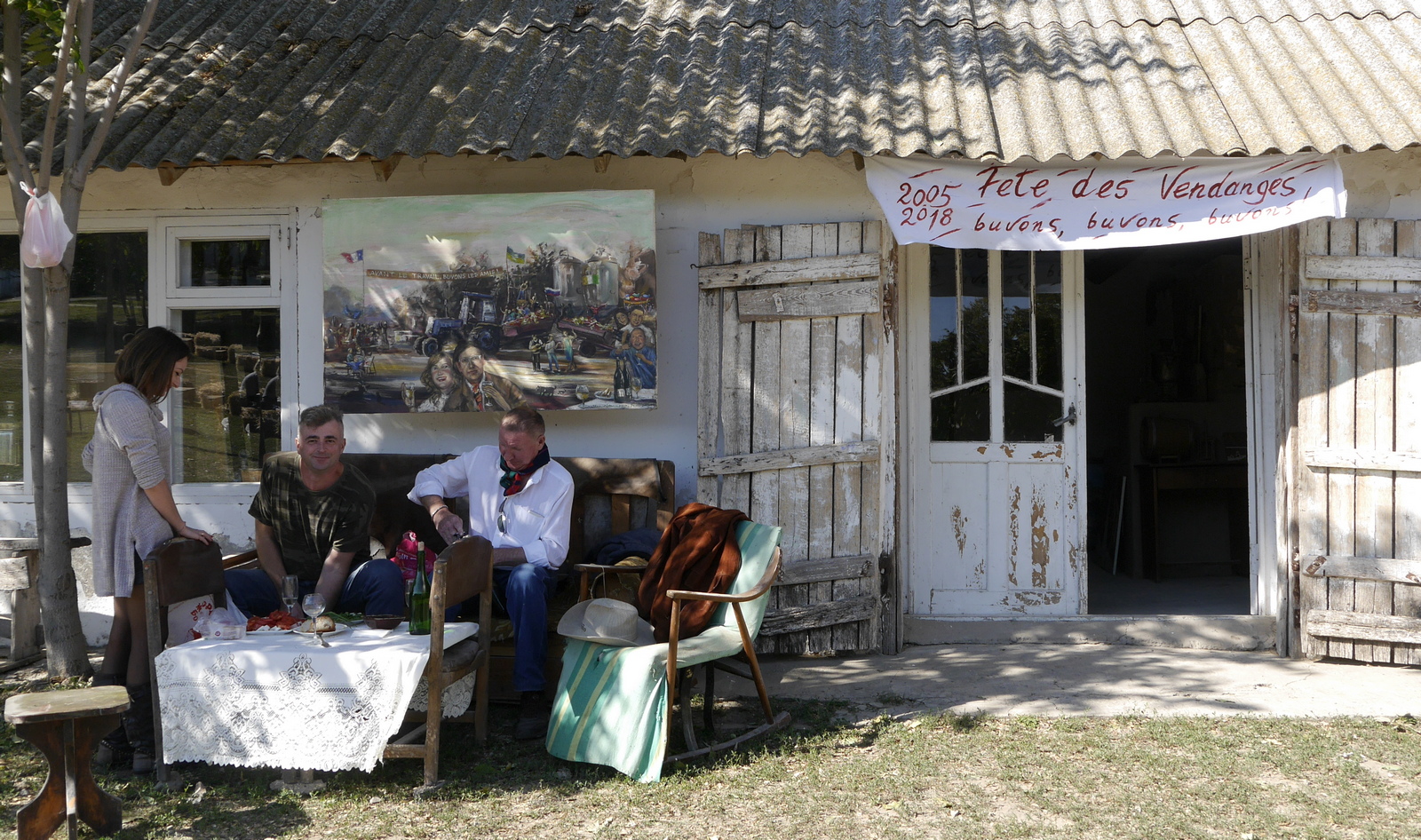
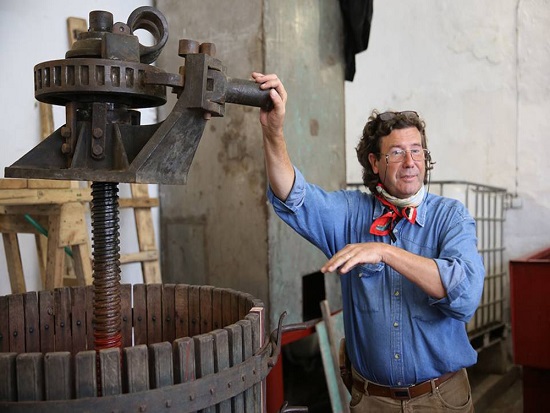
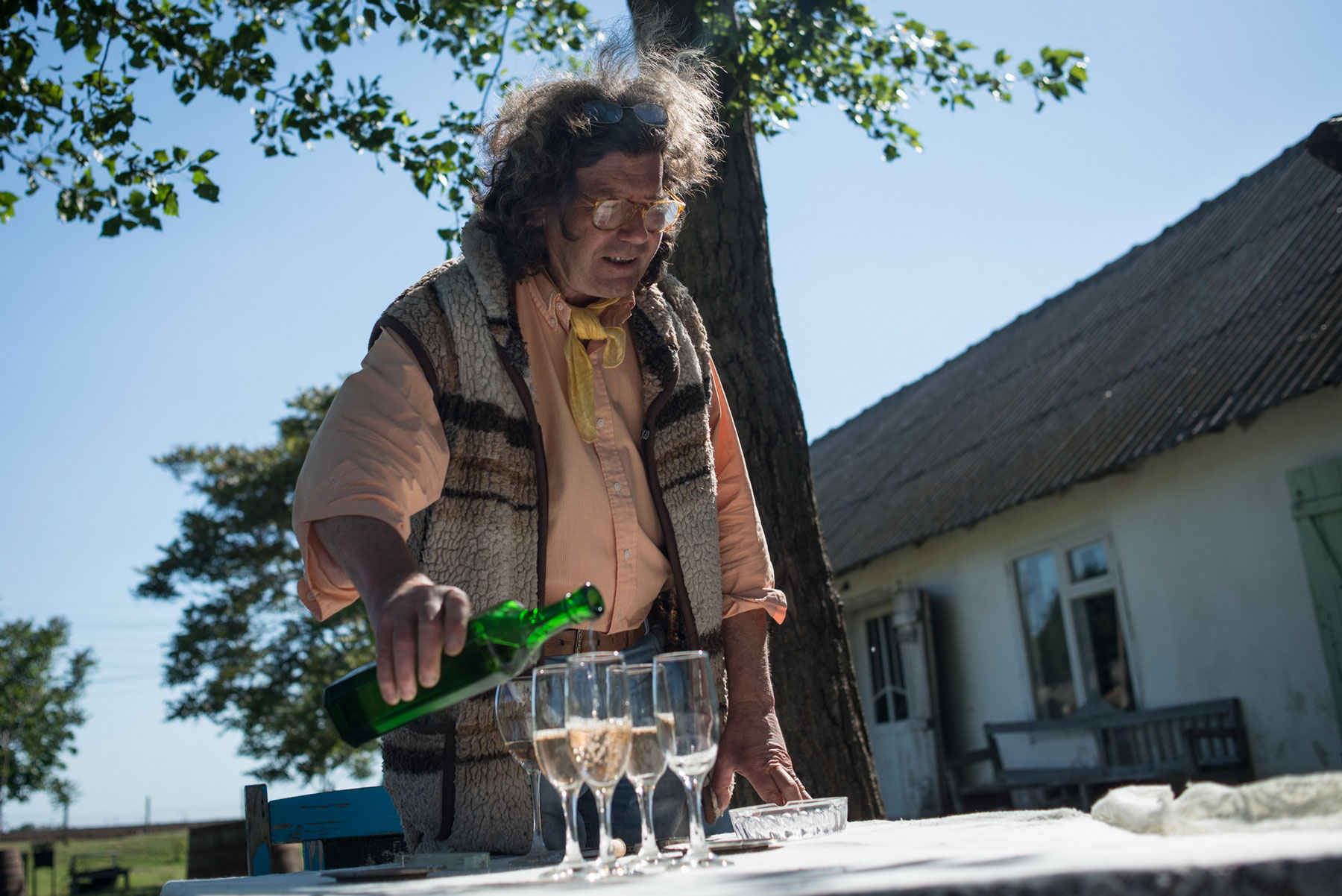
Chateau Lacarin located off the road, among the vineyards. This is a small estate founded by the Swiss winemakers of Tsar Alexander II in the 19th century, who in Soviet times became the tractor brigade of the Lenin collective farm. The estate seems to be a refuge of peace, far from worries, where nature wins: horses, goats, sheep graze everywhere, dogs runs, cats bask in the sun. Marianne Lacarin prepares wonderful meals using natural products from her farm. And the winemaker Christophe Lacarin himself, like a true Frenchman, enjoys spending time with guests at the table, talking about life, wine, business. And then he leads them to his huge wine cellar, demonstrating the process of making wine and champagne, carefully making sure that the glasses do not remain empty.
At Chateau Lacarin, tastings and excursions are combined and held outdoors during the warmer months. In the rain and during the cold season – in a spacious salon with a fireplace, decorated with paintings and antique utensils. A variety of wines are provided, accompanied by pate, goat cheese and homemade bread. The salon can accommodate 10 guests + the owner, taking into account the distance (salon-114.5 sq.m). At the tasting, guests are offered to try several types of white, rose and red wines of different years and different production technologies. The Marquis de Lacarin pours as much wine as the tourist asks, but without driving him to a state of intoxication.
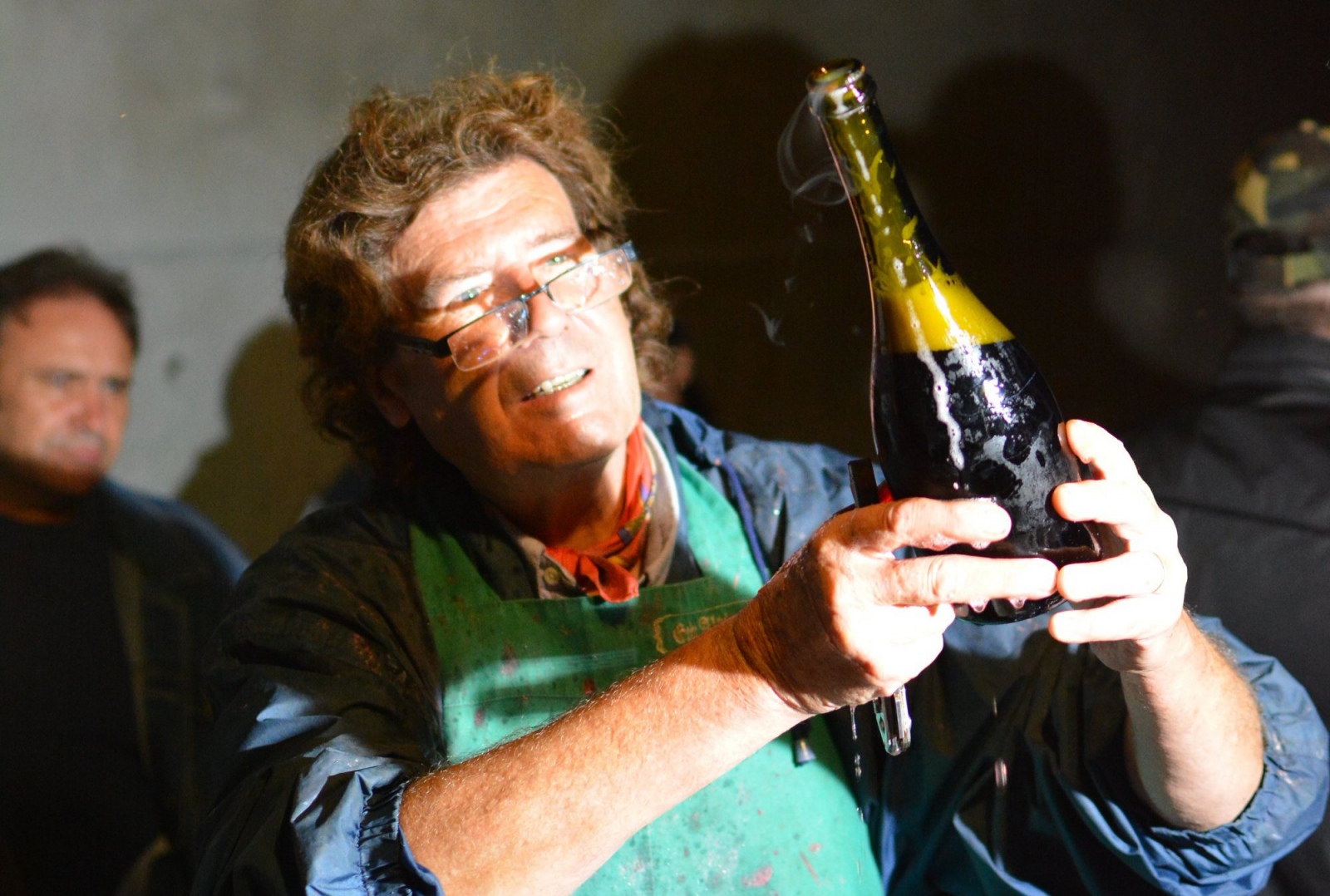
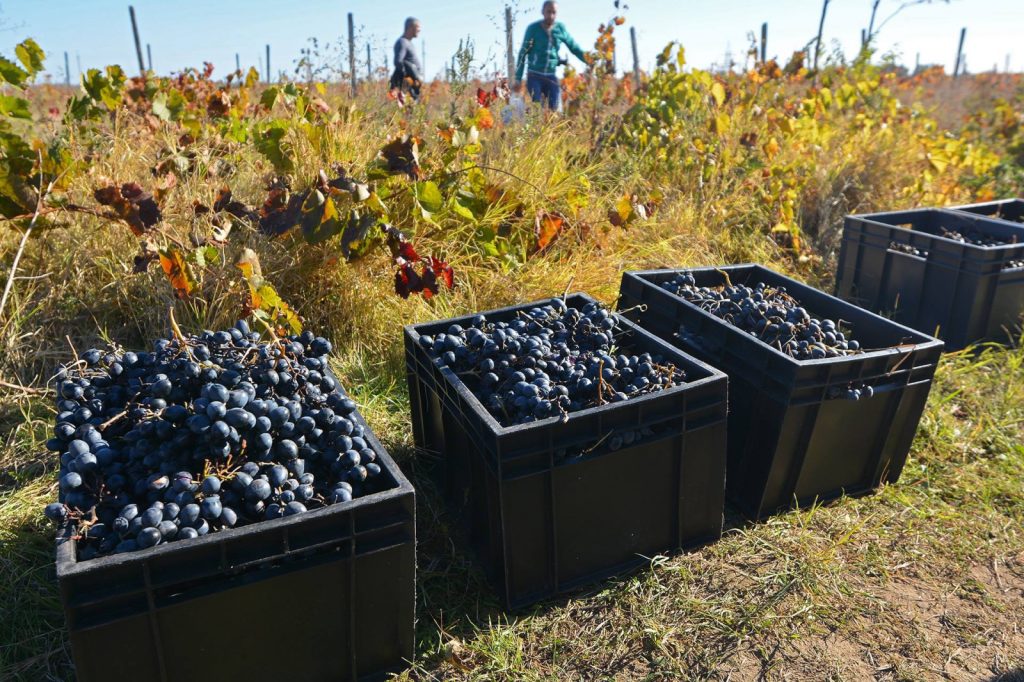
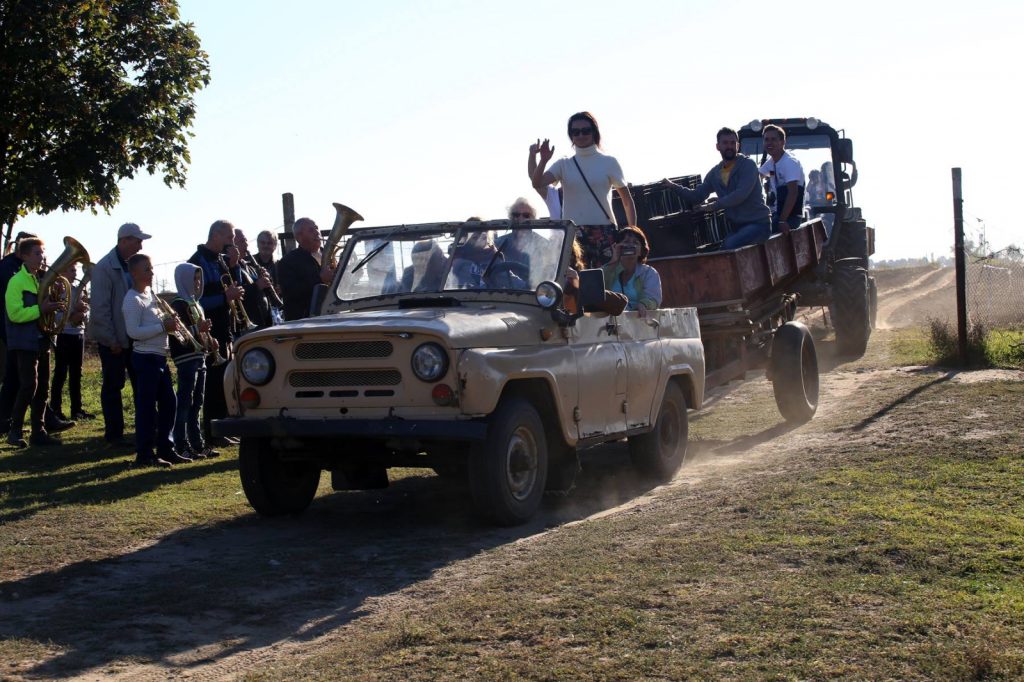
After the first tasting and communication with the winemaker himself, Christophe Lacarin, guests go to inspect the vineyard in a VAZ “cabriolet” (if the group is not large) or in a tractor trailer “Belarus”. Upon their return, guests go directly to the wine cellar, where they continue to taste wine directly from the wine tanks, and most importantly, the Marquis de Lacarin tells and shows how he makes champagne brut natural, using the old French technology “Dom Pérignon”, and the guests taste several types of champagne helping the Marquis in the process of “disgorgement”.

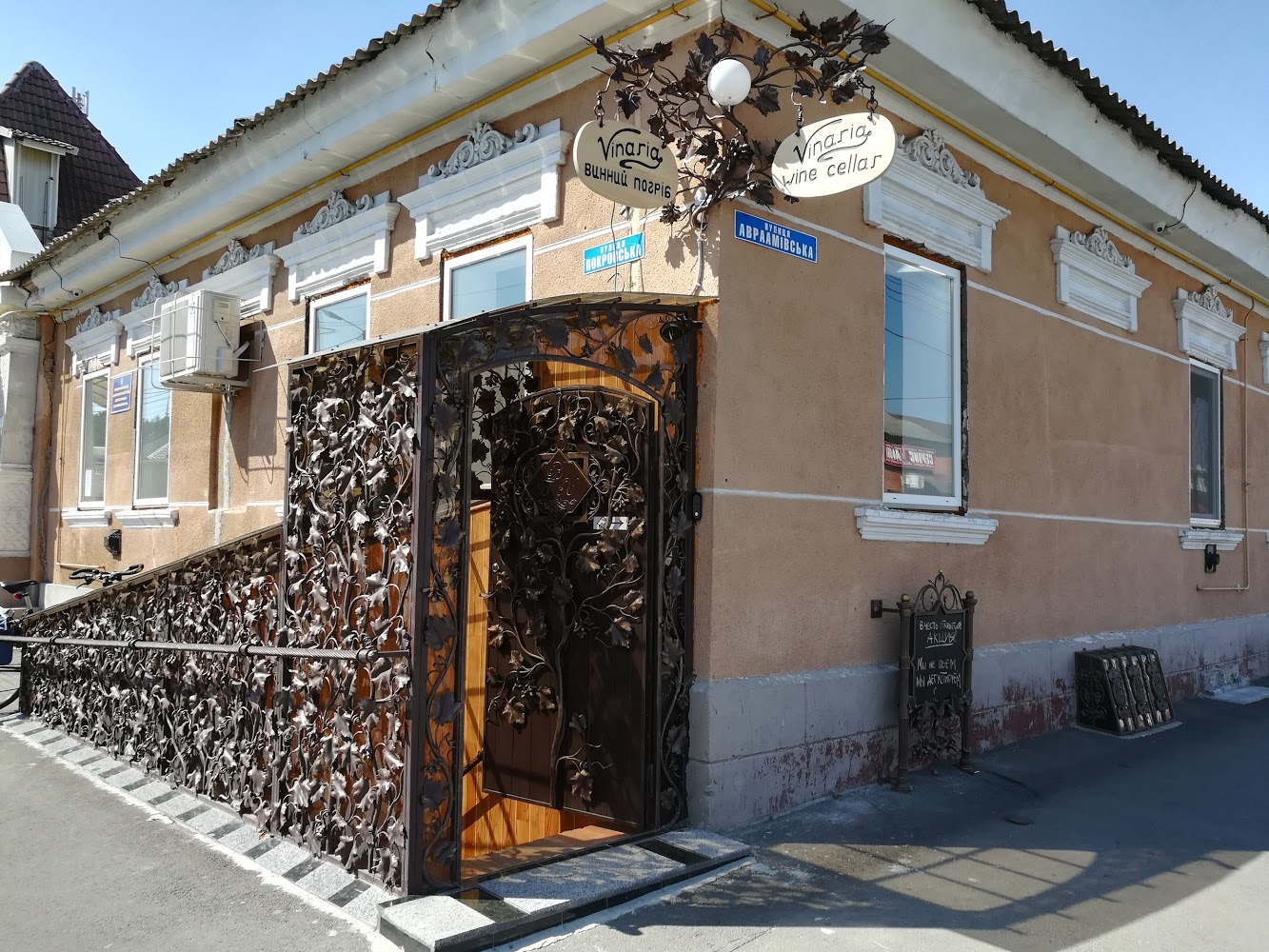
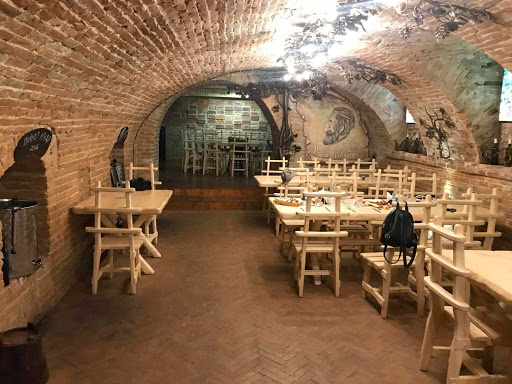
Wine cellar “Vinaria” is located in the old part of Izmail and offers local Besarabian wine and organic vinegars from their own small family winery, as well as traditional Besarabian cuisine.
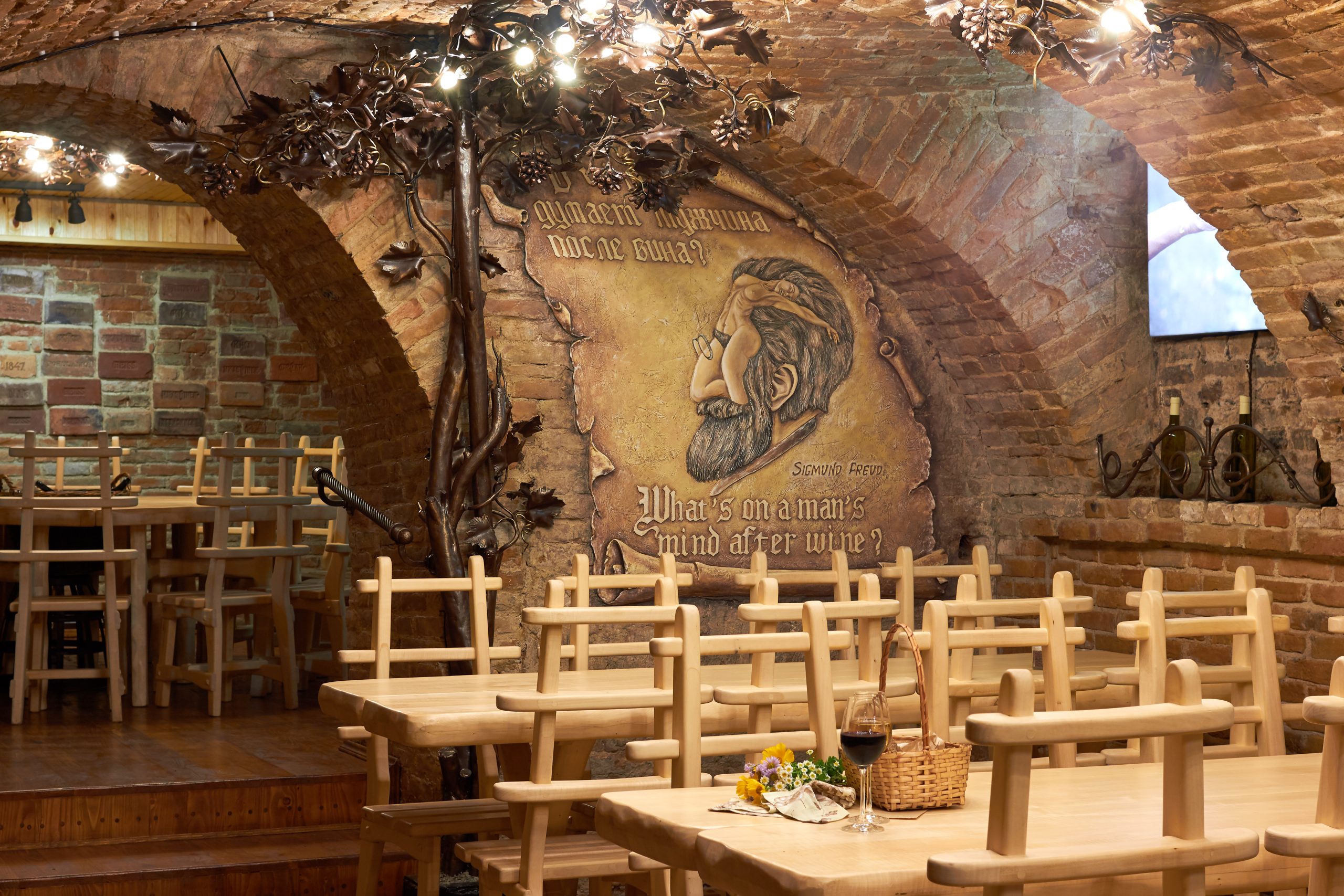
The institution was founded in 2017 in an old Besarabian house next to the Izmail Historical Museum and the Holy Intercession Cathedral, 3 km from the Izmail Fortress. The old cellar style, vintage decor, art forging and designer furniture are harmoniously intertwined here.
The institution offers exclusively dry wines of Western European varieties, as well as original wormwood wine according to the recipe of local ethnic Bulgarians. The wines are made by hand byclassic technologies on modern Italian equipment.
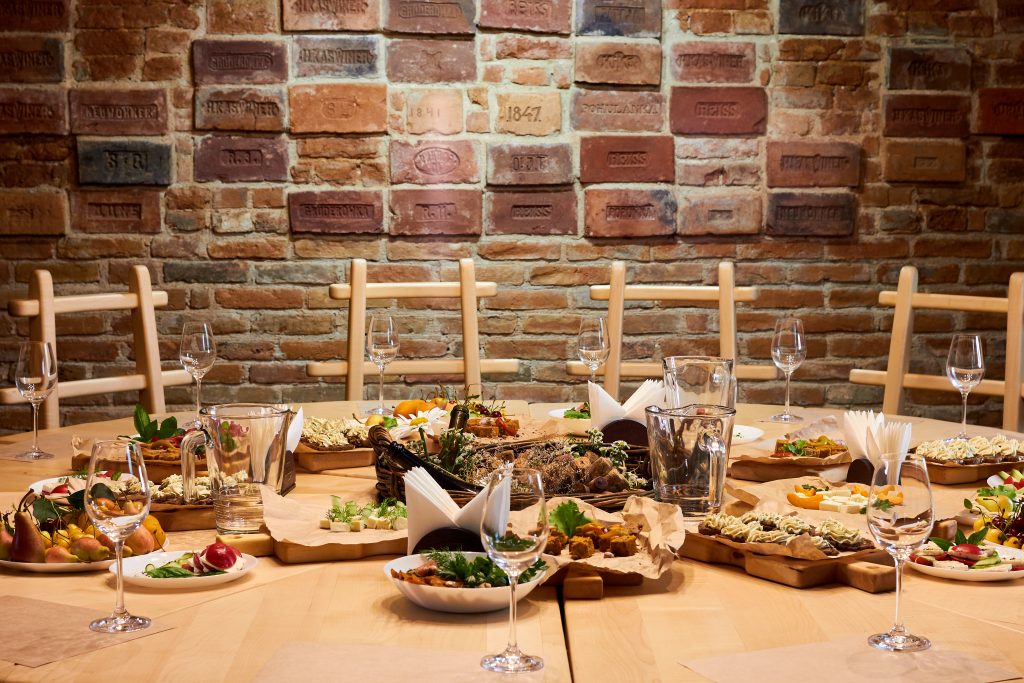
On order for tourist groups, complex dinners-tasting of traditional Bessarabian dishes are offered.