1. To Walk along Odesa Marine Passenger Terminal
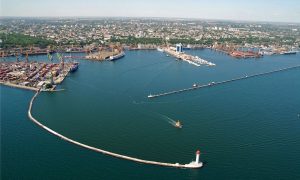
Odesa was built as a trade port. Due to its favorable geographical location, today Odesa is one of the largest ports of the Black and Azov Seas basins, located in the north-western part of the Black Sea on the historically founded merchant ways between East and West.
En integral part of the port is The Vorontsov Lighthouse, which serves mariners for over two centuries. The first lighthouse was built in 1815 at Cape of Big Fountain. Construction was finished by the Governor-General Mikhail Vorontsov. Exactly in his honor the lighthouse has got its name.
2. To Find the House with One Wall
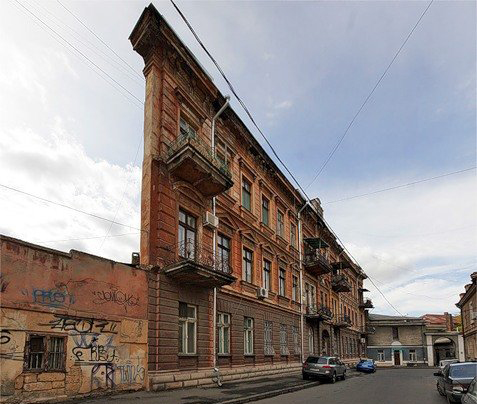
The House with One Wall is the most unusual building in Odesa, its architectural highlight gathers crowds of tourists throughout the year.
If you observe the house from the front side, it seems to be the usual old building with fine hammered balconies, original cornices and stucco work on its walls; it doesn’t differ much from the rest of the edifices of Odesa’s historical part. But if you look at it at the certain angle, the house will present a new image of itself – it gives an impression of being completely flat, consisting only from the facade wall.
This interesting visual effect is caused by an unusual architecture of the edifice. It does not have the back wall and lateral ones are adjacent to the main facade at an acute angle, therefore the building has triangular structure. The same reason serves as a basis for mystical properties and sometimes the edifice is called the Witch’s House.
3. To Count the Number of Steps of Potiomkin Stairs
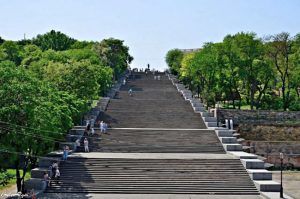
One of the city attractions is Potiomkin Stairs, which got is name thanks to the director Eisenstein. His movie “The Battleship Potiomkin” became the world classic of cinematography and the most tragic moment connected with famous ladder. So did its name appear. The staircase enters the top ten of the most beautiful staircases in Europe. Today the staircase consists of 192 steps (originally there were exactly 200, but with the expansion of the port eight steps were lost) and a dozen spans. The lenght of Potiomkin Stairs is 142 meters, it is created long-ranged – its base (width 21.7 m.) is wider than the upper part (12.5 m.), so that’s why when you look from above the staircase, appears an impression of equal width throughout its length. Railings of the staircase seem to be parallel and you can see only the pace (except the top of the march). When you look from below, staircase seems to be much longer and only a continouos cascade of steps can be seen.
4. To Visit Old Odesa’s Nook
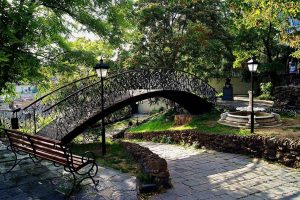
Mini open-air museum that can tell us a bit about the history of the city. It is a place with a collection of some interesting exhibits: the original form of garden furniture, humpbacked bridge with openwork lattice, sculptural decoration, griffin iron art casting, well dated the middle of XIX century. It is a favorite place of taking pictures with the newlyweds.
5. To Check Whether the Bridge of Mother-in-Law’s Really Vibrates
Mother-in-Law’s bridge is a miniature copy of the Bridge of Grand Duchess Charlotte in Luxemburg, which was built in 1965. The first official name og the Mother-in-Law’s bridge – Komsomolsky. But it is hardly known. It’s going tobe called Komsomolsky in the Soviet time, because then boulevard of the Military-Marine Forces (ex-Zhvanetskogo) was called Komsomolsky boulevard. Subsequently, it was named the Captain’s. However, in our time neither one nor the other name does not appear anywhere.
There is story connected with a feature of the bridge. Because of it’s design, it is sensitive for swinging in the wind. If you just stop and listen, you can feel how the bridge “walks” underfoot. And if you jump at the same time together with somebody, it is impossible not to feel the vibrations. It is said that tradition of rocking the bridge was used by student-physicist on the day of the Physics Faculty. So, the bridge swings as mother-in-law’s tongue. In general, fantasy and humor of Odesans are endless!
6. To See the Monument to the Fruit, which Rescued Odesa
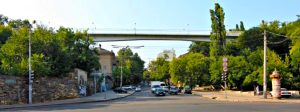
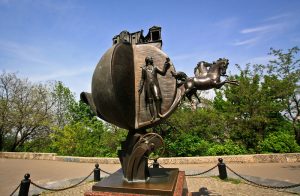
The monument to Orange is not just a monument dedicated to the South fruit, it’s the monument erected in honor of the fruit, which literally saved Odesa. According to legend, at the end of the XVIII century, Empress Catherine II issued a decree on the construction work of a commercial port on the sea. However, this imperial order was never executed during the life of Catherine. Tsar Paul I also did not want to implement it, citing its high costs. Representatives of the Odesa merchants foud out about this and decided to send him many oranges on carts. Such exotic fruits as oranges, in those days were deficient for Odesa citizens. Paul I was very pleased with their taste and cheerful appearance. It was such a generous gift to the ruler that awakened the most wonderful feelings in him, after which he decided to renew his mother’s decree on the development of Odesa and the construction of a commercial port. The funds allocated for this were multiplied many times and the port began to develop rapidly, providing the best opportunities for the flowering of Odesa. The monument to Orange was installed in 2004. The monument is a bronze composition.
7. To Taste Odesa Cuisine
Odesa cuisine is piquant and colorful. It has its own peculiarity and spice! Assimilating the best culinary traditions of the representatives of 130 nationalities, that lived in Odesa, Odesa’s cuisine represents colorful mixture of indigenous cultures and tastes. Fragrant like Greek, spicy like Bulgarian, gourmet like French and hearty like Italian, dishes of Odess cuisine are small culinary masterpieces, delights of the table and pride of each Odesa family!
Natural taste of products is perceptible in any dish and balance proven over the years. The most popular recipes are based on those products, which any Odesa’s home-maker daily can by on “Pryvoz” market. Black sea gives fish and other marine animals; warm climate presents a lot of juicy fruits and vegetables, fertile land affords rich harvests of grain. Also we have a lot of sorts of perfect grapes from which our wine-yards make astonishing wine.

8. To Taste Local Wine
Most of the wineries located outside the city. Many vineyards in our region are located at the same latitude as the great wine regions of Bordeaux and Bourgogne. In different countries of the world at this latitude winemakers produce Great Wines.
Wines of the Odesa region is famous far beyond the borders of Ukraine and wins awards at prestigious international tasting competitions.

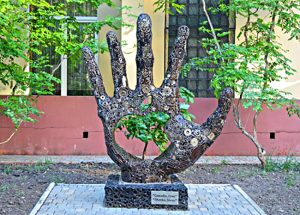
9. Captar Wi-Fi junto al monumento a Steve Jobs
Los iniciadores de la instalación del monumento a Steve Jobs en Odesa fueron los estudiantes y el rectorado de la Academia Estatal de Regulación Técnica de la Calidad. Para su emplazamiento se eligió el territorio frente a la fachada de la residencia estudiantil de la Academia, en la calle Novoselskogo.
El monumento fue inaugurado solemnemente el 5 de octubre de 2012, en el primer aniversario de la muerte de Jobs. En la propia escultura está integrado un dispositivo que permite a las personas cercanas tener acceso gratuito a Internet en modo Wi-Fi. En la parte frontal del monumento, en el pedestal, hay una placa con la inscripción en ruso e inglés: «Gracias, Steve».
10. To Haggle on the Pryvoz Market
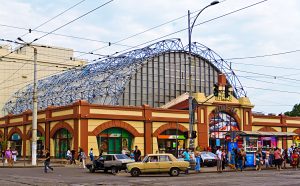
The famous Odesa Pryvoz – is a colorful market, where “you can buy everything”, is one of the symbols of Odessa. Built in the first half of XIX century on Pryvozna area as a branch of the Old Bazaar, Pryvoz originally intended for trading “on wheels”, which means with carts. Only at the end of XIX century there appeared the capital structure, and Pryvoz gradually became the main market of Odesa. It is considered as one of the biggest markets in Europe.
175 years have passed, but this famous Odesa market remains the biggest, nosiest, colorful and crowded…
11. To Come over the Odesa Courtyards
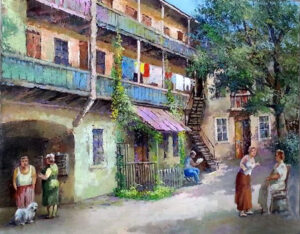
Odesa courtyards are a unique phenomenon, which still exists in the only corner of the globe where you return to, wherever fate would throw you. In fact, Odesa courtyards are somewhere between a hallway and a common vestibule. Feasts often take place in them on occasion or without chance, on spring or summer afternoon on staircases that surround the courtyard, and Odesans are going to take a breath of fresh air and listen to new gossip. In such courtyards, life is measured and unhurried.
12. Discover Who Invented the World’s First Cinecamera
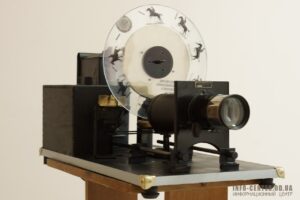
It is considered that the date of birth of cinema is well known – 1895. That year took place two main events in the history of “the tenth Muse”: on the 13th of February, brothers Lui and Ogjust Lumiere for the first time officially announced the invention of the movie camera and got a patent and on the 28th of December made the world’s first paid public screening in the basement of a Parisian “Grand café” located on the Boulevard des Capucines.
Less known in that the Ukranian inventor Joseph Timchenko, a mechanic of the Odesa University, created a movie camera of his own design two years earlier – in 1893. On January 9, 1894, the camera of J. Timchenko was presented for the first time to the public. The astonished audience saw on the screen galloping cavalry and javelin thrower. Two days later, on the 11th of January, 1894, was published a Protocol of that, without exaggeration, historic session, recorded the fact and date of the first public film demonstration in the history…
The secrets of filmmaking, from inception of the film concept to its embodiment on the screen, are possible to discover in the unique Museum of the Movie Exposition of the Odesa Film Studio.
13. Taste Mineral Water from a Healing Spring
Mineral water “Odeska No. 1” has no analogues in the world in terms of its chemical composition. Its healing properties have not yet been fully studied. As a result of recent research, silver ions have been discovered in it. This means that, in addition to other qualities, it also possesses bactericidal properties.
The medicinal drinking water has unique effects: it provides choleretic and diuretic action, regulates stomach acidity and the motility of the gastrointestinal tract, and improves the function of the pancreas.
You can try it at the Clinical Sanatorium named after M. Gorky, which owns three of its own wells of this healing water.
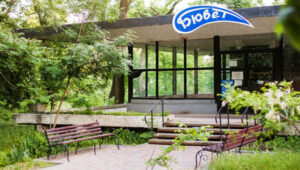
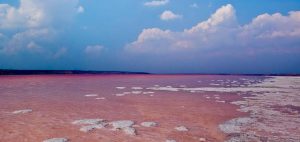
14. Extract Healing Mud from the Kuialnyk Estuary
The effectiveness and uniqueness of the Kuialnyk Estuary mud are renowned throughout Europe. Its therapeutic effect can only be compared to that of the Dead Sea mud.
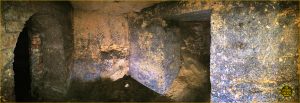
15. To Learn the Legends of Odesa Catacombs
Odesa catacombs – phenomenon fanned by a variety of mysteries and legends. It tunnels of different origin and destination. Most of the Odesa catacombs constitute ancient quarry-mine (~ 95%) of which are quarried stone for the construction of the city. Odesa catacombs also include drainage tunnels, “Mines” – the old cellars for various purposes, military bunkers, all sorts of mysterious underground tunnels and real natural caves. To understand the intertwining of subterranean cavities of various origins, it is difficult at times even to the inhabitants of Odesa. Dungeons stored in itself interesting traces of bygone eras of the city. The very presence in the catacombs shall not forgotten impressions.
16. Seat in the City Garden
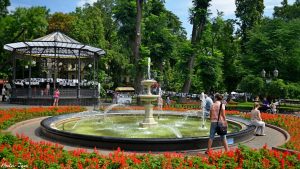
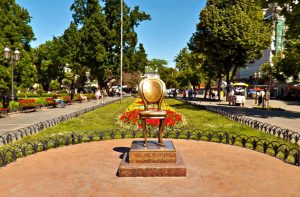
City Garden are called the heart of Odessa. The brother of the founder of the city Joseph de Ribas, Felix, gave it to the on the 10th of November, 1806. From the side of Deribasivska Street, entrance to the garden is guarded by a bronze lion’s family, that was brought to Odesa from France in the XIX century. In the Garden you can sit on a bench with Leonid Utiosov, to see one of the “twelve” chairs. In the center of garden locates musical fountain, jets of which change the height depending on the rhythms of melodies.
17. To Have a Seat on the Twelfth Chair
Where else you can sit on the 12th chair from the headset of Madame Petukhova? Right on the Deribasivska Street is a monument to the last, 12th chair from the novel of Ilf and Petrov.
Novel of Odesites Ilf and Petrov’s “12 Chairs” was filmed more that 18 times, inkluding Cuba, Iran, Sweden and Brazil. The novel was written in 1928 and the first adaptation was alredy filmed in 1933, when the film of Poland and Chekhoslovakia’s production was released.
Almost all of the film adaptations were adapted to local realities: Brazilians saw Ostap Bender a girl-dabser from variety show, Americans – coach of flea runs. This work is filled with Odesa humor.
18. Count Haw Many Names Are on the Alley of Fame
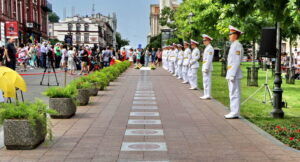
Odesa is rich in cultural and historical heritage, unique landmarks, wonderful humor, and, of course, has given the world many outstanding personalities. Distinguished figures of culture, art, literature, and music lived and created here, thanks to whom Odesa became known worldwide.
This is a tradition of immortalizing the names of prominent Odesans who made an invaluable contribution to the development of the city’s culture. The first commemorative plaque is dedicated directly to the city itself—the “Odesa” star. Others honor famous Odesans: Anna Akhmatova, Yuri Olesha, Isaac Babel, Mikhail Zhvanetsky and Kira Muratova, Leonid Utyosov, Sasha Chorny, Sviatoslav Richter, and others.
19. To Visit Odesa Opera and Ballet House
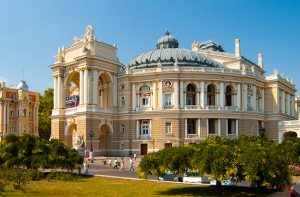
According to Forbes Magazine. the edifice of the Odesa National Opera and Ballet Theatre is one of the 11 most interesting sights in the Eastern Europe, and it is the only theatre in the list.
In the 1874, two Viennese architects Ferdinand Felner and Herman Helmer, who had already created the theatre buildings in Vienna, Budapest and other European cities, took up the constructions. The Felner and Helmer`s design was not detailed and the architects did not come to Odesa during the construction period. The best local architects. in particular Felix Gonsiorovsky, Alexander Bernardazzi and Yuri Dmytrenko, had to revise and amend the design project.
The splendor and luxury of the interior strikes. Baroque details carry us into a wonderful word and were “intended for the creation of spiritual ecstasy” (as it in noted in one of the articles about the theatre). Generously gilded molding, magnificent sculptures, and a great number of mirrors – everything pulls a person out of ordinaries and into the enchanting word of music and theatre. Plafonds of the auditorium are decorated with four pictures of Viennese painter, N. Lefter, on the themes of Shakespeare`s works “Hamlet”, “A Midsummer Night`s Dream”, “The Winter`s Tale” and “Twelfth Night”. Meanwhile, the huge festive chandelier above the auditorium, suspended to be weightless, weight about two tons.
20. To Visit Sculptures Garden
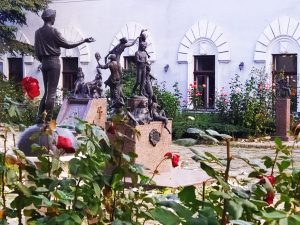
Garden of the Literary Museum is a hallmark of Odesa. Here are sculptures of almost all legendary Odesa citizens.
At Humorina on the 1st of April 2000 a monument to “Odesa-mama” was unveiled. There are also humorous sculptures devoted to literary heroes and iconic characters of the urban folklore made by contemporary sculptures: “Rabinovich”, “Antilopa Gnu”, “Monument to the genius of the future”, “Sashka-musician”, “Duke in jeans”, “Green Van”, “Odesit Misha”, “Barges full of mullet”, “Monument to the unknown reader”, a monument to Ilya Ilf and Yevgeny Petrov, etc. Lanzheronivska Str., 2.
21. To Have a Ride on the Most Famous Observation Wheel in Europe
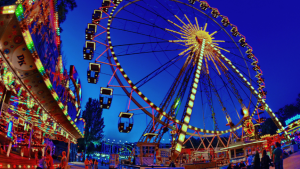
The observation wheel was opened in 2011 in the Odesa Central Park named after T.G. Shevchenko. Guests and residents of the “Pearle of the Sea” has a unique opportunity to get an unforgettable experience, seeing the beauty of Odesa at bird`s eye panorama! The symbol of Odesa bright sun – an observation wheel – was included in the list of the most famous observation wheel in Europe. It is the tallest wheel in Ukraine.
22. See the Sunrise at the Beach
The beach in Odesa lasts about 5 month: from May to mid September. At this time the water temperature off the coast is from 17-18 to 24-25 degrees.
The total length of the beach are of the city is 30km. Among the coastal beaches of Odesa, the most popular are Arcadia, Lanzheron, Otrada, Golden Coast, “Luzanovka”, “Dolphin”, “Chaika”, etc.
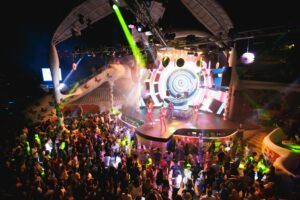
Arcadia – is a Mecca of the night club life of Ukraine. Many large and famous night clubs are popular not only among citizen of Odesa and among the guests of the city, attract here hundred thousand of tourist throughout the summer.
23. Walking along the Lanzheron Quay
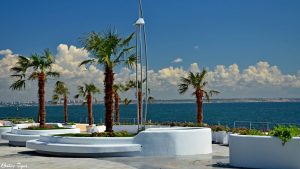
Today, Lanzheron is a favorite place for Odesa citizens to walk all year round. There you can feed flocks of seagulls, cool of near splashing fountains on a hot day.
Previously, there was the cottage of the Novorossiysk governor Alexander Lanzheron, that later gave the name of the area. Today, only the arch remains from the old buildings that were made by architects Franz Boffo in 1830.
The Dolphinarium “Nemo” is located in Lanzheron area. There you cannot only watch the dolphins during the performance, but also swim with these funny sea creatures.
24. Meet the Most Famous Frenchman in Odesa
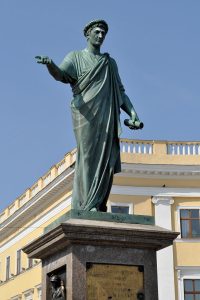
There is no mayor more respected by Odesa citizens than the famous Duke de Richelieu (Armand-Emmanuel Sophie Septimanie de Vignerot du Plessis, 5th Duke of Richelieu and Fronsac). Thanks to his efforts, Odessa turned from a small port settlement into a luxurious city that coud complete with European capitals in beauty and wealth. Over the 11 years of his rule (1803-1814), city revenues increased 25 times and customs revenues 90 times. Soon Richelieu was called by Louis XVIII to France, where he was twice appointed head of government. In 1828, Odesa citizens, at their own expense, erected a bronze monument to their beloved Duke.
The original semi-cercular buildings frame the monument. They were built according to the plan of the famous Petersburg architect Abraham Melnikov in the 1930s XIX century in fashionable style of classicism at the time. In one building (at Prymorsky Boulevard, 7), the so-called “offices” were located at different times – the Odesa City Council, a public charity order, a building committee, a commercial court and other administrative institutions. The second building (on Prymorsky Boulevard, 8) originally belonged to a private person. In 1840 it was turned into a fashionable Petersburg hotel, where famous guests of the city liked to stay.
The monument to Duke de Richelieu against the background of yellow semi-circular buildings and the Potiomkin Stairs are the most recognizable architectural ensemble of Odesa.
25. To Visit Vorontsov Palace
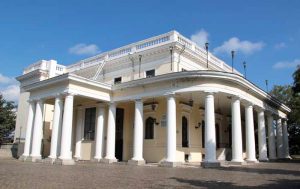
The magnificent palace, in the Empire style, was built in 1827 by the project of architect Francesco Boffo. The palace used to be the residence of Michail Vorontsov, who has served as a governor-general of the Novorossiya region.
The palace was always full of life: there held balls and audiences, there was always lights in large palace windows and front doors were wide open, there were speech in all European languages and there were talks about politics, trade and obviously about love.
26. Sense the Water Breeze near Vorontsov Colonnade
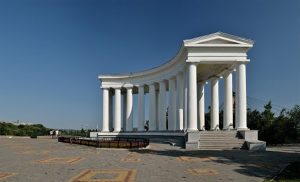
Arbor with columns in the antique style is one of the Odesa symbols; it is also known as the Colonnade. It was built in 1826-1828 as an orangery of Vorontsov Palace by the project of architect Francesco Boffo. The colonnade is located on the edge of the hill and offer a breathtaking view of the Odesa harbor with silhouettes of port cranes and docks on the coast.
27. Listen to the Melody of the Odesa City Council Clock
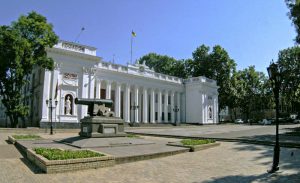
The Odesa City Council building is an architectural centerpiece of Prymorsky Boulevard, which is built in the style of classicism. The building was constructed by the project of Franz Boffo and Gregorio Torricelli in 1837. Originally, it was the building of the first Odesa trading venue. Its main activity was the sale of grain and flour-milling products.
Above the entrance, there is a massive clock, which was made by the English firm “Smith and Sons” in 1868. Above it there are two female figures – Day and Night, they symbolize the eternity of time. Every half hour the clock plays the melody “Odesa, my hometown” from the operetta “The White Acacia” by Isaak Dunaievsky, which is the anthem of Odesa.
28. Ride in the Largest Skate Park in Ukraine
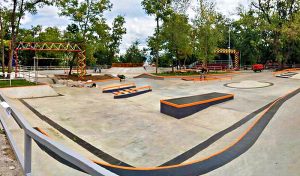
In Odesa, the stationary platform for practicing extreme sport located between the stadium “Chornomorets” and Alley in the T.G. Shevchenko park. It is the largest in Ukraine (its area is more than 1000 m2). Four-level skating-ring of durable and safe cover with fascinating facilities for performing tricks invites extreme people and sports fans to ride on rollers, skateboards and bicycles.
29. Touch the Ancient Fortress
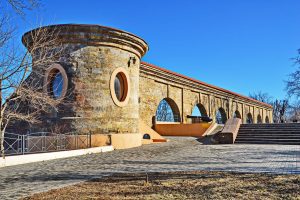
Walking through the Shevchenko park, you can see the old arcade wall with a turret. More than 200 years ago, the Turkish defensive line was located on this territory. In 1793, in its place laid the Odesa fortress, which existed for about 20 years, which did not give the Turks the opportunity to regain the bay and allowed to build a harbor and the city. In 1811, the fortress was abolished and quarantined; some parts of it have survived to this day: the powder tower and the arcade. The Quarantine Harbor was located at the bottom of the arcade, in which ships arriving in Odesa defended for about 2 weeks in order to prevent the spread of the plague epidemic. After the quarantine was canceled and the planning of a new park began, the quarantine wall became a popular viewing platform.
30. To Run along the Health Route
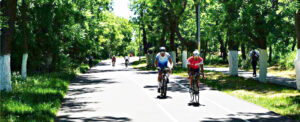
The Health Route is a special recreational object for Odesa citizens. Already the name of the route tells about its purpose: here cyclists, rollers, sport lovers are jogging and hikingin winter and summer. However, before you go on a hike or jog, calculate your strength, because the length of the route is more than 6 kilometers. It stretches from the Shevchenko Park through the famous beaches – Lanzheron, Otrada and Arcadia. Here you can rent a bike or ride an electric car. Along the entire route there are sports fields, cycling slides and simply picturesque slopes where you can enjoy nature and seascapes.
31. Walk around Turkey and Greece in the Center of Odesa
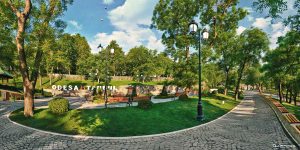
At the bottom of Prymorsky Boulevard, the favorite pedestrian thruway of Odesa, located unusual green corners – Istanbul and Greek Park. They are connected by a tunnel under the famous Potiomkin Stairs. This is a piece of Turkey and Greece, their history and culture, in the center of Odesa.
Istanbul Park is a gift from the Istanbul municipality on the occasion of the 20th anniversary of fraternity. It is a very well-kept green area with a picturesque landscape design, where there are many comfortable benches, arbors, recreation areas with tables, children’s and sports grounds, a pump-room and a unique fountain – Diana’s Grotto.
Its garden neighbor, on the left side of the Potiomkin Stairs, is the Greek Park. It is an expression of gratitude to the city from the Greek diaspora in Odesa. Here you can see copies of ancient Greek statues from the famous Acropolis Museum, the fountain “Beginning of Beginning”, which symbolizes the universe, and many other Greek artifacts from Greek mythology.
32. Invite Someone on a Date to Taras Shevchenko Park
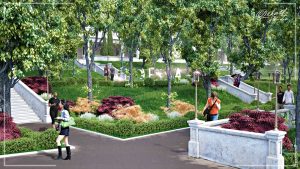
The largest and oldest park in Odesa was opened in 1875 and was originally named Alexander Park in honor of Emperor Alexander I’s visit to the city, during which he personally planted an oak tree here. In 1920, the park was renamed after the famous Ukrainian poet Taras Hryhorovych Shevchenko, whose monument rises near the central entrance. Around the monument are art benches, each inscribed with lines from the great poet’s works.
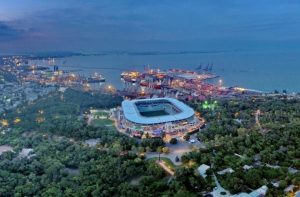
Within its nearly 45 hectares of greenery lie the Alley of Glory—a memorial complex honoring those who fell during World War II, the Green Theater—an amphitheater that hosts literary gatherings, concerts, fairs, and gastronomic festivals, and, near the park’s gentle slopes, the largest stadium in Southern Ukraine, “Chornomorets,” home arena of the football team of the same name.
33. Open the Door to the House of the Sun
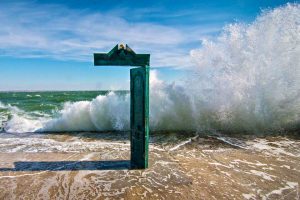
An unusual sculpture “The House of the Sun” is installed on the Lanzheron Embankment. It is made in the form of an old Odesa door with the inscription “Domus Solis”. The door is slightly open to the east and through it in the morning you can watch the rising sun, which hurries to warm the excited heart of Odesa – the Black Sea. The bronze sculpture has a wooden prototype – the door, the life of which stretched over two centuries. In the 19th century, it decorated the main entrance of the house on the street Richelievska 21, and with honor welcomed and escorted the guests to the house. Here, on Lanzeron Embarkment, the most secret desires are made, which, according to eyewitnesses, are surely fulfilled.
34. Take a Selfie with City Sculptures
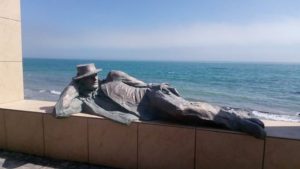
Odesa is opened to the art, which has provided modern sculptors its streets as an exhibition hall for realized art objects. They harmoniously fit into the urban space, without violating the well-established architectural ensembles. Here you can find the banker from the Deribasivska street, and colorful giant snails, that walking near the beach at the 14th Big Fountain station, and the Odesa “dreamer” on the embankment between the 15th and 16th stations of the Big Fountain, and many other interesting sculptures. Not all such works of art have a name, giving viewer the opportunity to up with it himself.
35. To Get Inspired by the Murals of the Odesa Buildings
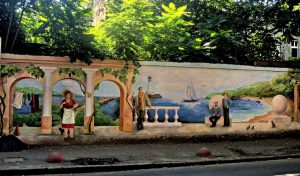
There is a project Odesarium, in which foreign and Ukrainian artists decorate the blank walls of Odesa houses with magnificent murals. Monumental street art objects symbolically tell about the life of the city, convey its unique atmosphere and inspire the residents and visitors of the city.
Murals are located in various parts of the city. You can found fiery water horse on French Boulevard, watch a loving couple in Pyrogovsky lane etc.
36. To Find Odesa Cats
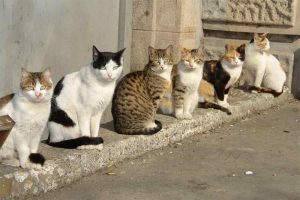
Cats for Odesa citizens have always been not just animals, but sterling residents of the city. There are really a lot of them in Odesa, and they all look pretty plump. Footloose fluffy cats live mainly in Odessa yards, port docks and in the famous market Pryvoz. But their sculptural statuaries playfully hide around the noisy metropolis, inviting you to find them.