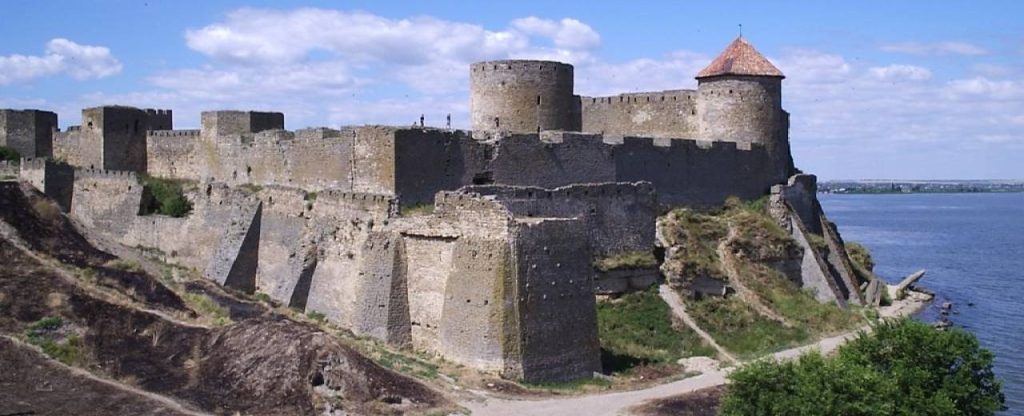
Akkerman Fortress
Bilhorod-Dnisrovskyi. Odesa region
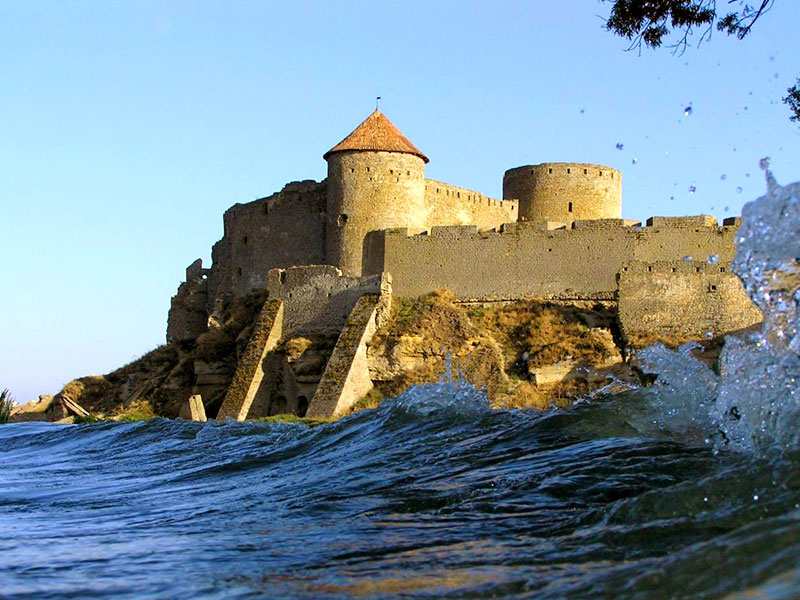
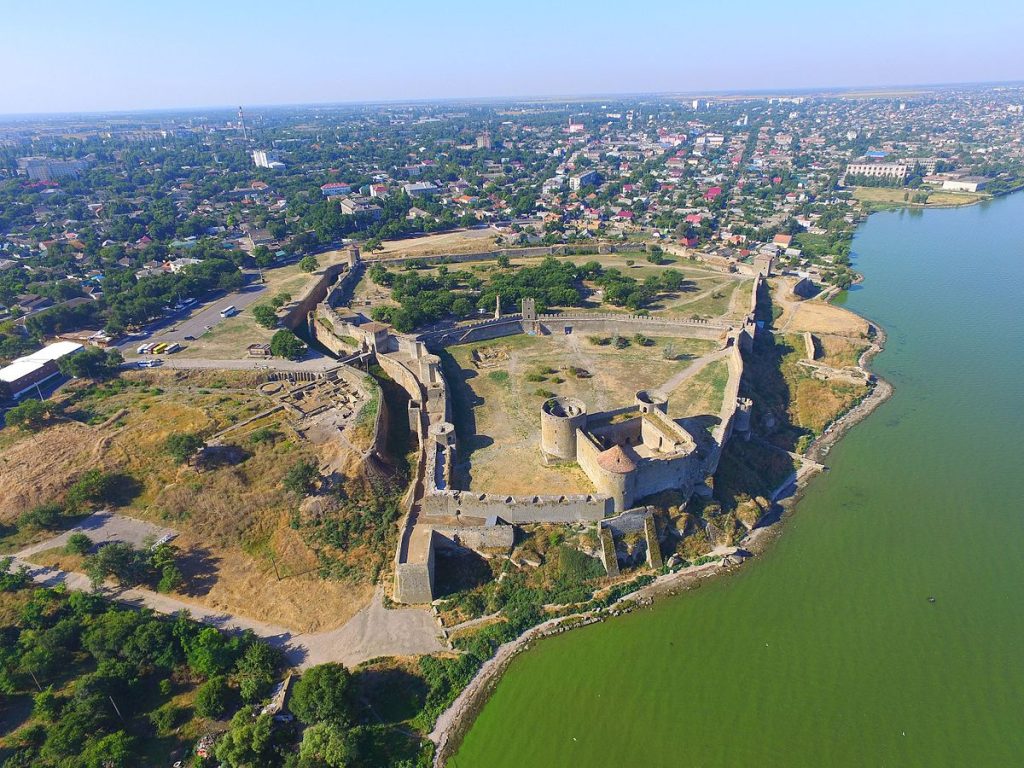
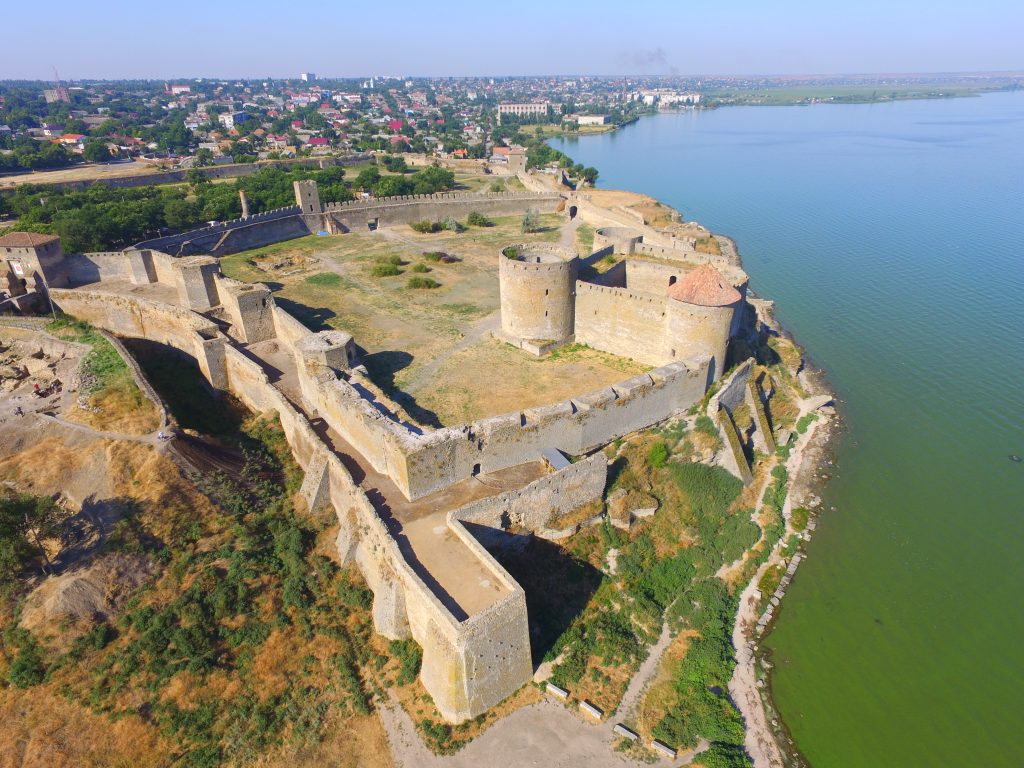
During 2500-year history, city of Bilhorod-Dnistrovskyi get a great history, survive a lot of historical eras, his numerous names testify about moving and changing of people, but coasts of fast Dniester was always densely populated.
History of city of Bilhorod-Dnistrovskyi begins at the end of 6th century B.C., when people from Asia Minor city of Miletus on west coast of Dniester established city of Tyras. The remains of Ancient Thira, what was located in place of current Bilhorod-Dnistrovskyi, are unique historical and cultural monument. Over, almost a thousand years of history, Tyras experienced many invasions – Gets, Goths, Huns; in the first centuries of our era city is part of the Roman Empire and its name was changed to Alba-Lulia. The early Slavs name it city of Turis, Uliches and Tivertsi –Belgorod.
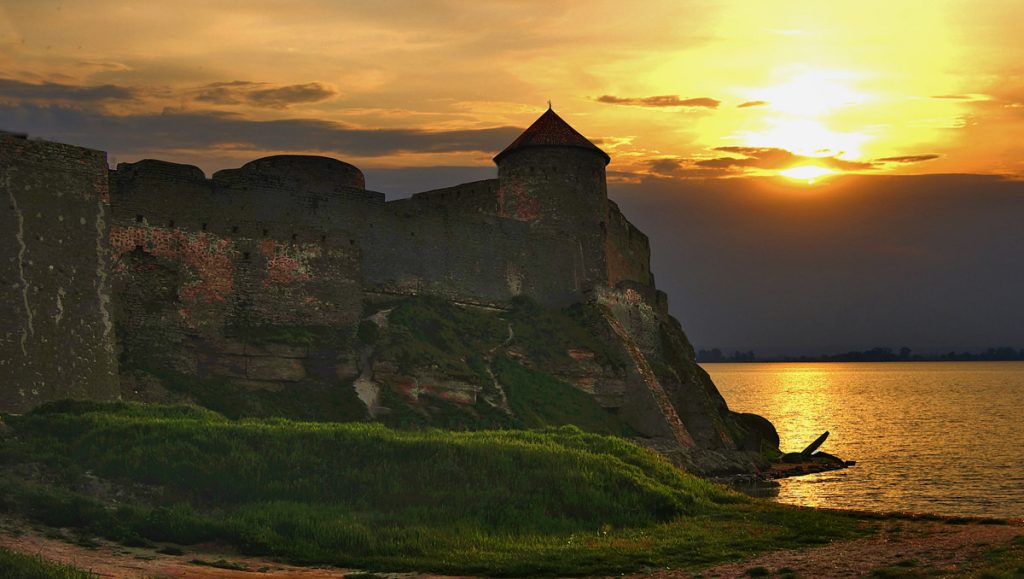
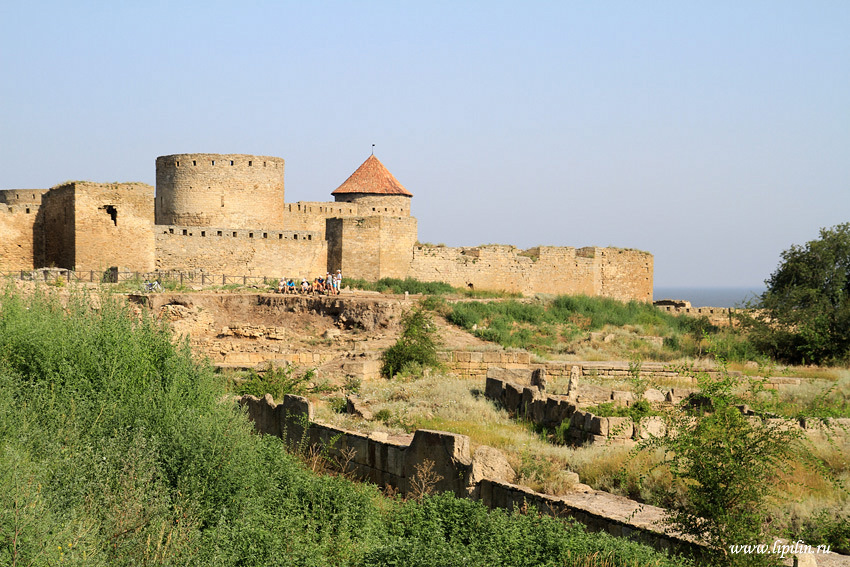
In the 12th century, Belgorod is part of the Kingdom of Galicia–Volhynia , since 1214- under the reign of the Kingdom of Hungary. In the end of the 14th century city is part of Moldavia and its named Cetatea Alba. The city has become the main port of principality and the capital of the southern provinces of Moldavia. By this time the building a powerful fortress was finished, this is one of the most outstanding and interesting monument of defense architecture of the Middle Aged. First of all, the construction of that kind of fortification was connected with political instability in the region. There are different versions about the time when fortress was build.
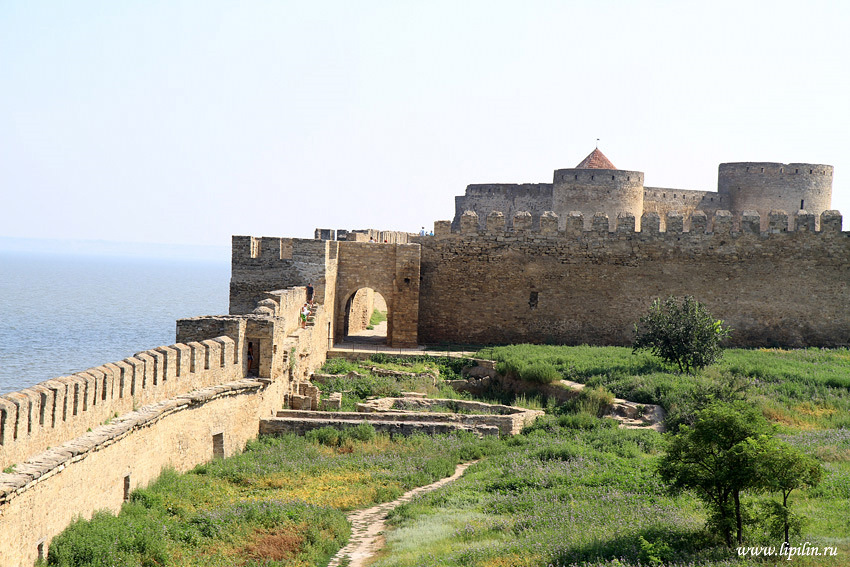
Some consider that its Turkish fortress, some – Moldavian, but citadel – Genoese. It was building almost 200 years (13-15 centuries). At all times fortress admired, expressed with power and inaccessibility. Fortress was build on the on the high, rocky coast of Dniester Estuary – from the local stone – limestone, , in plan is an irregular polygon with an area of just over 9 hectares. Rising to the side of the walls, you can walk around the fortress perimeter and learn about constructional and architectural features of defensive line.
In the 15th century Ottoman Empire made several attempts to take a city and the fortress. The most serious and brutal attempt was made at august o 1418, when 300 thousand army of Turkish sultan Bayezid II, 50 thousand army of khan Menli-Giray and 100 warships lay siege to fortress from side of land and estuary. Assaulters swamped deep citadel, dig trenches for artillery, fired from all sides, and then went to the assault. And after desperate resistance, defenders of fortress were forced to give it to the enemies. Turkish authority was established for a lond 328 years and the city started to have another name – Akkerman ( white stone), and started to be the center of Akkerman sanjak. The Ottoman Empire made Akkerman one of its strongholds in the north. Subsequently, the city became the target of relentless attacks by Zaporizhian Cossacks, Moldavians, and Poles. Yet, Akkerman remained an impregnable fortress. The fortress also drew attention from the vassals of the Ottoman Empire—the Crimean Tatars. Akkerman often served as their base during campaigns, and the Crimean Khan, Islam II Giray, even died within the fortress and was buried in a mosque, of which only the minaret remains today. During the long Ottoman rule, the fortress was repeatedly expanded and reinforced in line with the latest fortification technologies. In 1657, Melek Ahmed Pasha significantly strengthened the fortress. In 1707, the Ottomans invited French military engineers, who helped build a new bastion line. Starting from 1756, fortification and construction in the fortress occurred almost annually.
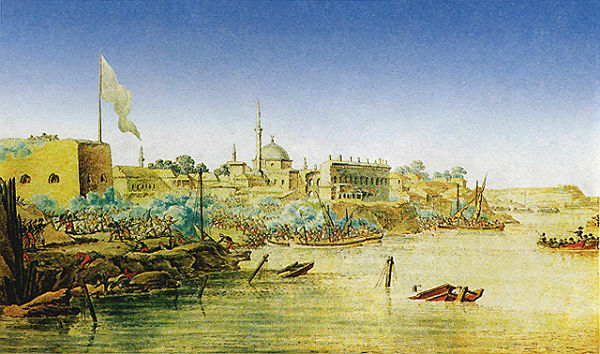
In the 18th century, Russia transformed into an empire with significant territorial ambitions in the system of international relations. The events of three Russian-Turkish wars affected the territory of the south of Russia. In 1770, after a 10-day siege, armies of brigadier-general I.A. Igelstrem- at the first time took the city. In 1789 – the assault of the fortress was carried out by troops under the command of G. Potemkin, the units of the Black Sea Fleet were commanded by F.F. Ushakov, M. Kutuzov, M. Platov, Barclay de Tolly. In 1832, the fortress was abolished as a military-defensive structure, and in 1896 it was declared a historical and architectural monument.
Today, the Bilhorod-Dnistrovskyi fortress is a national monument, it attract numerous tourists, song festivals take place here, walls of the fortress are “stormed” in theatrical performances, and you can participate in jousting.
Izmail Fortress
Izmail. Odesa region
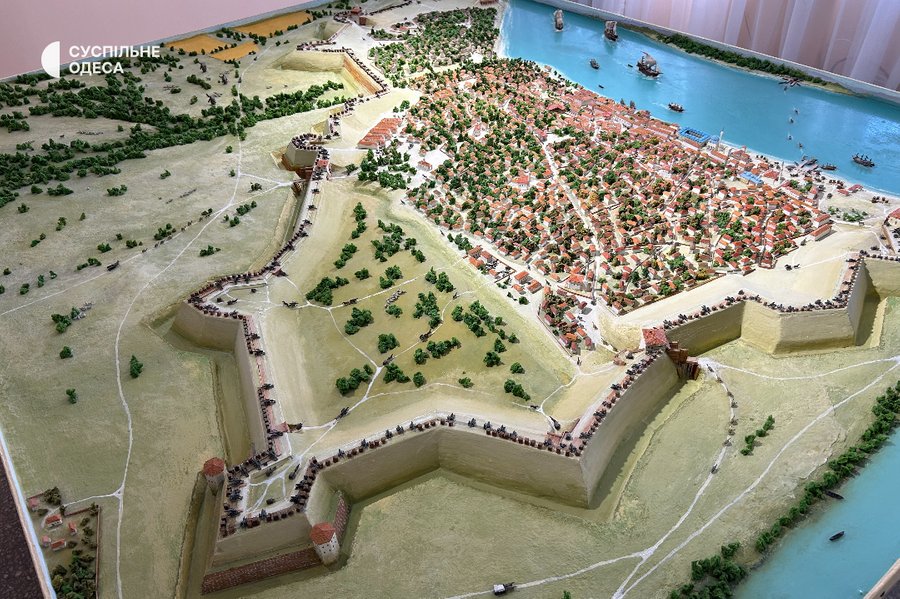
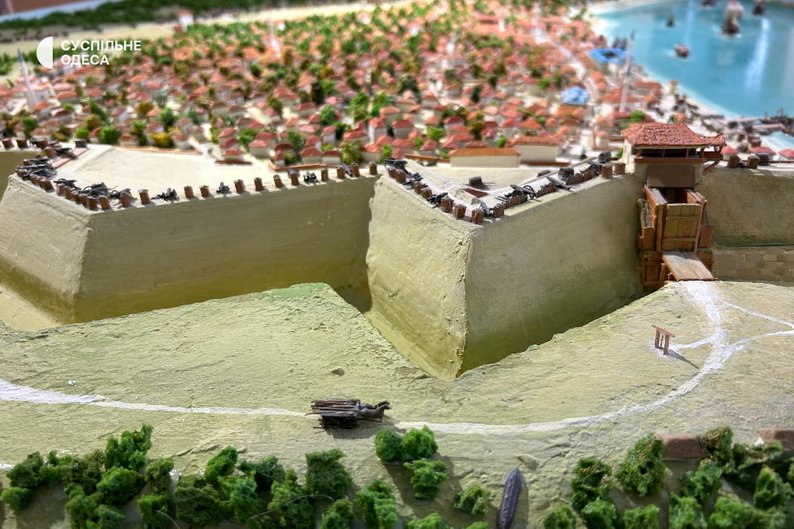
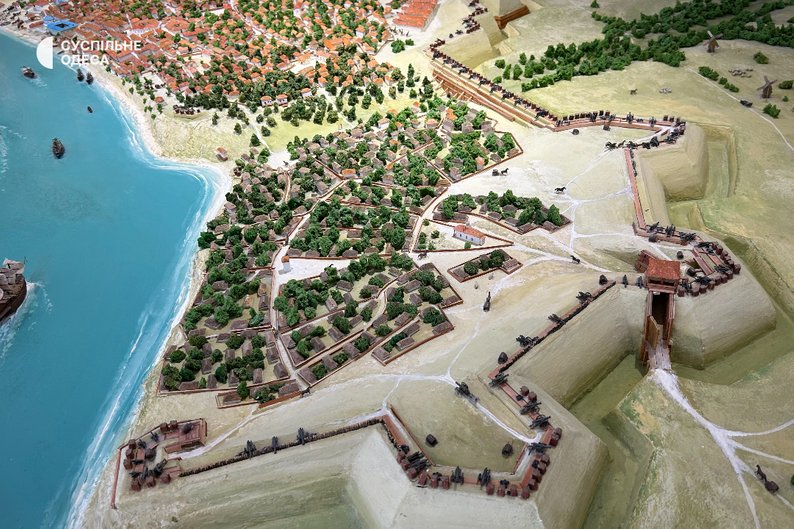
The citadel was built by the Turks on the territory of present-day Izmail, on a massive hill overlooking the Danube River. It was shaped as an irregular triangle and was protected on three sides by earthen ramparts six kilometers in length and between six and eight meters in height. On the southern side, the fortress was naturally defended by the waters of the Danube. Inside the citadel stood numerous earthworks and three stone bastions. For a long time, the fortification served a defensive function and acted as a stronghold of the Ottoman Empire along its northern frontier.
Information about the capture of the fortress by the Russian general Alexander Suvorov in 1790 is widely known. Few people, however, are aware that the Izmail fortress was first taken by Cossacks under the command of Severyn Nalyvaiko in 1595, and then a second time by the same Cossacks, led by Petro Sahaidachny, in 1609. The Zaporizhian Cossacks organized campaigns against the Turks and frequently attacked Bilhorod, Kiliia, and Izmail. In doing so, they inflicted considerable economic losses on their opponents and prevented raids on Ukrainian lands.
In the eighteenth century, after the fortress was once again taken over by the Turks, a decision was made to strengthen it. During the modernization, the most durable materials were used, and the finest German and French engineers of the time were invited to design the project. At that time, in the south-eastern part of the fortress, the Cavalier Bastion was erected in the form of a pentagonal fortification with a tower. By 1791, the Izmail fortress had become the most powerful defensive structure in all of Europe. The area of the citadel covered approximately 170 hectares, and its perimeter reached twelve kilometers.
The massive walls of the fortress were destroyed during the Russo-Turkish War. By the end of the nineteenth century, with the development of long-range artillery, the Izmail fortress lost its defensive significance. Thereafter, the territory of the fortifications was used first as a Russian cemetery and later as a Romanian cemetery. The remains of the bastion are still visible today. Within the historical complex, fragments of the earthen ramparts and a massive defensive moat have been preserved; the moat reaches a depth of eleven meters.
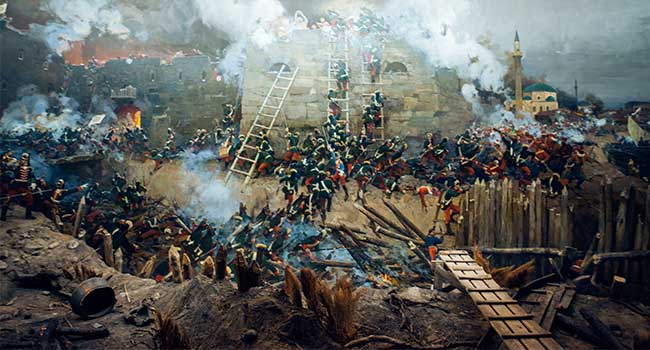
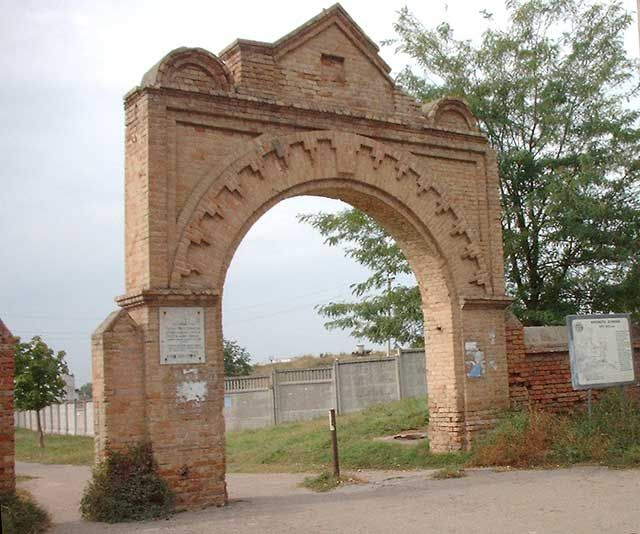
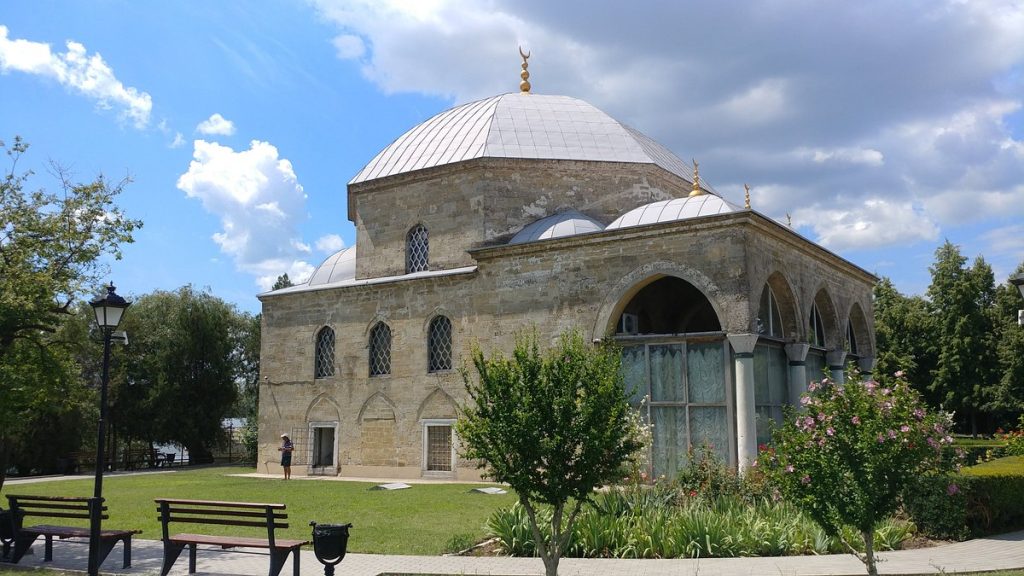
Historians have made efforts to restore the monumentality of the fortress in historical memory. In one of the oldest mosques of historic Izmail, a diorama depicting the assault on the citadel was created in 1973. The backdrop of this large-scale battle scene features the fortress walls, rendered with striking grandeur. Since the fortress itself has not survived to the present day, the Izmail Memorial Park-Museum “Fortress” was established on the site of its former location. Within the park-museum, visitors can see a sixteenth-century mosque that has been preserved to this day, as well as the gates of the former cemeteries. One of them, built of red brick, serves as the entrance to the Monastery of Saint Nicholas, dating from the seventeenth to the nineteenth century, which is situated on the grounds of the park-museum. Guided tours are conducted here, and the diorama of the assault on the fortress is on display.
Kuris Castle
Odesa region
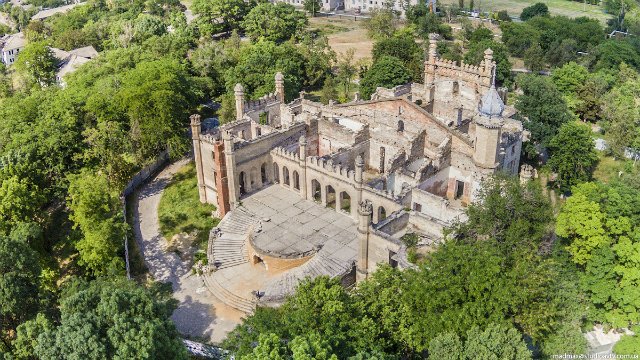
The palace is considered an architectural monument of the Odesa region. Initially, the estate belonged to Mr. Suvorov, the head of the chancellery. Over the years, the palace passed to the head of the secret department, Colonel Ivan Kuris, and later to his son. Iraklii Ivanovich renovated and significantly expanded the castle. Around the estate, he ordered the construction of a windmill, houses for workers, and a horse farm, the building of which can still be seen today. After Iraklii Ivanovich, the palace passed to his son, the collector Ivan Irakliiovich. His tenure is considered the best period in the history of the village and the family palace.
The palace was built in two stages. The eastern part was constructed in the early 18th century, but the identity of the architect is unknown. Local rumors suggested that the lieutenant colonel had invited a master from distant France. The first castle likely featured delicate finishing and porticos with columns, which did not survive later restorations. In the 1790s, under the direction of local architect M. Tolvinsky, construction of the western part began, with windows overlooking the pond. The builders added a third floor, additional towers, neat balconies, and a round Islamic tower.
The architecture prominently features a Neo-Moorish style. The castle was built from shell limestone. The structure had vivid Gothic elements and resembled a medieval palace. The palace’s architecture is characterized by round and conical shapes, with meteorological instruments placed on the roofs to measure wind direction. At the end of the palace, there are arched entrances framed with decorative moldings. The castle has terraces of various sizes with smooth semicircular protrusions. On both sides of the terraces, there are rounded mirrored staircases. The steps lead to an English park on the western side of the estate. The palace windows are rectangular with smooth circular transitions. The walls are textured, adorned with crenellations in the shape of a trefoil. From the central entrance, one can access a vast grand hall, which is unique as it was designed without windows. The hall is illuminated by overhead light and features four-sided half-columns and delicate murals that enhance the interior.