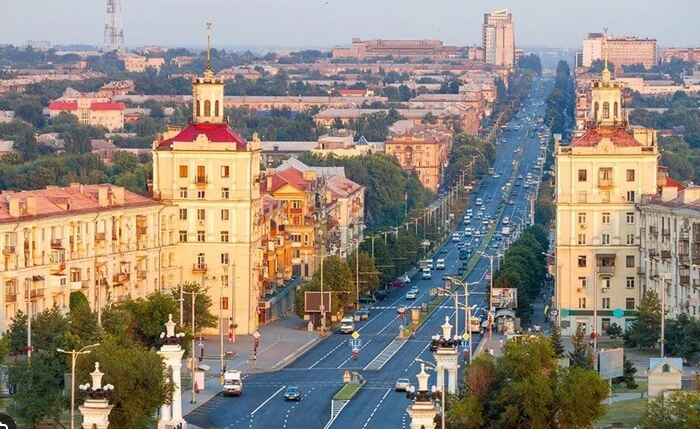
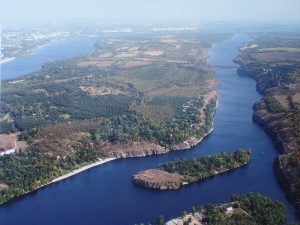
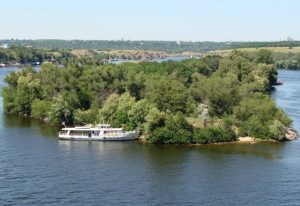
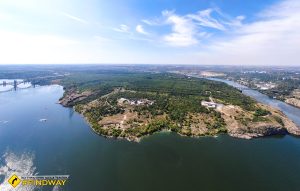
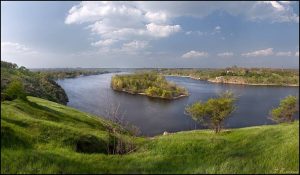
Zaporizhzhia is the cradle of the Ukrainian Cossacks — a city stretching along both banks of the Dnipro River. Although it is often perceived primarily as the country’s largest industrial center, it attracts visitors not only from across Ukraine but also from abroad, including both neighboring and more distant countries. This is largely due to the opportunity to explore Khortytsia, the largest island on the Dnipro, which holds the secrets of history and captivates visitors with its unique natural landscapes. Yet Khortytsia is not the only reason why Zaporizhzhia has every right to be proud…
1. National Reserve “Khortytsia”
From the earliest times, Khortytsia has drawn people to its shores. The first human presence on the island dates to the Paleolithic and Mesolithic periods, as evidenced by the discovery of stone tools from those eras. Archaeological research confirms that the island and its surroundings were also inhabited during the Neolithic and Eneolithic periods, from the seventh to the third millennium before the Common Era. From that time onward, Khortytsia remained continuously within the sphere of human activity, and every subsequent historical epoch left visible traces of its presence here.
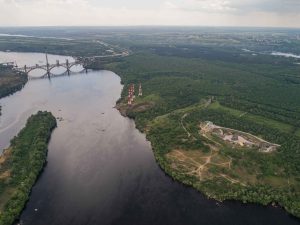
During the Bronze Age, from the third to the second millennium before the Common Era, the island was inhabited by agricultural tribes who left behind numerous settlements, stone fortifications, burial sites, and ritual structures, including sanctuaries. In 2005, during archaeological excavations conducted at the construction site of the new bridge piers across the Dnipro River on the eastern bank of the island, archaeologists uncovered the oldest known remains of stone residential structures in the Zaporizhzhia region, dating back more than three thousand five hundred years.
From the seventh century before the Common Era to the third century of the Common Era, Iranian-speaking nomadic peoples such as the Cimmerians, Scythians, and Sarmatians migrated across the southern territories of present-day Ukraine. The Scythians reached Khortytsia in the sixth century before the Common Era and left substantial evidence of their presence: a powerful fortified settlement on Sovutyna Rock, the only fully studied island Scythian hillfort, as well as burial mounds and cemeteries. Among the most valuable archaeological discoveries from this period are a Scythian akinakes sword, refined jewelry worn by Scythian women, amphorae, and Greek coins.
The Early Slavic period in the history of Khortytsia, dating from the second century of the Common Era, is represented by isolated remains of the Chernyakhiv culture discovered by archaeologists on Bayda Island and in the Kornyichyha ravine. From the fourth century onward, successive Turkic tribes passed through the steppes of Khortytsia: the Huns in the fourth and fifth centuries, the Avars from the fifth century, the Khazars in the eighth and ninth centuries, the Pechenegs from the ninth to the eleventh centuries, the Cumans from the eleventh to the early thirteenth centuries, and the Mongol Tatars from the thirteenth to the fifteenth centuries.
These peoples left behind characteristic burial mounds crowned with anthropomorphic stone sculptures known as “stone women.” In the nineteenth century, there were one hundred twenty-nine burial mounds of various historical periods on Khortytsia; approximately thirty have survived to the present day.
The first written mention of the island appears in the treatise On the Governance of the Empire, written in 952 of the Common Era by the Byzantine Emperor Constantine VII Porphyrogenitus. According to the emperor, after navigating the dangerous rapids of the Dnipro River, the Rus’ merchants crossed the Krarion portage, later known as Kichkas, and stopped on the Island of Saint George, the earliest known name of Khortytsia; in other translations it is referred to as the Island of Saint Gregory. As the author recorded: “On this island they, the Rus’, make their sacrifices; there stands a great oak tree…”
During the period of Kyivan Rus’, the island was visited by princes. According to the Primary Chronicle, in the spring of 972, near the shores of Khortytsia, the courageous Prince Sviatoslav Ihorevych, known as Sviatoslav the Brave, was killed in battle with the Pechenegs. This account is supported by swords from that period discovered in 1928 and again in the autumn of 2011.
In Old Rus’ chronicles of 1103 and 1190, the island is already mentioned under its present name as a gathering place for Rus’ troops before campaigns against the Cumans. According to the Primary Chronicle, in the spring of 1223, princely forces assembled on Khortytsia before the tragic battle against the Mongol Tatars on the Kalka River.
From the fifteenth century onward, Khortytsia has been inseparably linked with the history of the Zaporizhzhian Cossacks. The Cherkasy starosta Ostafii Dashkevych planned to establish a defensive outpost on the island to counter Tatar raids. His initiative was continued by Prince Dmytro Vyshnevetsky, who in the 1550s built a fortified settlement, known as a horodok, on Mala Khortytsia, now Bayda Island; this became the first Zaporizhzhian Sich.
In popular memory, Khortytsia is associated with prominent Cossack leaders such as Yakiv Shakh, Petro Sahaidachny, Marko Zhmaillo, Ivan Sulyma, and Taras Triasylo. In 1648, the troops of Bohdan Khmelnytsky were stationed here. Numerous local place names attest to the Cossack presence: the tracts of Sovutyna, Hromushyna, and Chaunova, and the rocks Dumna, Karakaika, Durna, and Naumova. Each of these names has its own story preserved in legend and oral tradition.
During the war with the Ottoman Empire from 1735 to 1739, a Zaporizhzhian shipyard and fortress were constructed on Mala Khortytsia, also known as Bayda Island, and on the western bank of the Dnipro River. The fortress contained Cossack kurins, which were military and administrative units, as well as underground defensive shelters.
After the liquidation of the Zaporizhzhian Sich in 1775, Khortytsia belonged for a time to Prince Hryhorii Potemkin. The prince later transferred the island to the imperial treasury, and in 1790, at the invitation of Empress Catherine the Second, the first Mennonite colonist families arrived from Gdansk and settled on the island, where they lived until 1916.
In 1843, the island was visited by Taras Shevchenko. Later, it was explored by distinguished historians including Mykola Kostomarov and Dmytro Yavornytsky, artists such as Ilya Repin and Valentin Serov, and the future Nobel Prize laureate writer Ivan Bunin. It was during this period that the romantic image of Khortytsia as the cradle of the Zaporizhzhian Cossacks took shape.
In 1910, the Khortytsia Nature Protection Society was established to draw public attention to the need to preserve its unique natural environment.
The early twentieth century brought significant national events and military actions involving the White and Red armies, as well as forces of the Ukrainian People’s Republic. In April 1918, during the concentration of the Ukrainian People’s Republic troops before Colonel Petro Bolbochan’s Crimean campaign, Khortytsia became a site of unity for fighters from all Ukrainian lands in the struggle for a new independent state. These ceremonies served as a prelude to the unification of the Ukrainian People’s Republic and the West Ukrainian People’s Republic on 22 January 1919.
In the 1930s, an agricultural enterprise was organized on Khortytsia to supply food to workers constructing the Dnipro Hydroelectric Power Plant. Farms, orchards, berry plantations, cultivated fields, and even rice paddies were established. In 1930, a branch of the All-Union Institute of Agricultural Electrification was founded here.
During the Second World War, Khortytsia became the scene of fierce fighting. It was here, during the two-month defense of Zaporizhzhia against German and Romanian forces in the autumn of 1941, that one of the first successful counterattacks of the Red Army was carried out. After two years of occupation, the island was finally liberated in 1943 and 1944.
Khortytsia also witnessed the construction of the Dnipro Hydroelectric Power Plant, its destruction by Soviet and German forces, and its postwar reconstruction.
The process of official state recognition of Khortytsia was long and complex. In 1958, the island received the status of a natural monument of local significance. In 1963, it was designated a natural monument of republican significance. Two years later, on 18 September 1965, the Council of Ministers of the Ukrainian Soviet Socialist Republic issued a historic decree declaring Khortytsia a State Historical and Cultural Reserve.
A decisive role in establishing the reserve was played by dedicated patriots, public figures, scholars, and cultural leaders, including Mykola Kychenko, Stepan Kyrychenko, Petro Tronko, Maksym Rylsky, Pavlo Tychyna, and Oles Honchar.
In the second half of the 1960s, several competitions were held to design a memorial complex dedicated to the Cossacks on Khortytsia.
In 1990, Khortytsia became the focus of international attention during the celebrations marking the five hundredth anniversary of the Zaporizhzhian Cossacks.
In 1993, by decree of the Cabinet of Ministers of Ukraine, the reserve on Khortytsia became the first in the country to receive enhanced status as a National Reserve.
Since 2009, the reserve has also included the national historical monument known as the Kamian Sich, located in the Beryslav district of Kherson region.
Zaporizhzhian Sich
The Sich was the capital of the Cossack territory and its administrative, religious, commercial, and military center. Numerous historical sources and works of folklore have preserved the memory of the Khortytsia Sich, one of the earliest siche established in the sixteenth century during the Cossack colonization of southern Ukraine. The activities of the first organizers of the Cossack movement, Ostap Dashkevych and Dmytro Vyshnevetsky, were closely connected with Khortytsia.
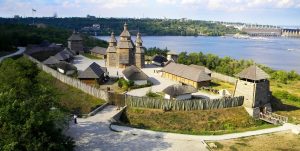
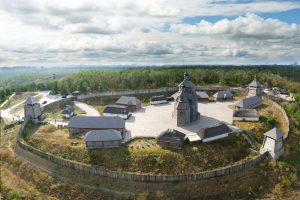
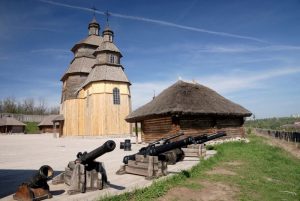
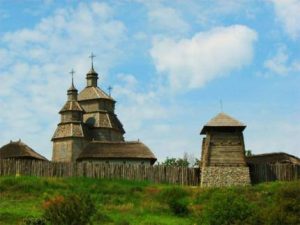
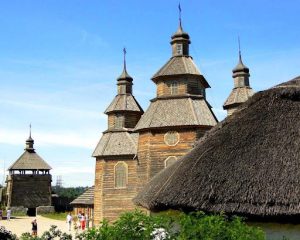
The present-day Sich on Khortytsia represents a generalized reconstruction of Cossack fortifications, faithfully recreating the features of all eight Zaporizhzhian siche that existed from the sixteenth to the eighteenth century. The complex consists of two parts: the Small Kosh, a commercial and craft suburb, and the Great Kosh, which served as the Cossack garrison. The entire settlement is surrounded by a defensive system that includes a moat, a palisade of sharpened wooden stakes, and watchtowers.
The internal space is organized in accordance with Cossack traditions. Here, visitors will find reconstructed Cossack kurins, which were military and residential units; a blacksmith’s forge; a pottery workshop; a tavern; and a Greek house, where diplomatic delegations were received. At the center stand the church and the square where the Cossacks assembled for councils, elected their atamans, and made their most important decisions.
The Cossack buildings are designed as museum exhibitions based on reliable historical data, original scholarly concepts, and authentic artifacts from the period.
These structures demonstrate the functioning of the administrative institutions of the Sich, including the house of the Kosh Ataman, the highest elected leader, and the Military Chancellery, where official documentation was maintained, correspondence conducted, intelligence information collected, prisoners interrogated, and other administrative duties performed. A separate exhibition titled “Artillery” represents the Sich arsenal, where cannons, weapons, ammunition, and gunpowder reserves were stored. In certain periods, this building also served as a prison.
Special exhibitions present the traditional crafts of the Zaporizhzhian Cossacks, the most important of which was fishing, as well as aspects of everyday Cossack life. The exhibition “Cossack Mamai and His Pipe” is dedicated to the image of the Zaporizhzhian warrior known as a kharakternyk, a Cossack believed to possess supernatural abilities, depicted with a symbolic and mystical pipe. Most of the exhibits in the display “The Cossack Era – The Zaporizhzhian Siche” are original artifacts from the sixteenth to eighteenth centuries, discovered on the territories of four Zaporizhzhian siche.
The central building of the Sich is the active Church of the Protection of the Most Holy Mother of God, where traditional religious services are held, along with wedding and baptism ceremonies.
The Khortytsia Sich has become a traditional venue for nationwide festivals such as “Pokrova on Khortytsia” and “Easter on Khortytsia,” which attract thousands of visitors each year. Guests are drawn by authentic workshops on pysanka egg decoration and pottery, as well as concerts, ceremonial events, and a wide range of performances.
A distinctive atmosphere is created by the presence of the “Cossacks of the Sich.” This group of historical reenactors presents demonstrations devoted to the martial arts of the Zaporizhzhian Cossacks and conducts workshops on the use of traditional Cossack weapons.
Every visitor will find an experience that matches their interests and will leave with a vivid impression.
A visit to the Historical and Cultural Complex “Zaporizhzhian Sich” offers the opportunity to see a reconstructed image of the capital of freedom of the Lower Zaporizhzhian Host, the military and political organization of the Cossacks. Guests may explore the residential and economic buildings of the steppe warriors, learn about the life and customs of the Cossacks, and fully immerse themselves in the spirit of the Cossack era.
Sanctuaries
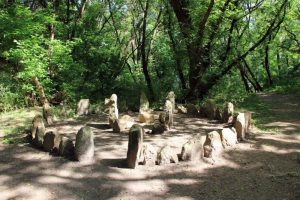
Since the earliest times, the rocky cliffs of Khortytsia have drawn people who endowed this place with special, sacred meaning. It is therefore no surprise that unique ritual complexes from different historical periods have been preserved on the island. Some of them are considerably older than the world-famous Egyptian pyramids. These stone structures were used for religious rites, funeral ceremonies, and observations of the movement of celestial bodies.
Khortytsia contains an exceptionally high concentration of archaeological monuments from various eras: burial complexes with and without kurgans (burial mounds), numerous stone ritual objects, ancient settlements, and defensive fortifications. All of this once again confirms the spiritual and sacred significance of Khortytsia Island, which served as a spiritual center linking different epochs, peoples, and cultures. Among the most renowned sanctuaries on Khortytsia are the Eneolithic cromlech complex; the sanctuary-observatory; the Bronze Age sanctuary; the Karakaika sanctuary; and the Heneralka 2 complex of the Iamna culture (also known as the Pit Grave culture).
Today, archaeologists are conducting excavations on Baida Island, continuing research at the Heneralka 2 site, and investigating the second part of the Karakaika sanctuary.
The Scythian Field
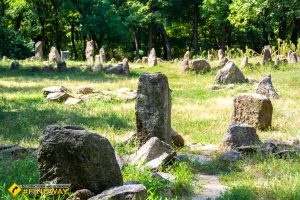
At the beginning of the twentieth century, Khortytsia was home to one hundred and twenty-nine kurgans dating from different historical periods. Only twenty-eight have survived to the present day. The kurgans were arranged in several groups along an ancient road that ran through the elevated central part of the island. In late 2005, at the highest point of Khortytsia, which offers a magnificent panoramic view, work began on the creation of the tourist and memorial complex known as the Scythian Field (Zorova Mohyla Burial Mound).
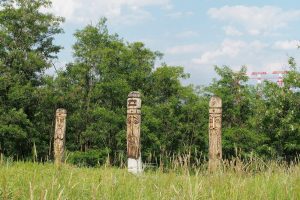
Covering an area of approximately five hectares, the site now features eleven kurgans: some have been carefully restored, while others have been reconstructed or stylistically recreated. The complex also includes an extensive lapidarium, a collection of historic stone monuments comprising sculptures, stelae, crosses, hand mills, mortars, and stone pillars.
During a visit, guests can view preserved and reconstructed kurgans, listen to a guide’s account of the ancient rulers of the steppe—the Scythians—and explore the open-air exhibition of stone monuments in the lapidarium. The region’s history is reflected here in stone idols, Cossack crosses, and agricultural tools once used by our ancestors.
The Museum Space
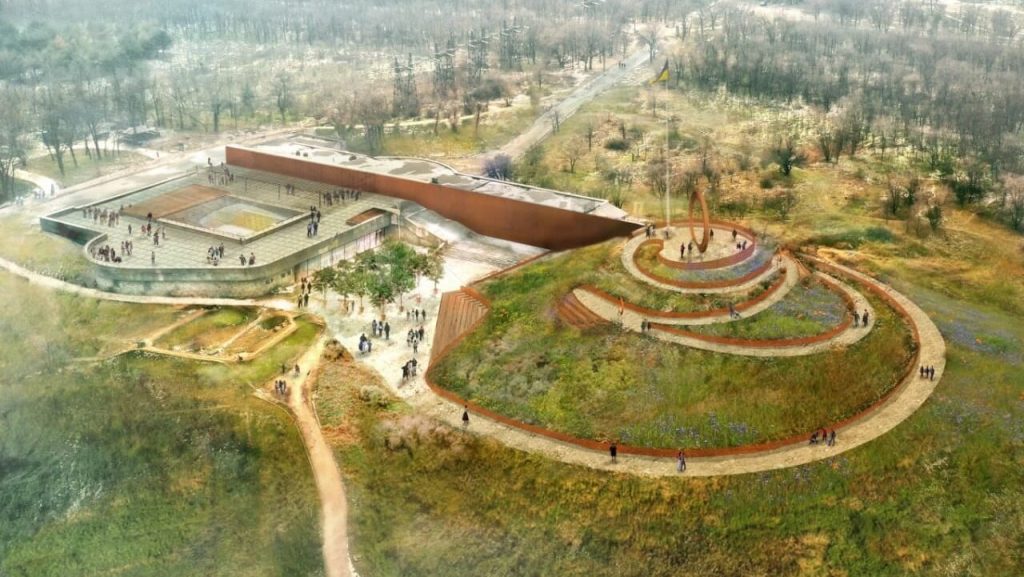
The panoramic square in front of the museum, together with the surrounding grounds, has become a venue for official ceremonies and cultural events. Oath-taking ceremonies for cadets, police officers, and military personnel are held here. It was from the terrace of our museum that, on October 14, the national holiday known as the Day of the Defender of Ukraine was officially proclaimed. This space hosts performances by orchestras and theatre companies, as well as meetings and workshops. Each year, a documentary film festival brings together hundreds of viewers for screenings of documentary films. In 2021, at the initiative of the President of Ukraine, reconstruction of the Museum of the History of the Zaporizhzhian Cossacks began.
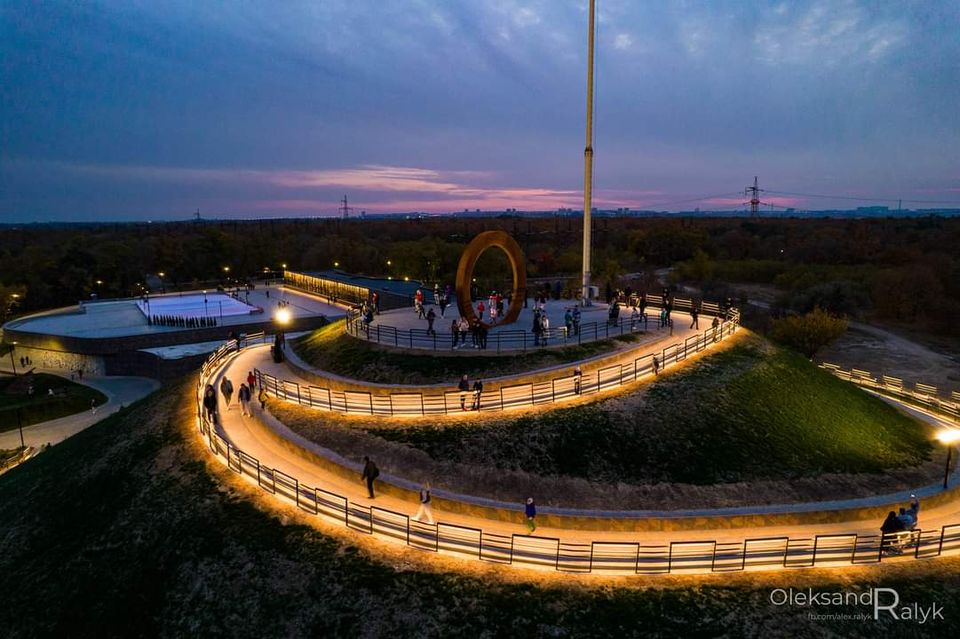
From this vantage point, visitors enjoy a magnificent view of the Dnipro River, the rocky rapids, and the Dnipro Hydroelectric Power Plant. Adjacent to the museum, Unity Hill has been developed, featuring a panoramic platform where the national flag flies. Unity Hill is a distinctive landmark that has become a true adornment of Khortytsia. Installed here is the Circle of Unity, a seven-meter-high metal ring clad in weathering steel. The creative director of the artistic project Circle of Unity was Bohdan Kryvosheia. According to its authors, the installation embodies multiple layers of meaning and interpretation.
First, the Circle of Unity symbolizes unity for the sake of the future. It was in a circle that the Zaporizhzhian Cossacks gathered to deliberate, debate, and make decisions. The island deserves to regain its historic role as a place of social consensus.
Second, the Circle of Unity symbolizes the sun, as the very name of Khortytsia is believed to derive from the name of the Slavic sun god Khors.
Comprehensive reconstruction of the museum space is currently under way. In time, it will become a venue for public discussions on issues of social, local, and national significance. In the future, this space will be capable of hosting a community of global leaders, for Khortytsia—an island in the middle of the Dnipro River, a sacred place between two banks—has always been a place of unity.
The renovated hill, equipped with convenient access routes, a panoramic platform, and a modernized flagpole, is fully accessible and comfortable for all visitors. The path leading to the hill and the viewing platform has a gradient of five percent, meeting accessibility standards. Designated rest areas have also been created.
Moreover, upon ascending Unity Hill, visitors can appreciate not only the natural beauty of Khortytsia. Through the audio performance entitled The Path, created by the team of Vlad Troitskyi, guests are invited to immerse themselves in a search for answers to the timeless question: Who are we?
By using the Quick Response code installed at the foot of Unity Hill, visitors can explore reflections on human greatness and history.
In the direction of the museum, along the shoreline, the Taras Path has been established. It commemorates the stay of the young poet Taras Shevchenko on Khortytsia in the summer of 1843. The route is marked with excerpts from the works of the Great Kobzar—a traditional Ukrainian bard and a title by which Shevchenko is widely known—in which Khortytsia, the Dnipro rapids, the Great Zaporizhzhian Meadow, and the Zaporizhzhian Cossacks are mentioned.
Nearby is Cossack Circle Square, the traditional site of the large-scale festival Pokrova on Khortytsia, which gathers thousands of residents and visitors. The square also hosts other large public events, team-building activities, and evening performances. In 2021, the square was comprehensively upgraded and became the venue for the Family Values and Traditions Festival, as well as the Winter Residence of Saint Nicholas.
The area surrounding the museum is equipped with full visitor infrastructure, including car parking facilities, a bicycle rental service, cafés, and pastry shops.
Park Areas
The “Khortytsia Labyrinth” is located in the northwestern part of the island. This landscaped park area consists of a network of intersecting avenues planted with a variety of tree and shrub species, reflected in the names of the alleys: Oak, Maple, Tamarisk, Linden, Walnut, Catalpa, and Caragana. The setting is complemented by picturesque compositions of trees and shrubs. Among the shaded paths are valuable historical and archaeological monuments, including a Bronze Age sanctuary; a Scythian archaeological site known as Kanfarka Hill; a presumed burial ground of the Zaporizhzhian Cossacks; a cemetery; and redoubts dating from the Russo-Turkish War of 1735–1739. A walk through the Labyrinth offers an opportunity to relax in the quiet of the Khortytsia forest and to engage directly with the history of this ancient island.
The dendrological park harmoniously adjoins the picturesque Hannivka Valley, and from its viewpoints visitors can admire the panorama of the New Dnipro Channel. Established in the mid-twentieth century, it combines a rich variety of ornamental trees and shrubs without disturbing the natural harmony of the landscape, effectively enhancing the architectural and scenic qualities of the terrain. The Khortytsia Dendrological Park is remarkable not only for its diversity of plant species but also for the elegance of its design. For this reason, it delights visitors in every season, continually revealing new aspects and surprising them with the changing colors and forms of nature.
Excursions through the park areas will be of interest both to specialists in flora and dendrology and to every visitor. They also provide an excellent opportunity to take unforgettable photographs, as the natural environment of Khortytsia displays a full palette of colors throughout the year.
The Museum of Navigation
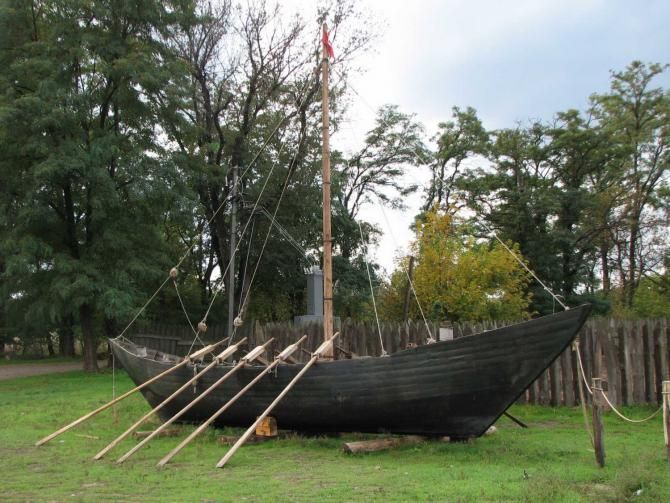
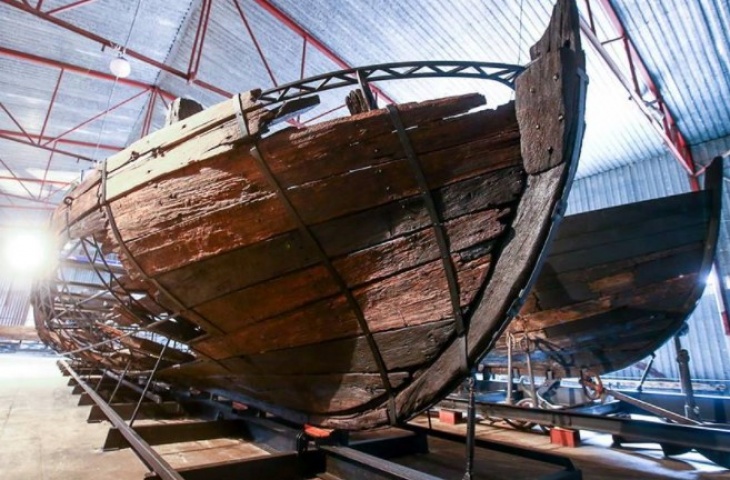
The Lower Dnipro region, and in particular Khortytsia Island, has witnessed numerous significant historical events. One of the most important chapters of the eighteenth century in these lands was the Russo-Turkish War of 1736–1739. This explains the presence of a large number of sunken vessels near the shores of Khortytsia: during that war, ships of the Russian squadron were unable to pass the Dnipro rapids in order to reach the Black Sea and were consequently scuttled. Since 1999, these vessels have been raised from the bed of the Dnipro River and restored as museum exhibits.
Although the site has not yet been granted official museum status, it is intended to become the only Museum of Navigation and Shipbuilding in Ukraine. Only a few institutions of this kind exist in Europe. The building in which the vessels are housed also serves as a conservation hangar, where specialists carry out preservation, restoration, and protective treatment of the ships.
Today, visitors have the rare opportunity to see and even touch a unique collection of Cossack-era vessels and anchors that has no equivalent anywhere in the world.
Among the exhibits are a Cossack boat dating from 1736–1739; a double-hulled Dnipro chalupa from 1737; a brigantine from 1736–1739—each an eighteenth-century warship—as well as a nineteenth-century baidak, a cargo vessel, a monoxyl canoe carved from a single tree trunk, and other types of watercraft. The museum also houses the largest collection of anchors in Ukraine, numbering approximately one hundred examples. The oldest date back to the tenth century.
During an engaging guided tour, visitors learn about the origins of the Cossack fleet, the construction and functions of the vessels, and the processes involved in their conservation and restoration, while also having the opportunity to take distinctive photographs as a keepsake.
2. The “Faeton” Museum
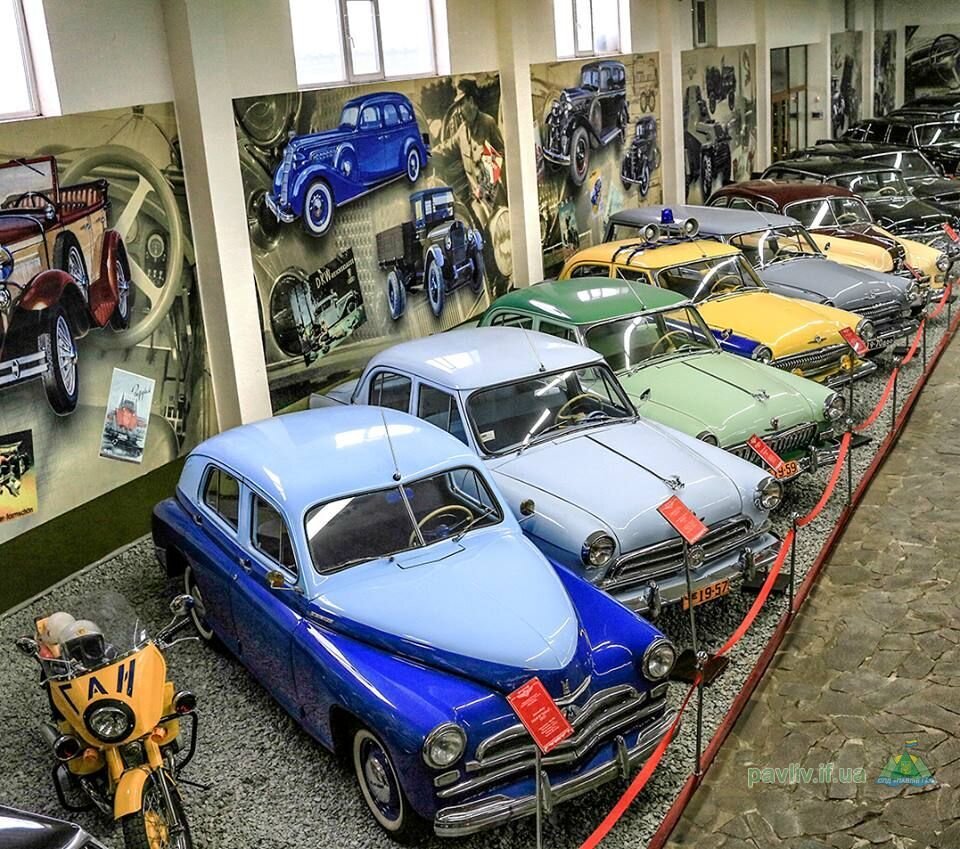
The “Faeton” Museum is the largest museum of technology in Ukraine. Its two floors contain six thematic halls. One hall displays luxury vintage automobiles; another presents more modern models; a third is dedicated to military equipment, including the famous Katyusha multiple rocket launcher. Visitors can then view all versions of the Zaporozhets automobile, along with motorcycles, children’s bicycles, and scooters. A separate hall is devoted to historical everyday household items. The exhibitions are continuously updated, and almost every year a new hall is opened. It is an ideal place for an unhurried visit and memorable photographs.
3. The Granite Quarry
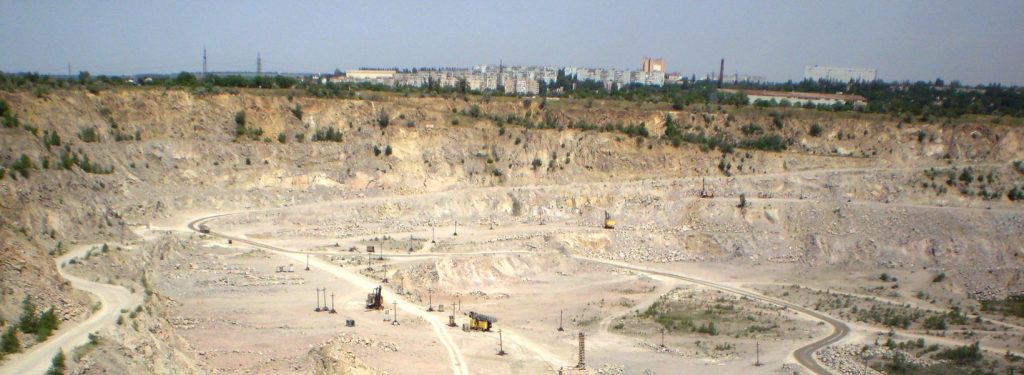
The granite quarry in Zaporizhzhia is a location perfectly suited for truly striking photography. The quarry has operated on the right bank of the Dnipro River since 1953. Reaching it is not easy, but while images of the site available online are impressive, seeing it in person makes an even stronger and more unforgettable impression.
4. The Children’s Railway
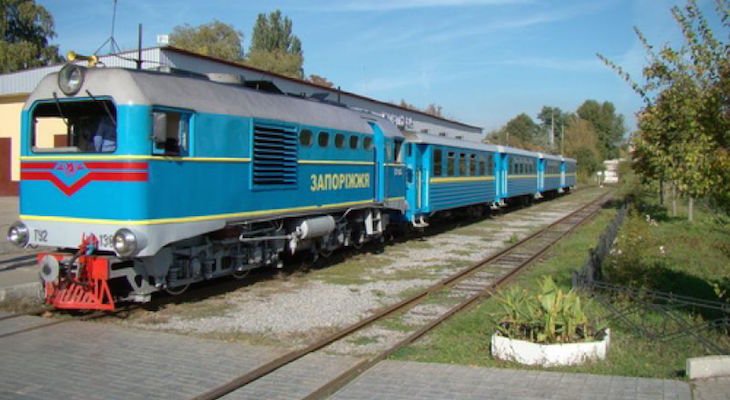
Another attraction of Zaporizhzhia is located near Dubovyi Hai Park. The Zaporizhzhia Children’s Railway extends for almost nine and a half kilometers. Its route passes through wetlands, alongside a forested area, a residential district, and a rowing canal; it also includes an eighty-meter tunnel. The Children’s Railway operates year-round. Its appeal for visitors is further enhanced by the presence of a winter garden, a dendrological park featuring exotic plants, an aquarium hall, and a small zoo, all located on its grounds.
5. The Preobrazhensky Bridge
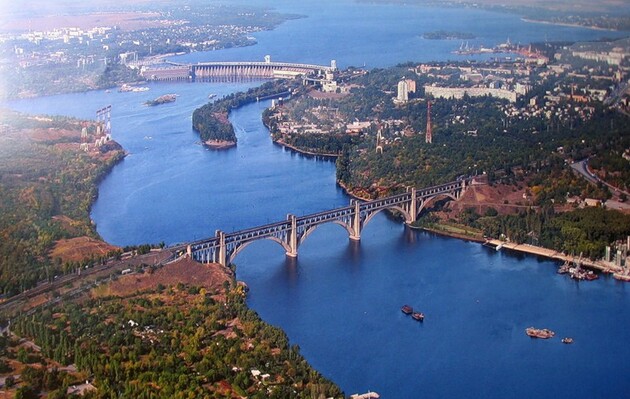
This bridge, designed by the architect Borys Preobrazhensky, is regarded as his architectural masterpiece. It measures 550 meters in length and rises to a height of 54 meters. The structure has two tiers and consists of four arches. The lower level is intended for pedestrians and light private freight transport, while the upper level carries a railway line. Nearby stands another bridge—less monumental in scale but highly popular among enthusiasts of extreme sports. This arch bridge connects Khortytsia Island with the part of the city located on the right bank of the Dnipro River. A platform on the bridge serves as a base for the sports club Free Flight, which organizes extreme jumps using professional mountaineering equipment. The choice of this bridge is deliberate: thanks to its arch design, jumps are performed at a maximum safe distance from the bridge structure itself. Experienced instructors provide mandatory safety briefings for every participant. In addition to rope jumping, the Free Flight club also organizes highlining, which involves walking along a tensioned line at a significant height above the ground or water. The club offers participants unforgettable эмоції, helps them overcome fear, and build self-confidence.
6. The Aswan Dam
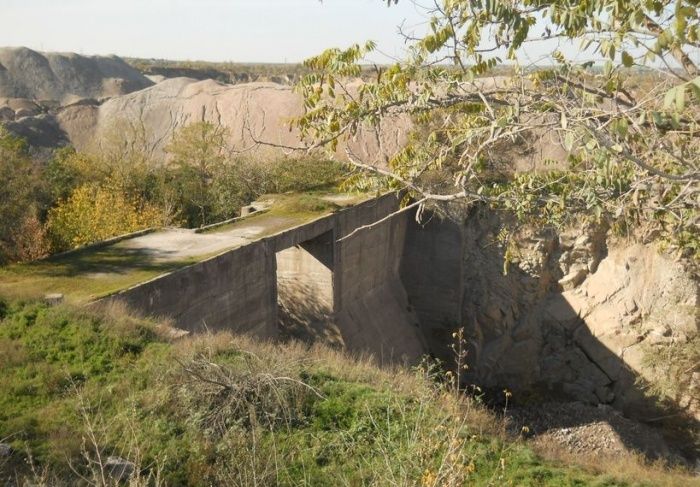
It may come as a surprise that the history of one of the greatest engineering achievements of the twentieth century—the Aswan High Dam, the largest hydroelectric complex in Egypt—began in Zaporizhzhia. At a granite quarry on the right bank of the city, Soviet engineers involved in the Egyptian project constructed a model that was fifty times smaller than one section of the Aswan Dam. This scaled replica was later used to refine the design of the dam in Egypt. Part of the model has survived to the present day.
7. The Dnipro Hydroelectric Power Plant (DniproHES)
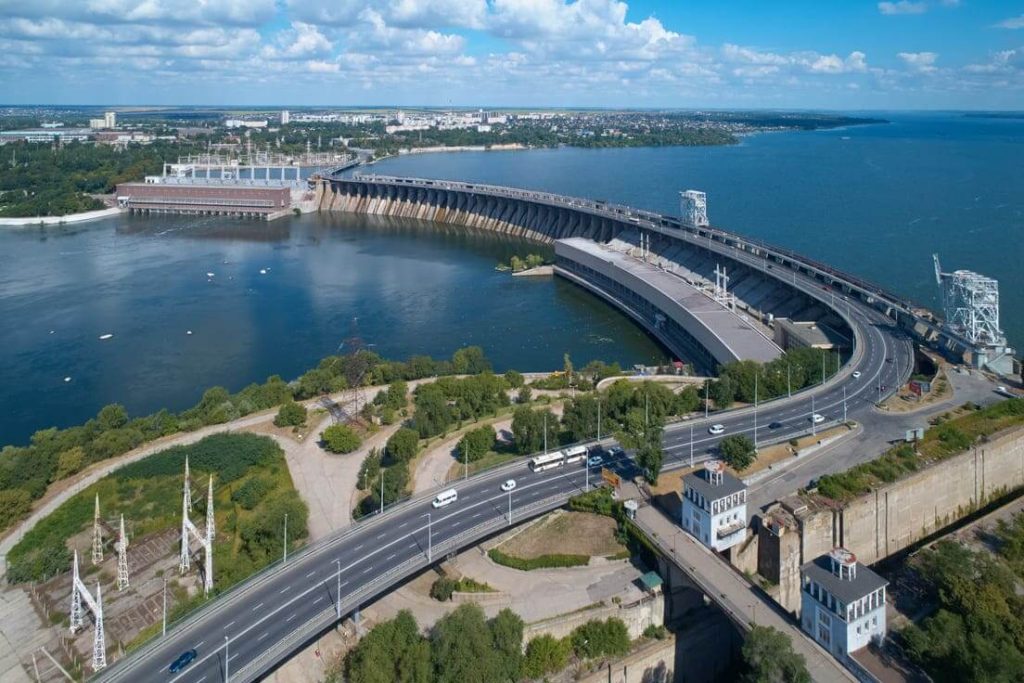
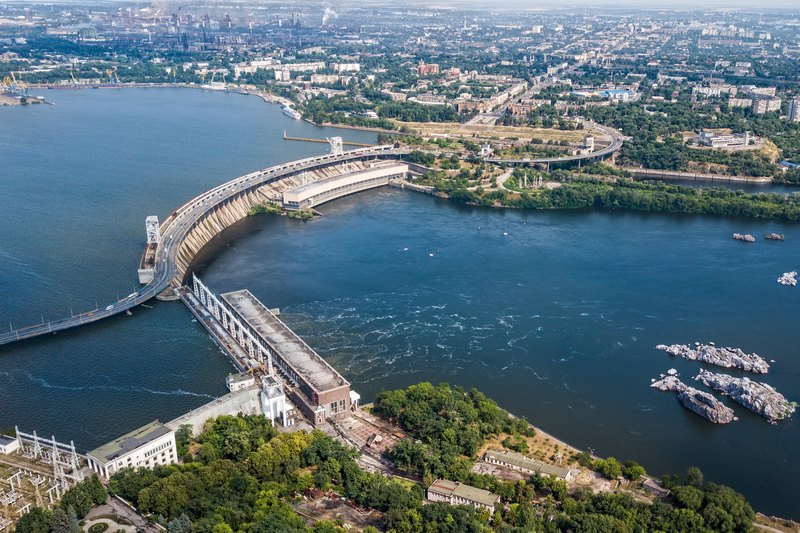
The Dnipro Hydroelectric Power Plant, widely known as DniproHES, is a unique hydraulic engineering structure. It was the first hydroelectric power plant built in the Union of Soviet Socialist Republics and, at the time of its completion, the largest in Europe.
Construction of the hydroelectric power plant in Zaporizhzhia was directed by Academician Oleksandr Winter, with the participation of American consulting engineers Frank Pfeifer, Wilhelm Meffert, Friedrich Winter, and Georg Binder, as well as engineers from the company General Electric, including Charles John Thompson and Hugh Cooper.
As a result of the construction of the dam, the Dnipro rapids were submerged, making the river navigable along its entire length. The commissioning of the power plant triggered rapid economic development in the city.
Adjacent to the administrative building of the power plant stands the impressive Museum of DniproHES. Two exhibition halls are currently open to visitors, presenting the history of the plant’s construction, its reconstruction, and the development of its second stage. During a guided tour, visitors can view a scale model of the power plant and observe operating turbines in the engine room.
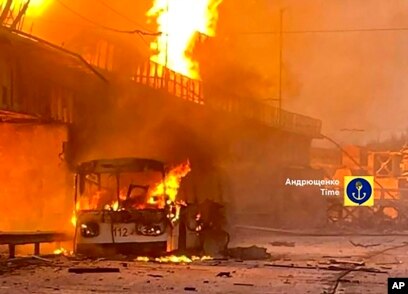
On the morning of March 22, 2024, during a large-scale missile and drone attack on Ukraine, Russian forces struck DniproHES with missiles, damaging the hydraulic structures and the dam. A fire broke out at the facility. In addition, a Russian missile hit a trolleybus carrying passengers that was traveling across the DniproHES dam.
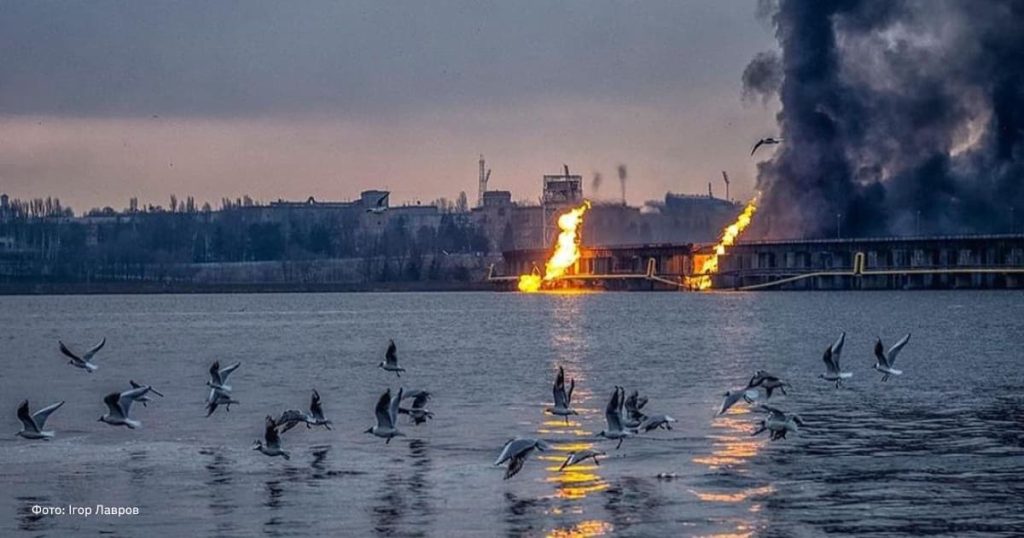
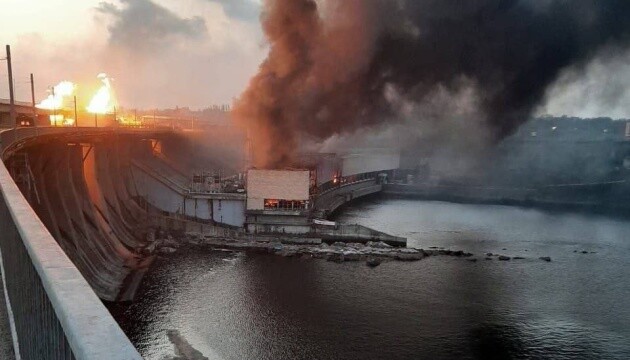
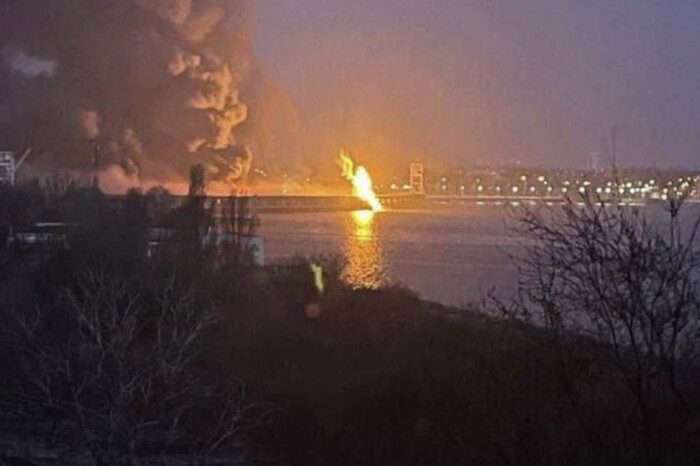
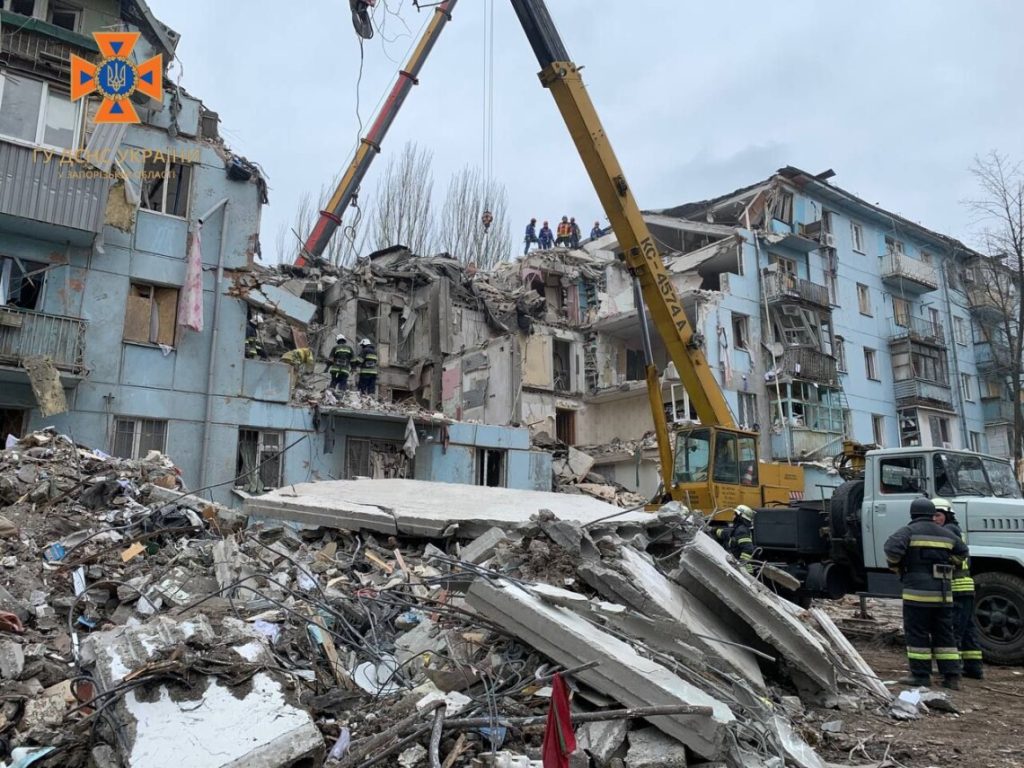
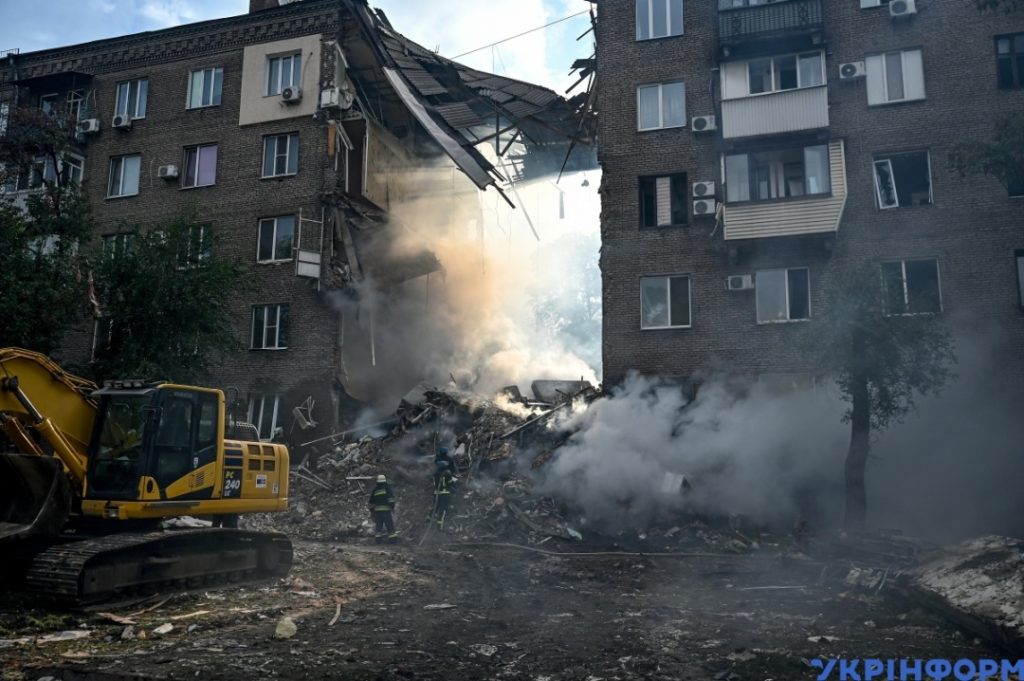
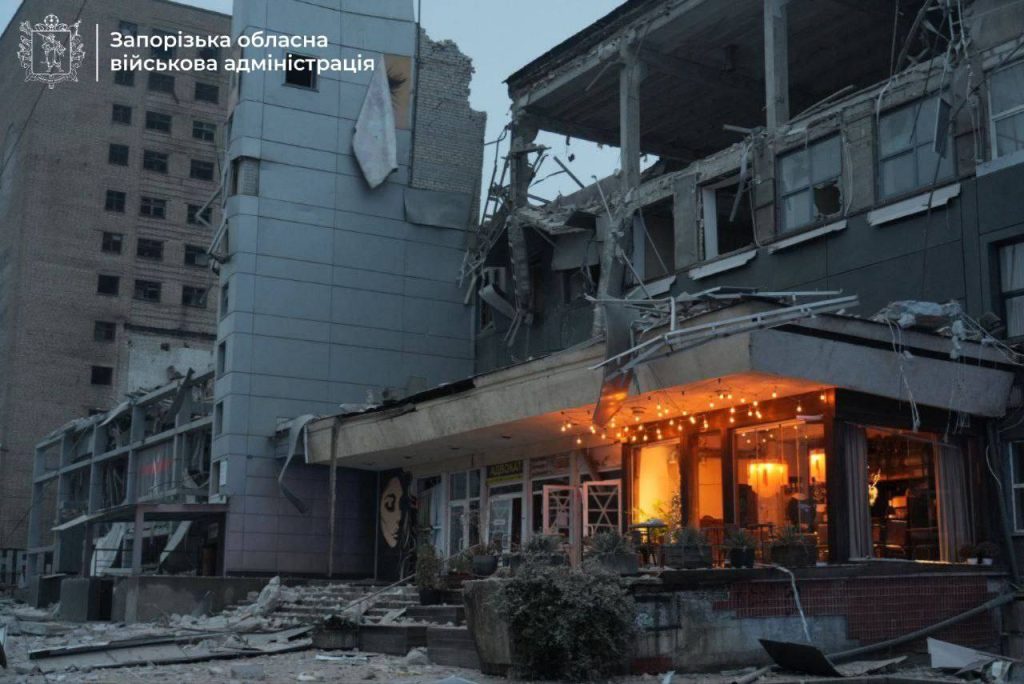
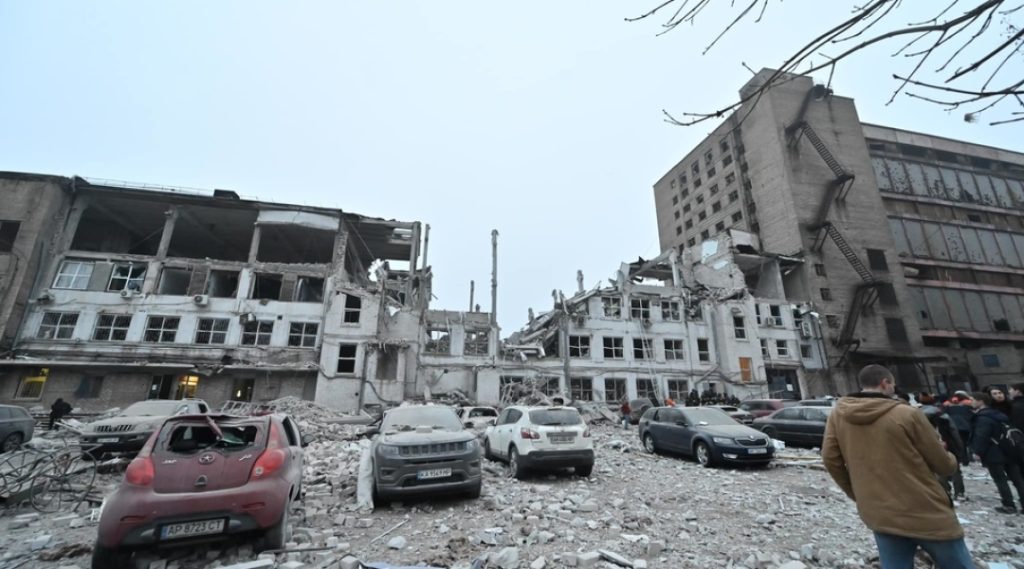
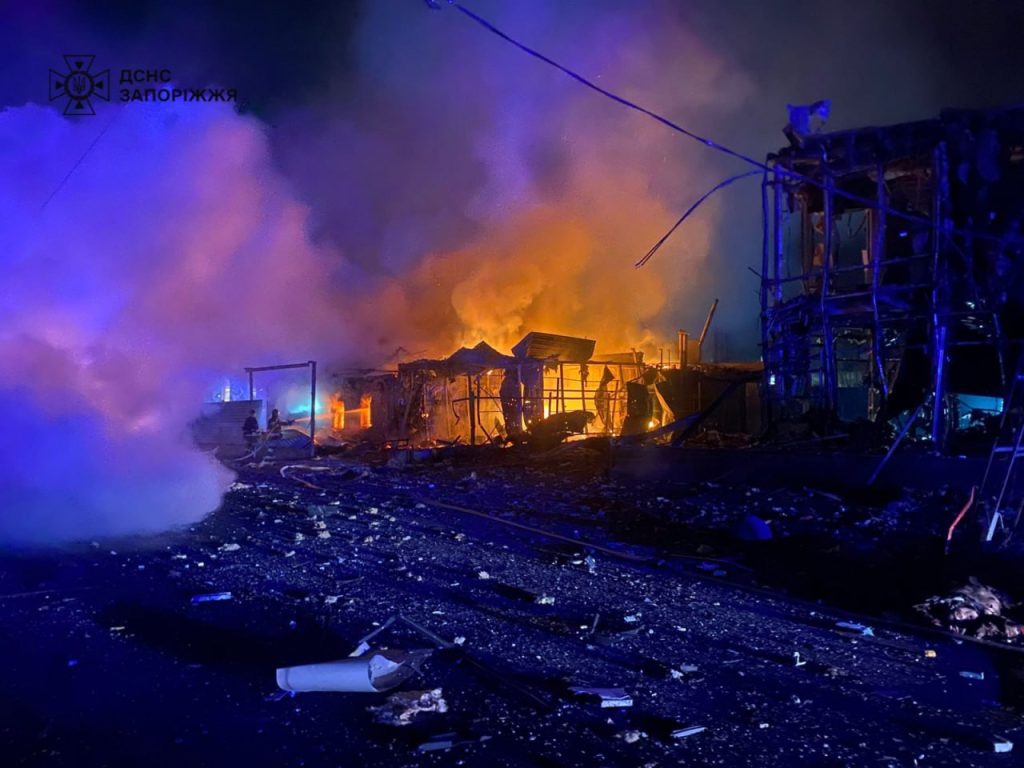
Since 2022, Zaporizhzhia has been subjected to intense shelling by the Russian aggressor. Russian terrorist forces destroy civilian facilities, historical monuments, hospitals, schools, and kindergartens. But the city lives on…
Tourist Information Center
in Zaporizhzhia
Soborny Avenue, 151
e-mail: mycitytic@gmail.com
Phone: +38 (050) 424 20 54
website:
https://zaporizhzhia.city/en