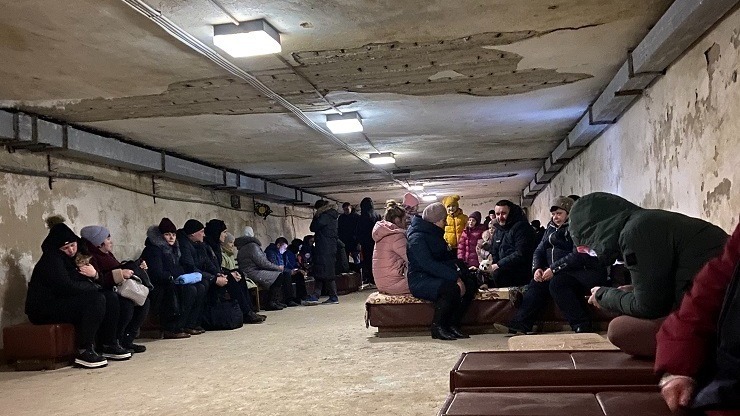
There are several types of public bomb shelters in Ukraine that are used during air raids:
▪️ metro stations: in large cities such as Kyiv, Kharkiv, and Dnipro, metro stations are among the safest shelters. They are equipped for extended stays;
▪️ basements: many apartment buildings, schools, hospitals, and other buildings have equipped basements that serve as the simplest types of shelters;
▪️ underground parking garages: modern parking garages in shopping centres or residential complexes are also often used as shelters;
▪️ specially equipped shelters: these may be standalone structures specifically designed to protect the population.

There may be many people in a shelter, especially in large cities. Space may be limited, so it is important to respect personal boundaries. Conditions may vary, but in general, you should expect it to be cold, noisy, and dark. Even during warm weather, it can be cool underground, so always bring warm clothing with you. A large number of people, crying children, and conversations can also create a significant level of noise. Although most shelters have lighting, there may be power outages, so a flashlight can be useful.
Staying in a shelter REQUIRES FOLLOWING CERTAIN RULES OF ETIQUETTE AND SAFETY to ensure comfort and safety for everyone 👇🏻
1️⃣ Respect other people’s personal space.
2️⃣ Do not smoke.
3️⃣ Do not consume alcohol.
4️⃣ Do not speak loudly or play music or videos without headphones.
5️⃣ Keep an eye on children.
6️⃣ Do not leave the shelter until the air raid alert has ended – wait until the official all-clear signal is sounded, and preferably stay for another 10–20 minutes afterwards, as there is a risk of repeated strikes.


WHAT IS IT BETTER NOT TO DO?
❌ Do not panic – try to remain calm and focused.
❌ Do not express political views that may offend local residents – remember that you are in a country suffering from war.
❌ Do not take photographs or record videos without permission – this especially applies to other people and military personnel.

WHAT TO TAKE WITH YOU IN CASE OF AN AIR RAID ALERT?
1️⃣ Your passport, insurance policy, and cash (preferably in small denominations).
2️⃣ Water – at least 1–2 litres.
3️⃣ A charger (power bank).
4️⃣ Medicines: any personal medications that you take regularly, as well as basic first-aid supplies (painkillers, antiseptics, and adhesive bandages).
5️⃣ A flashlight with spare batteries.
6️⃣ Energy bars, dried fruit, and nuts – food that does not require preparation and can be stored for a long time.
7️⃣ Warm clothing/a blanket: even in summer, it can be cool in a shelter.
8️⃣ Hygiene products: wet wipes, hand sanitiser, and toilet paper.
9️⃣ Things to keep you entertained – something that will help you take your mind off things and pass the time.


