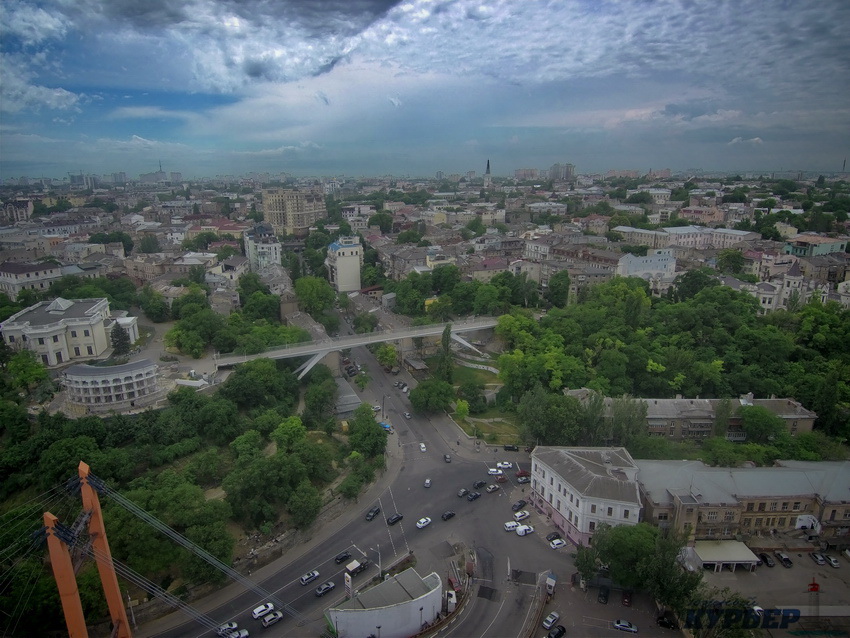
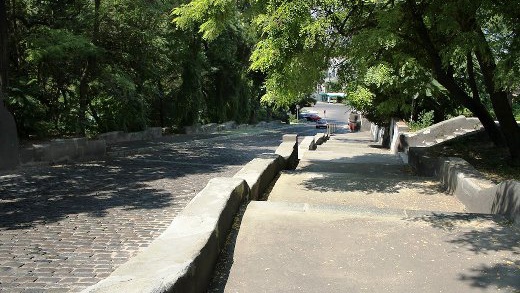
Odesa abounds in ravines and gullies: water from the plateau flows to the sea, carving its own channels along the way. Many ravines were filled in during construction, while large bridges were built across the biggest ones. But when bridges were still lacking, the only way to get from one side of a gully to the other was by stairs, and the ravines were lined with so-called “uzvozy” (descents).
Famous Stairs
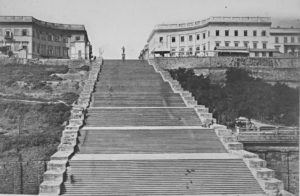
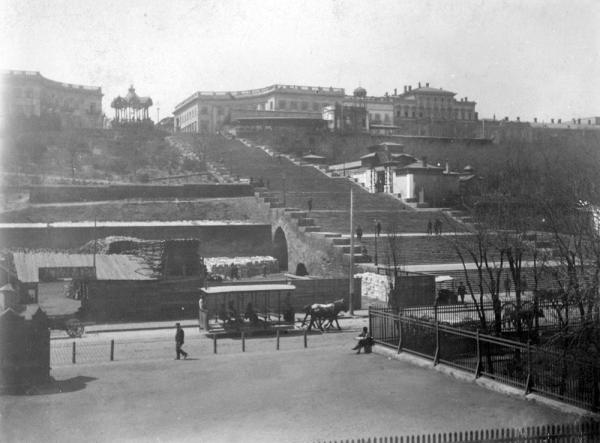
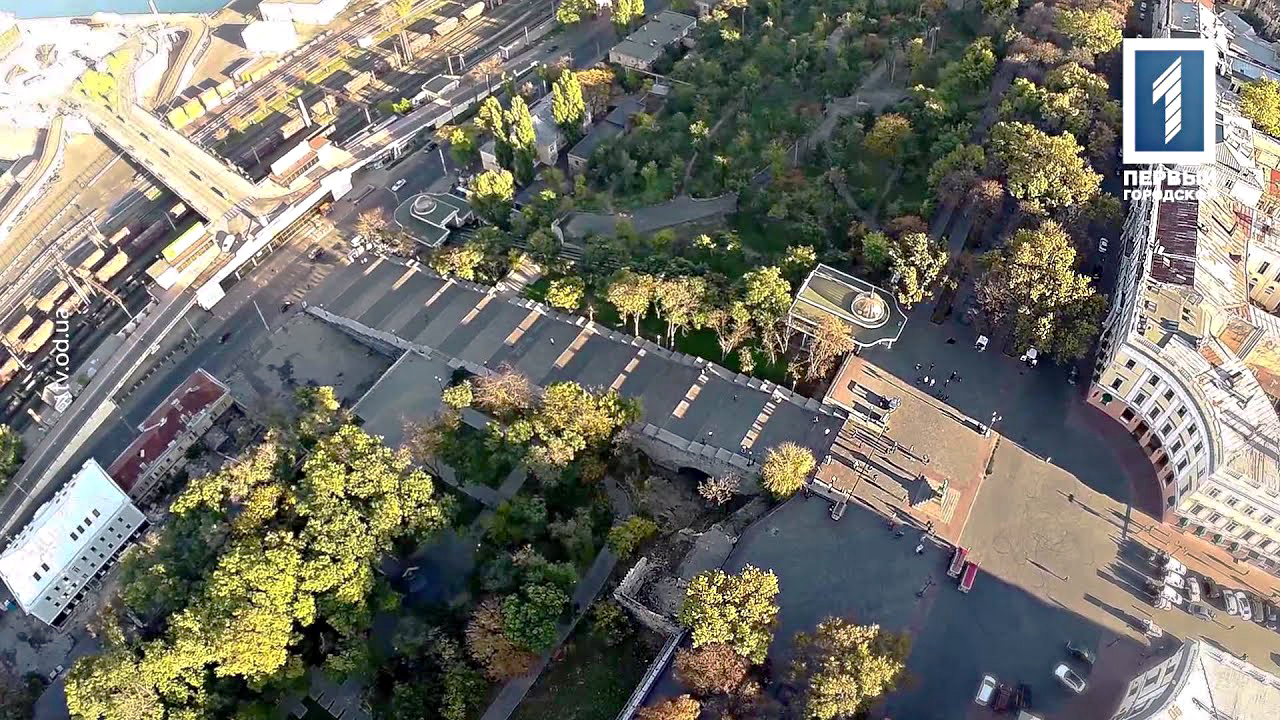
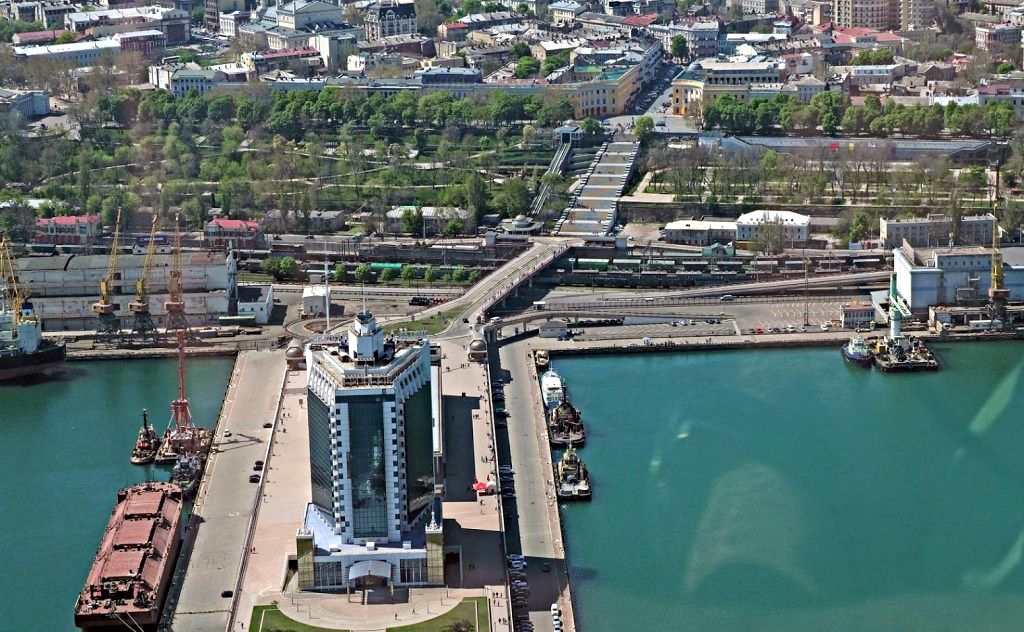
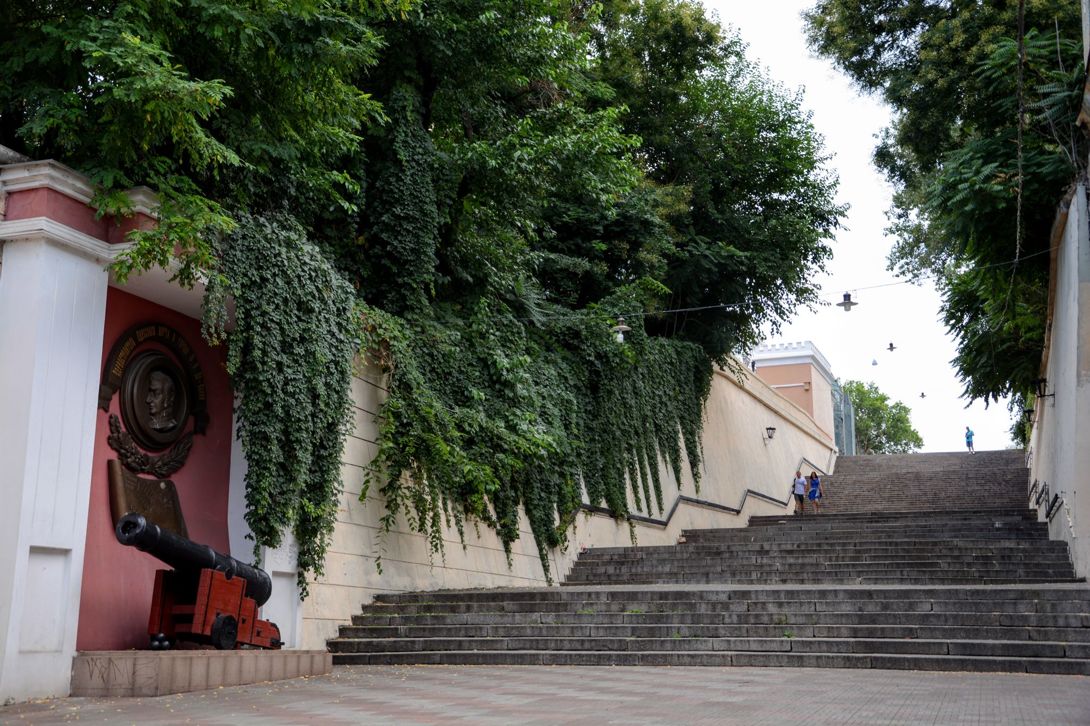
The Potemkin Stairs
The idea of arranging the grand staircase belonged to the prominent architect A. I. Melnikov and was included in the planning of the boulevard (now Prymorsky). On June 15, 1826, the project of the boulevard was approved by Tsar Nicholas I. The grand staircase was built in 1841.
The author of the project, architect Boffo, very successfully developed its proportions (width at the top 12.5 meters, at the bottom – 21.6 meters). Engineers Yu. Morozov, Uopton, and others participated in solving the technical and structural problems associated with the construction of the steps. The stairs had 200 steps: 10 flights of 20 steps each and 10 landings. Its length was 142 meters, height – 24 meters. They descended directly to the sea.
The Potemkin Stairs were created on the site of others, hewn into the limestone. They led to the Turkish fortress Yeni-Dunya. Later there was a wooden staircase – 220 steps: it descended to the sea to the bathing shore
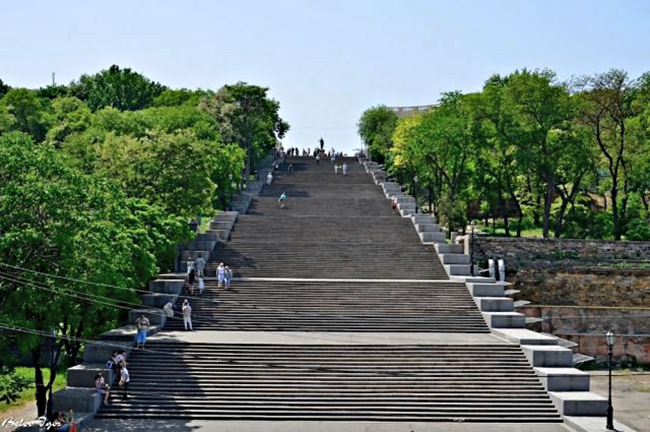
Some features of the stairs are interesting. When viewed from above, only the landings are visible (except for the upper flight). The parapets of the stairs seem parallel. This optical effect is achieved by the gradual widening of the steps downward. When viewed from below, the landings disappear. Before us is a continuous cascade of steps, and the staircase seems to have grown naturally.
This was the idea of its creators: to artificially enhance perspective, thereby visually increasing the length of the stairs and giving them a majestic appearance. The steps and landings were covered with Trieste stone, delivered by ships that came to the city for grain. The two-meter side parapets were built of local shell limestone. In 1933, during reconstruction, the steps were faced with pink-gray granite.
At various times the stairs were called: Giant’s, Boulevard, City. After the release of Sergei Eisenstein’s film Battleship Potemkin, they received the name Potemkin Stairs, since certain scenes of the film were shot on them.
The Odesa writer Yuri Olesha wrote: “… The famous Odesa staircase, after the film Battleship Potemkin, entered the memory of humanity like the Milan Cathedral and the Eiffel Tower.” Other writers also wrote about the Potemkin Stairs: Nechuy-Levytsky, N. Garin, A. Grin, M. Twain, A. Svirsky, A. Ostrovsky, Ya. Polonsky, K. Chukovsky.
At present, the stairs have 192 steps. Eight steps were covered when Primorska Street was raised to its current level.
The Stairs of the Dead
The story of the first female maniac in Odesа
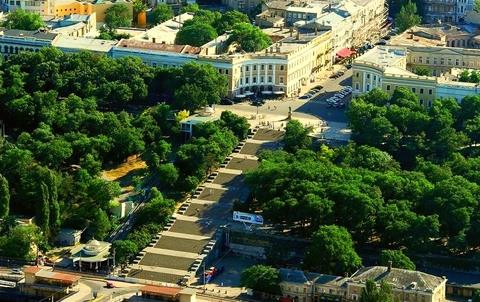
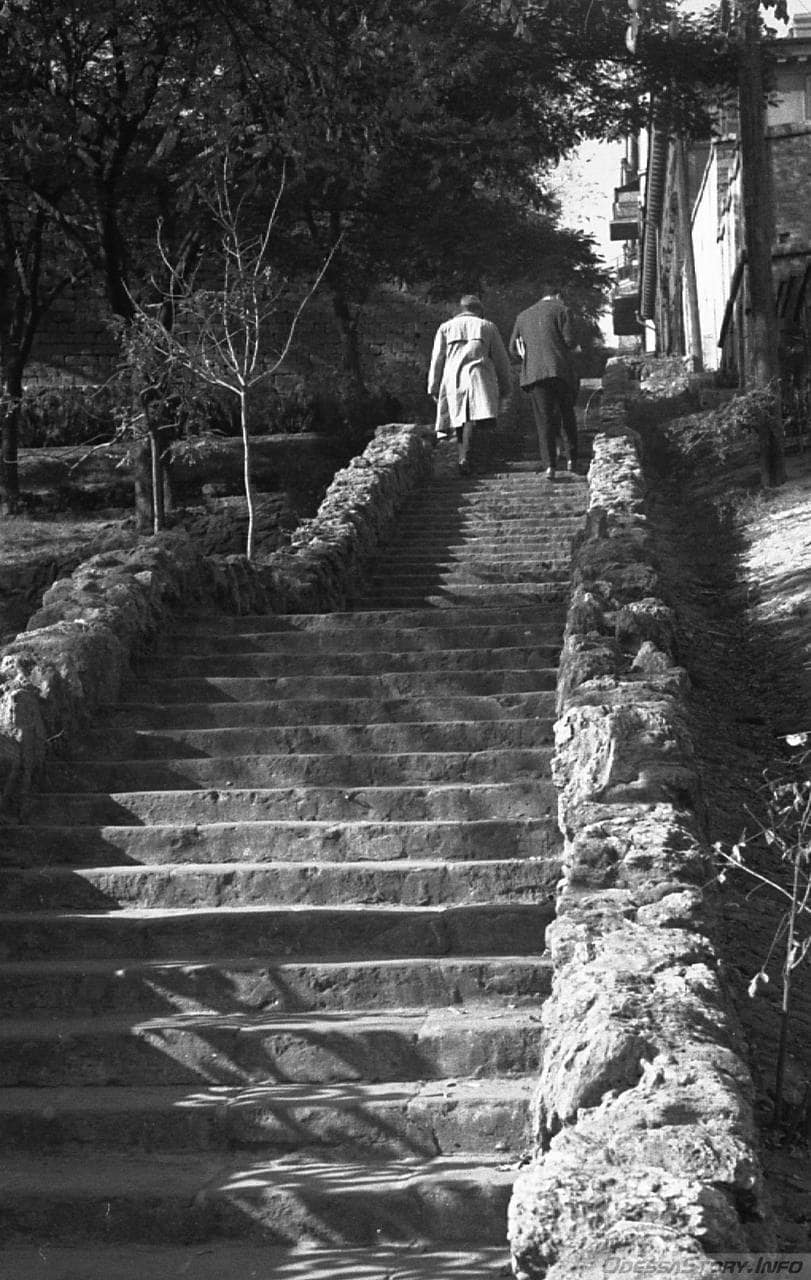
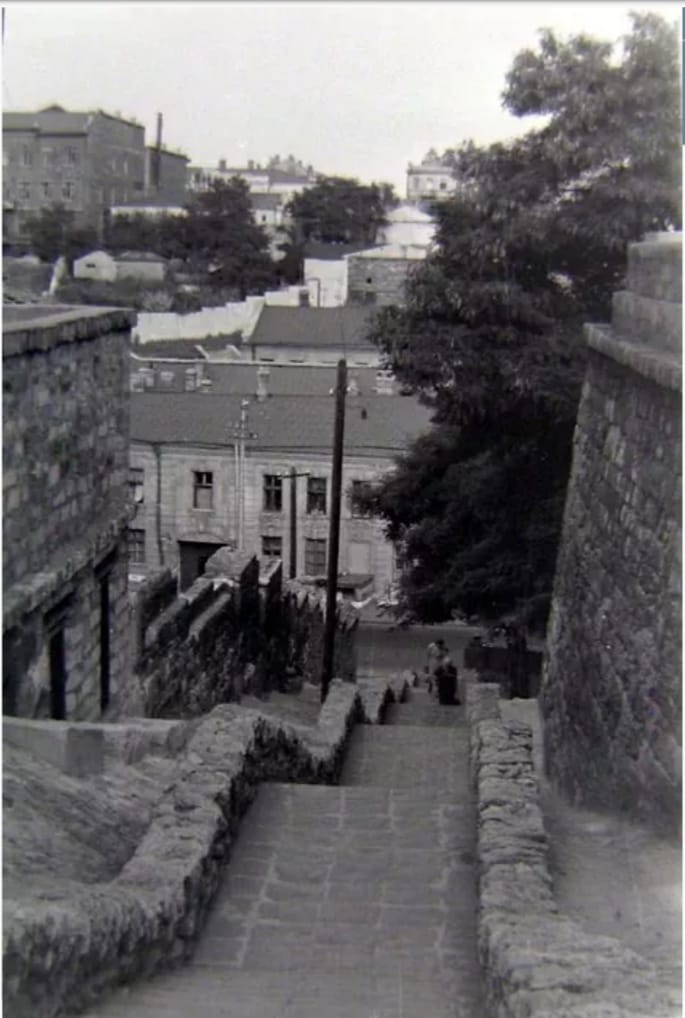
The “Stairs of the Dead” connect Deribasivska Street and the Polish Descent, just a few meters away – and you find yourself near one of the gates of the Sea Port. To this day, a chill emanates from this place, and especially at night, horror creeps in from the shadows spreading across the walls of the neighboring houses…
In the mid-19th century, men began to disappear without a trace in Odesa, mostly those who arrived in the city on ships. Years of investigation yielded no result… But one day, the investigators were lucky, while the city’s residents were plunged into endless horror and stupor. A lady bought a meat pie at Pryvoz market from a very pretty but already aging woman. When the lady bit into the homemade pastry, she found inside, along with the filling, the phalanx of a human finger!!! Naturally, the hysteria and panic knew no bounds! The police were immediately called, and the seller was arrested. During interrogation, it was revealed that this woman “worked” in one of the houses on the “street of white sheets” (as in Odesa at that time they called the “red-light streets”). She murdered her clients and, in order to conceal the traces of the crime, made pies out of them. Her name was Rosa. She was the very cruel but foolish first female maniac in the history of Odesa. She personally sold the pies. Probably, had she entrusted this business to someone else, she would never have been caught. She also confessed that if she heard something suspicious or if something alarmed her, she would throw the body of a client out of her window onto the lawn (her room’s windows overlooked an unlit area between the building and the stairs in question). Then she would go down and bury it there. After the investigation team arrived on the scene, the bodies of more than twenty men were found.
Rosa could not explain the meaning or purpose of her actions, but she was nevertheless declared sane and was hanged.
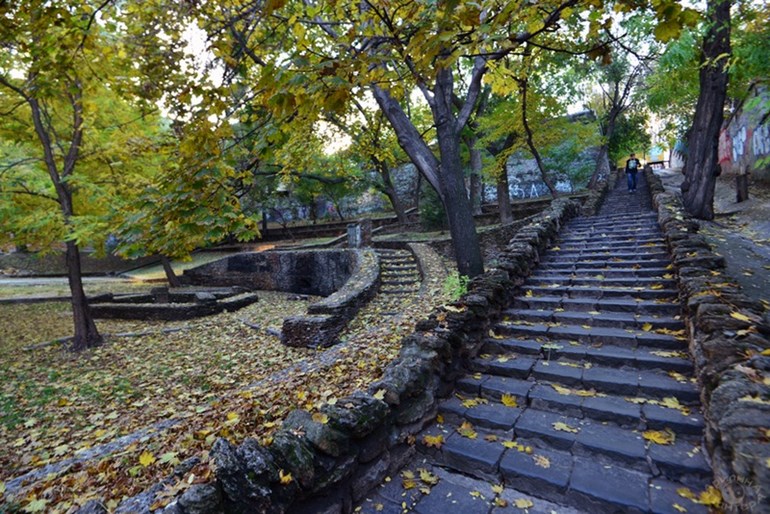
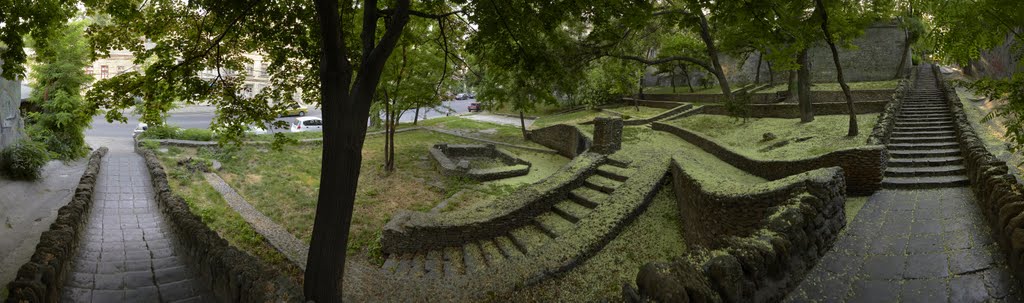
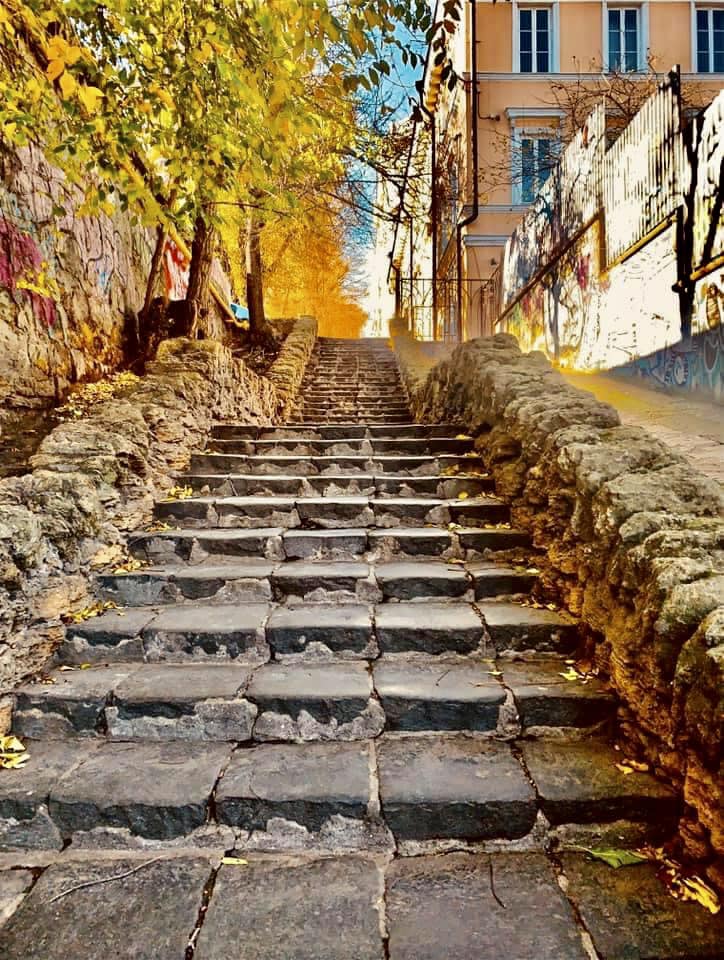
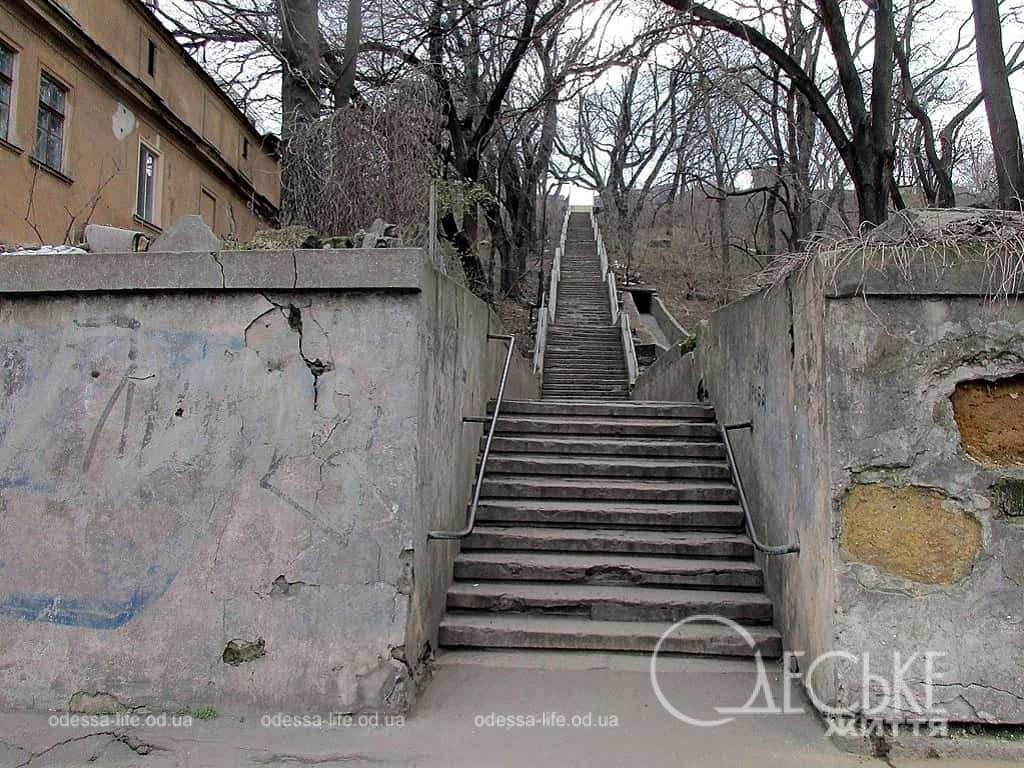
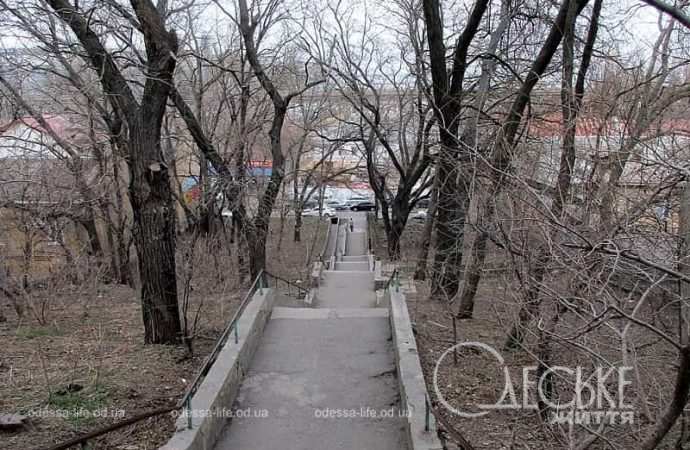
The Giant Staircase
Another mystical place in Odesa
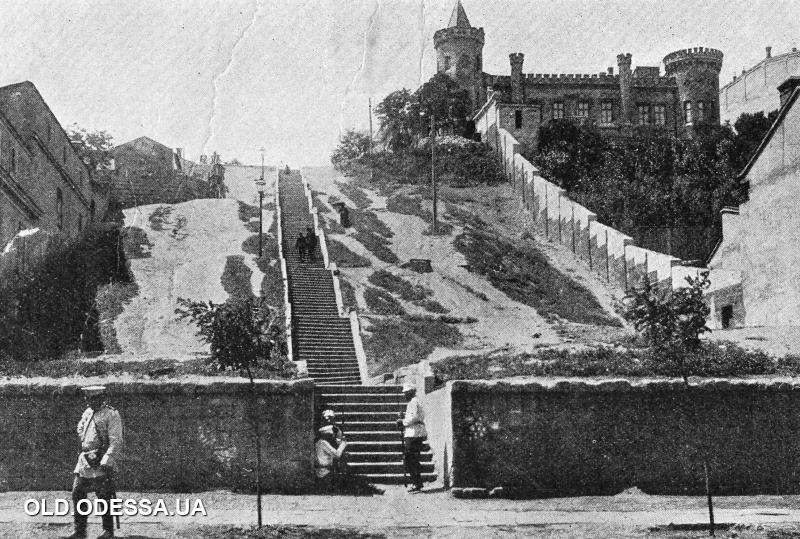
These historic stairs stretch from the intersection of Naval Forces Boulevard (until 2024 — Zhvánetsky Boulevard, until 2009 — Arts Boulevard) and Commercial Street down to Prymorska Street.
It was precisely here — at the intersection of Naval Forces Boulevard and Commercial Street — that, at the end of the nineteenth century, the Odesa merchant and member of the city council Konstantin De-Azarta built a castle, which was destroyed during the Second World War (1939–1945). The staircase led directly to that castle.
“At the end of Commercial Street, toward the sea, where today stands the magnificent De-Azarta castle, there was once a wasteland covered with dusty grass, bordered on one side by Sabansky’s grain warehouses, on the other by the garden of the archbishop’s residence, and from the sea by a steep cliff. De-Azarta appeared, took a liking to this empty place overlooking the sea, demolished a small house, built a splendid palazzo in its place, and buried beneath it an old legend of old Odesa,” wrote A. M. Deribas in the book Old Odesa about this place.
And what was that ancient legend of old Odesa?
As recounted by Doctor of Philology, Professor, and Head of the Department of Applied Linguistics at the I. I. Mechnikov Odesa National University, Natalia Kondratenko, it was precisely at the site of Mr. De-Azarta’s castle and on these stairs that the ghost of a cursed mother began to appear — the mother of a young woman who threw herself from the cliff. The ghost of the unfortunate woman is said to appear to this day; she limps and “hunts” exclusively for unmarried young men. The girl in a wedding dress appears suddenly, as if out of nowhere, and asks for help, claiming that she has twisted her ankle. Compassionate young men would try to assist her.
After taking a few steps, she would suddenly ask to go back to retrieve the shoe from her injured foot. The young man would turn around, searching for the abandoned shoe, and at the very moment he turned back again, the ghost would disappear.
Thus, this ghost has still “not vanished” and has entered the list of mystical addresses of Odesa. Therefore, the castle that once adorned this place did not, in fact, bury the old legend of Odesa — rather, it was itself, unfortunately, destroyed.
Mysticism aside, the staircase continues to serve its practical function — and quite actively. After all, the location is very convenient: one can step onto Naval Forces Boulevard, descend, and find oneself on Prymorska Street, right by a trolleybus stop and several bus routes.
Descents of the Historical Center
The Lanzheronivskyi Descent
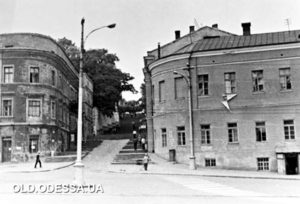
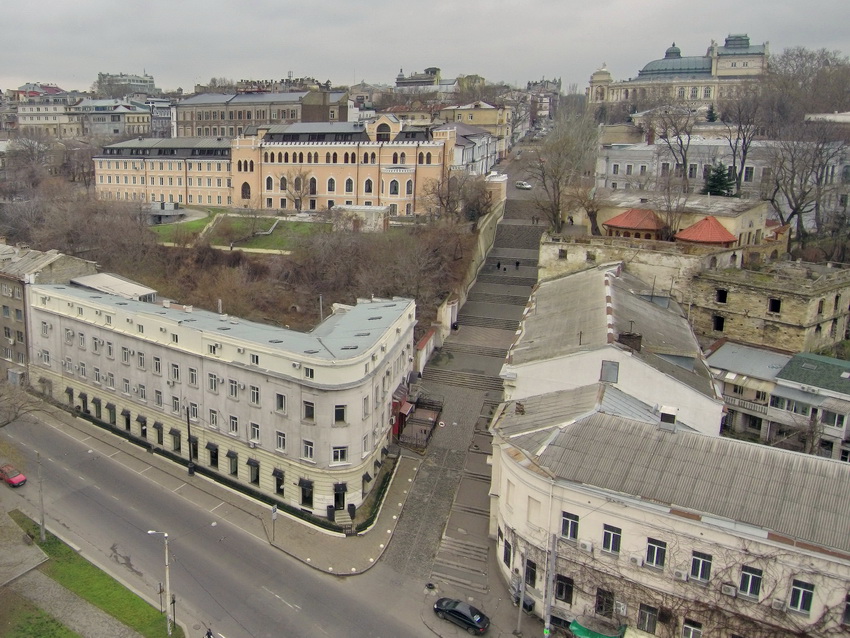
The Lanzheronivskyi Descent is located in the central part of the city and stretches from Lanzheronivska Street to Prymorska Street (practically to the entrance of the Odesa Commercial Sea Port). The stairs and retaining walls were built in the mid-19th century (architects P. Colo, K. Dallacqua).
House No. 1 – on the left – (Zherbolini House) was built in 1841 (architect F. Boffo).
House No. 2 – on the right, built in the 1850s (architect D. Colo), before the October Revolution was used as storage facilities and a night shelter. That is why Maksim Gorky, who at one time worked as a dock worker in the Odesa port, stayed here overnight, and later Oleksandr Hryn.
This building now houses the Museum of the Odesa Commercial Sea Port and the Seamen’s Mission (an international public organization under the patronage of the British Crown, which assists sailors in distress).
The Polskyi Descent
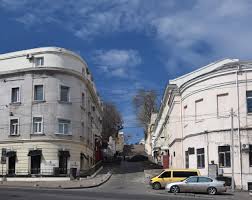
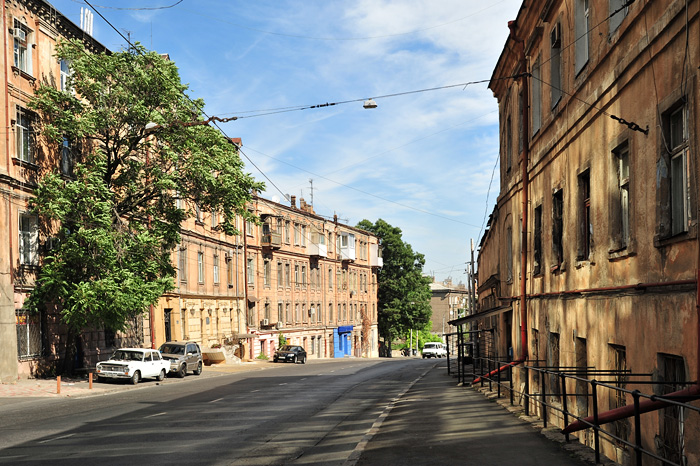
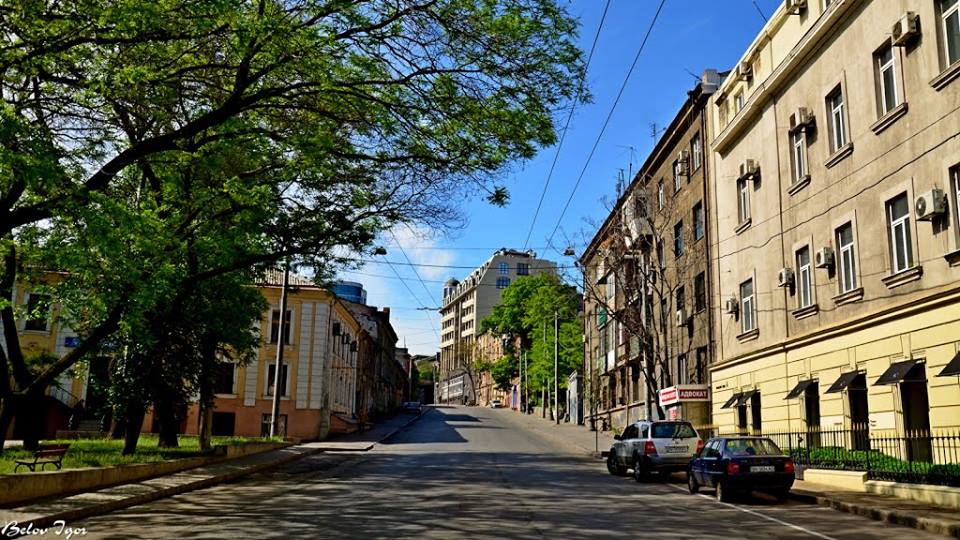
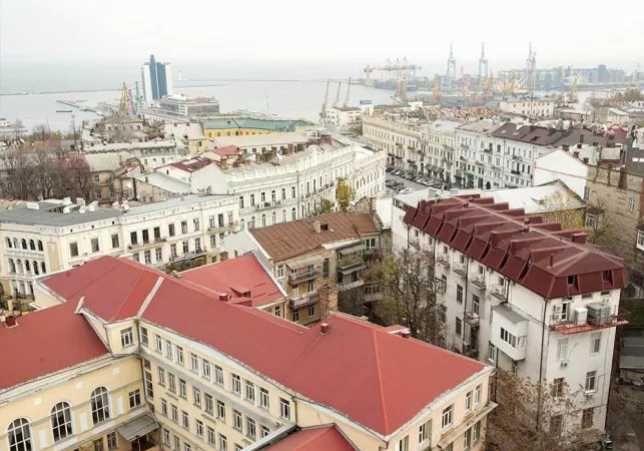
Polska Street, which continues into the descent of the same name, is one of the oldest streets in Odesa. It begins at Yevreiska Street and ends at Mytna Square.
In Soviet years, Polska Street bore the name of the Italian revolutionary Garibaldi, who visited Odesa several times. In the mid-19th century, Polskyi Descent was called Mytnyi (Customs) and Portovyi (Port). After the October Revolution, the descent was named after an Odesa native, chief of staff of the Red Guard, Moisey Kangun, who was mortally wounded during the January uprising. The street received its present name because, in the first half of the 19th century, Polish noblemen built grain warehouses here, where grain was stored before being transported to Mediterranean countries.
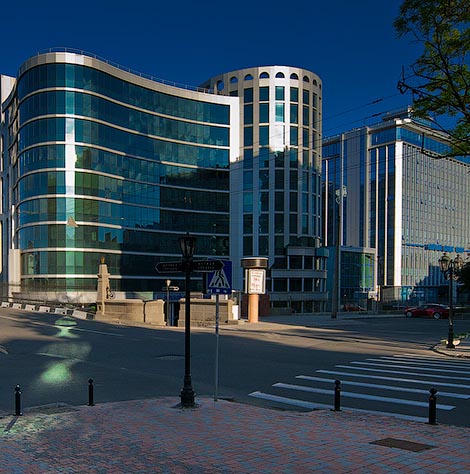
Mytna Square, into which Polskyi Descent “flows,” has at various times been called Quarantine, Port, Devolanivska, and in Soviet times Vakulenchuk Square. From here one can quickly reach the main entrance to the Sea Port.
The Devolanivskyi Descent
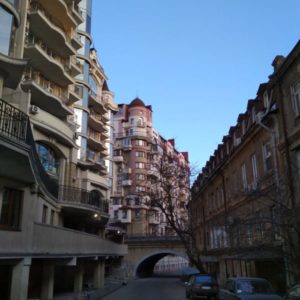
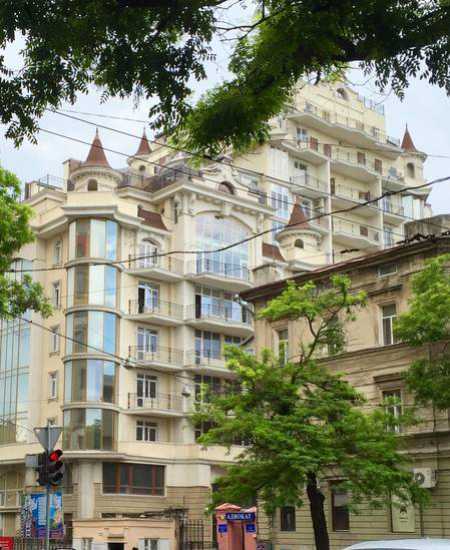
The Devolanivskyi Descent (formerly Vakulenchuk Descent) is located in the old part of the city. It runs parallel to Polskyi Descent from Yevreiska Street to Mytna Square.
The descent changed its name three times: Levashivskyi after Volodymyr Levashov – Count, Major General, and Odesa Governor in 1876–1878; Vakulenchuk after non-commissioned officer, Bolshevik Hryhorii Vakulenchuk, one of the organizers of the mutiny on the battleship Potemkin; and since 1995 – Devolanivskyi, in honor of Franz de Volan, who rebuilt Odesa together with de Ribas.
In 2024, a complete reconstruction of the road surface of the descent was carried out, and the dismantling of ruined buildings is now underway.
The Viiskovyi Descent
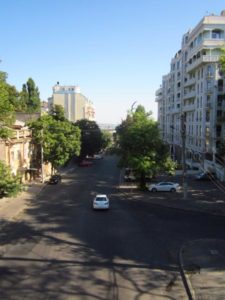
The Viiskovyi Descent has gone through many name changes in its history. The reason is quite simple: from here began one of the main transport arteries that connected the city with the Practical (Military) Harbor. The road ran along the thalweg of the Military Gully, crossed Deribasivska Street, the Greek Market, continued along Oleksandrivskyi Avenue to the Free Market and further to Pryvozna Square. Thus, it was essentially one long street, simultaneously called Oleksandrivska, Havanna, and Starobazarna.
Over time, this highway broke up into fragments: descent, avenue, street, and three market squares. The descent was initially simply called Viiskova Balka (Military Gully), then Portova, Viiskovyi, Havannyi, Sabaneievskyi, Sabaneiev, Sabanskyi, Viiskovyi Havannyi, Vorontsovskyi, Kazennyi Descent, as well as Portova Street.
Viiskova Balka ended near the Greek Bazaar, and across it were built stone bridges: Sabaneiv (1828–1836), the so-called Deribasivskyi or Gymnasium Bridge (1811–1812), and another unnamed one – at the intersection of today’s Lanzheronivska and Havanna Streets (1810). Later, the upper part of the ravine was filled in together with the latter two bridges, and this section essentially became today’s Havanna Street.
The Karantynnyi Descent
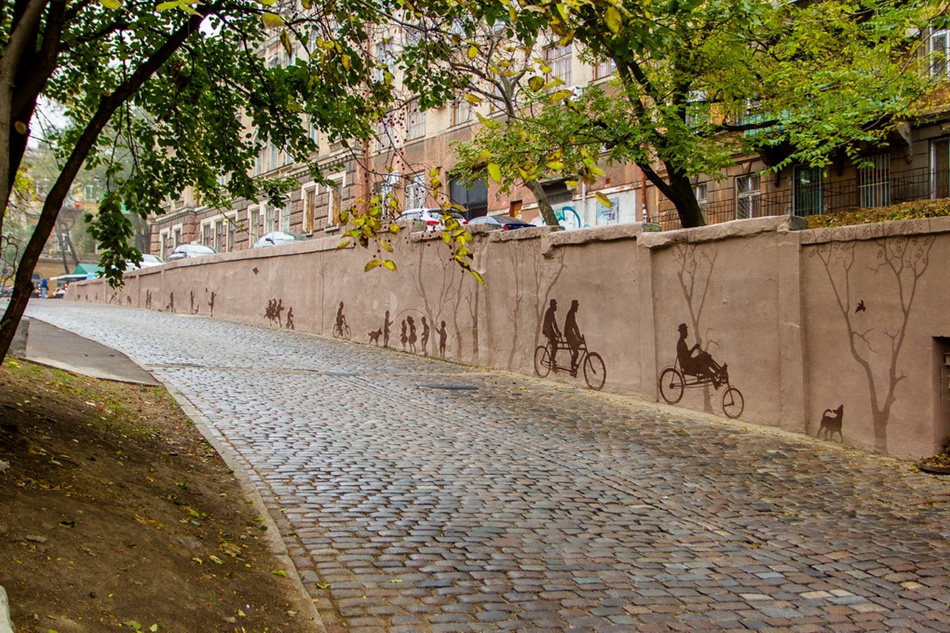
The Karantynnyi Descent is an inconspicuous, formerly neglected street in the very center of the old city, running from Shevchenko Park (Kanatna Street) to Mytna Square. Until recently, it was not remarkable at all, and the long concrete fence evoked boredom. But since last year everything has changed. The descent is now unrecognizable – trees have been trimmed, garbage removed, and most importantly, silhouettes in the style of old Odesa appeared on the concrete wall. And they did not just appear but brought the place to life and filled it with soul. These works by young talented artists tell old stories about the lives of Odesites.
Recommended reading (click the link):
Parks. Green Areas
Squares of the Historic Center
Monuments. Compositions
Odesa’s Landmark Bridges
*Why Is the Name of the City Spelled “Odesa” with Only One “S”?
We write the name of the city as “Odesa” with only one “s” in order to respect the Ukrainian spelling and the original Ukrainian name. Traditional international spellings with a double “s” may still be encountered, but the correct Ukrainian form is spelled with only one “s”.