Beaches of the Black Sea Coast of Big Odesa
Beaches of Fontanka
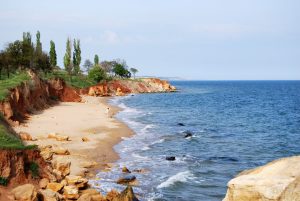
The Fontanka resort has a great recreational potential. Thanks to the combination of the sea and the steppe, the air in this rest area has a beneficial effect on the respiratory system, cardiovascular and nervous system. The natural conditions and climate of the Black Sea contribute to successful climatotherapy. Curative resources in the recreation area Fontanka on the Black Sea – sea air and sea bathing.
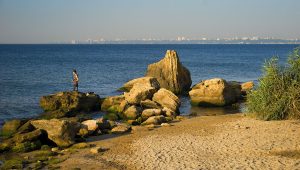
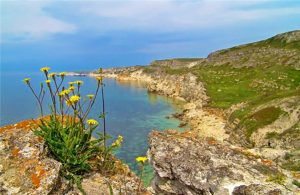
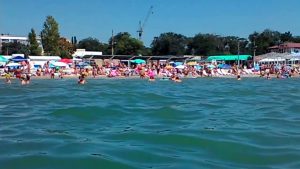
Beaches in Fontanka are aimed at lovers of a quiet and relaxing holiday on the Black Sea coast, far from the city noise and fuss. Here you can stay with tents, listen to the sea breeze at night, and in the morning meet a delightful dawn.
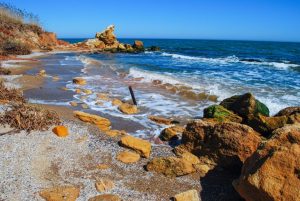
Another advantage of rest on the beach in Fontanka is that the beach is divided into small bays by stones, you can always retire with your company.
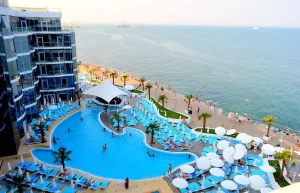
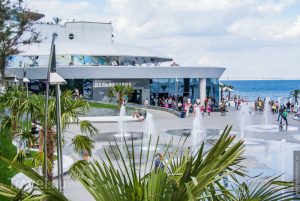
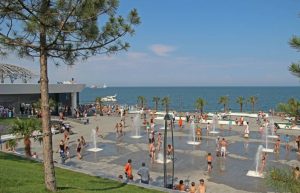
In the Fontanka area, one of the largest shopping and entertainment centers of Ukraine – “Riviera” is functioning. By voting of visitors, “Riviera” mall was recognized as the best shopping and entertainment center in Odessa. There everyone can find entertainment for their liking. In addition to various boutiques, the center has bowling, go-karting, a cinema, billiards, leopark and Auchan hypermarket. It is open in a parking lot with an amphitheater, a rope park, a swimming pool, a food court and sports grounds to create a unique recreation area for citizens and tourists.
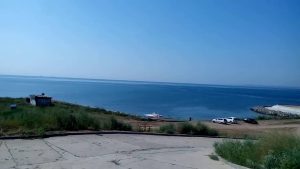
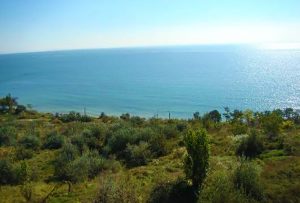
Wild Beach and Forest in Lisky
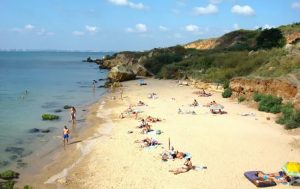
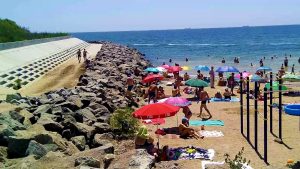
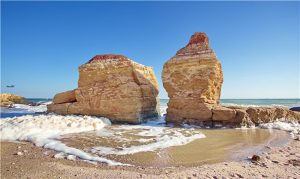
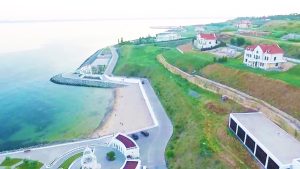
If you want both at sea and in the forest – welcome to Lisky! There is an atmosphere of peace and tranquility here, and the air smells of the sea, pine needles, flowers and berries. First, hang out in the woods, and then run to the wild beaches of this area. Here you want to lie on the sand and read Hemingway “Islands in the Ocean”, listen to a live guitar and stay for the whole summer. Waterfalls, small coves, giant boulders, brooks, the clearest sea – everything you need for a perfect pastime.
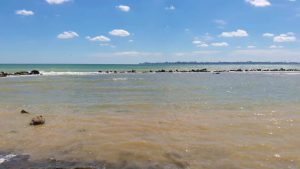
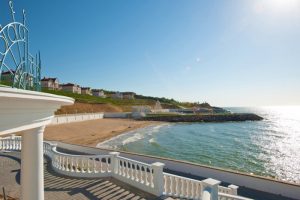
Out-of-Town Beaches in Kryzhanivka
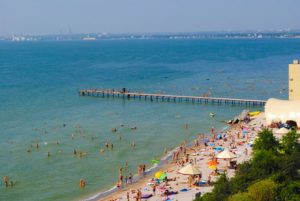
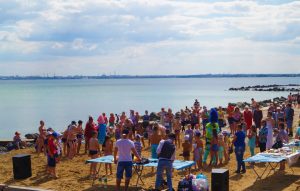
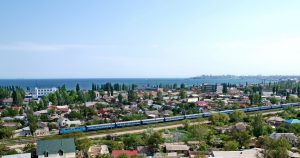
Despite the close proximity of the big city, rest in Kryzhanivka can not be called active. On the contrary, people come here to relax from the city’s bustle, relax and be alone with themselves or their loved ones. It is unlikely that there will be those who dreamed of spending an active holiday here. Kryzhanivka (Odesa Region) seems to be “breathing” with peace and tranquility: tourists are walking leisurely on the streets, tourists are relaxing on the beach.
Problems with food are not here: many cozy cafes and restaurants are always happy to meet visitors. And although there are no entertainment facilities with live music and discos, local cafes “take for living” with their warmth and friendliness. Many establishments are a “family business”, passing from parents to children, so the cuisine here is very tasty – the result of many years of experience.
However, most hotels in Kryzhanivka offer their own meals or provide the opportunity to cook on their own. Housing here is very affordable, the prices are literally pleasing with a number of zeros! At the same time, the quality of the rooms is very good: modern furniture, “fresh” renovation, beautiful view. Many hotels and mini-hotels in Kryzhanivka offer free beach equipment: umbrellas, sun beds and towels. In some places of temporary accommodation, you can ask to rent a bicycle and ride along the coastline – admire the sunset or just breathe the sea breeze.
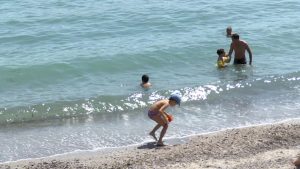
Kryzhanivka is located on the beach, some houses are almost on the shore. In any photo you can see how clean and beautiful the beach is here: pale yellow sand, fresh green grass, blue-black sea.
The coastal line is not very wide, only about 40 meters, but it extends several kilometers to the sides. Nature generously endowed this place with a variety of colors, and a small number of vacationers ensures peace and cleanliness around.

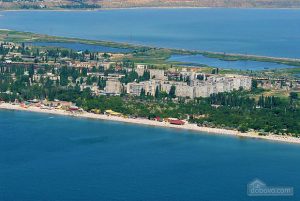
Beaches, Parks, and Nightclubs of Luzanivka
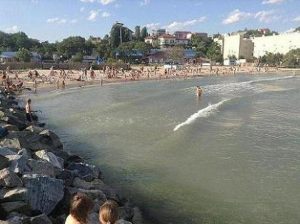
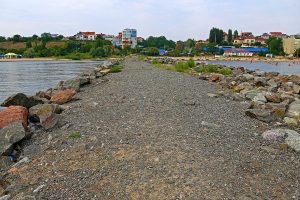
Luzanivka – a beach that is far from the city center, one can say that this beach is “local”. Located after the Peresypskyі Bridge at the entrance to a large sleeping area Odesa called “village Kotovsky” – he was for many years a place of rest locals. But recently, Luzanіvka becomes more popular, thanks to some of its advantageous features.
A BIT OF HISTORY…
The area was named after the historic owner, Major General Thomas Luzanov, famous in the wars against Napoleon and the Turks. Even during the Vorontsov governing, Major General for faithful service was given 18 thousand hectares of land near the estuary Hadzhybeiskyi. A well-known and respected in Odesa man was the grandson of Thomas Luzanov, Michael, the last chairman of the commercial court before the Revolution. According to the plans of Michael Luzanov in his possession it was planned to create the Odesa Riviera, a project that would have made this part of the Odesa coast second Nice piece of paradise to relax. It was supposed to invest eighteen million rubles in gold, who knows how could look like Luzanivka now – but, unfortunately, these grandiose plans were disrupted by the revolution. In the early twentieth century building Luzanov pretty manor on the hill above the beach, but soon came to the Bolsheviks, and the owner and his family had to emigrate. The estate camped young Communards, where a pioneer camp “Young Guard”» is located now.
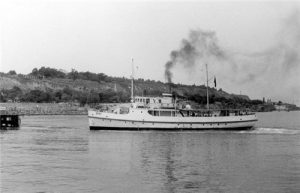
In Soviet times, the boat went here on a regular line “Odesa port – Luzanivka” – a tradition that is now trying to revive. While on the boat, or just standing on the beach at Luzanivka, you can observe from the sea the central part of the city, the port and the Sea Port or Langeron beach.
PRESENT DAY
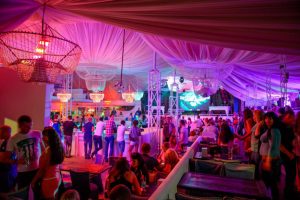
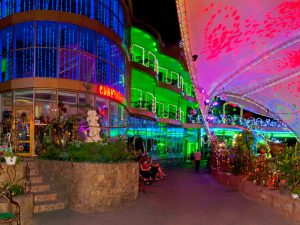
It extends the usual beach service – deck chairs, showers, changing cabins. It works amusement park for children. In recent years, Luzanivka markedly increased in terms of entertainment – there are a lot of cafes, restaurants, summer night clubs, small hotels (for example, a large living room Courtyard “Pavlov’s House” club “Malibu”, “Lemon”, “Florida”, “Gulfstream” ). It’s could be good alternative to pretentious clubs of Arcadia – at least, eat and relax here will come much cheaper.
Those who are not interested in club culture and prefers rock music or for bikers, you can find entertainment, too.
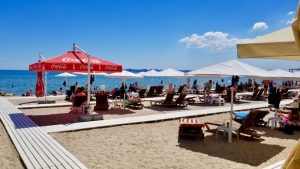
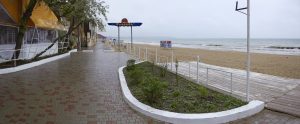
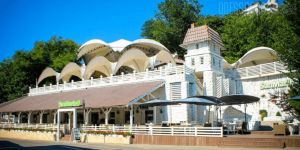

Langeron. The First Beach in Odesa
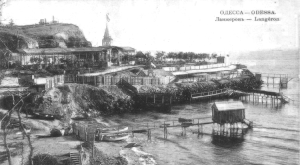
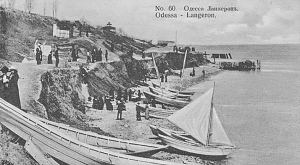
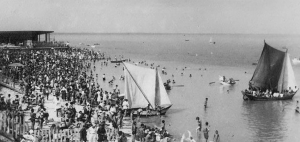
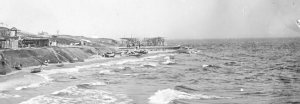
Langeron is historically the very first of Odesa’s beaches. At a time when the Small and Big Fontan areas were still poorly developed, and Arcadia did not yet exist as a leisure destination, Langeron was already attracting lovers of the sea and the sun. The closest beach to the city center, it became a hub of summer residence life and seaside recreation, a place for elegant celebrations and evening entertainment…
A BIT OF HISTORY…
First of all, it should be remembered that Langeron is not only a beach, but also a person. Count Louis Alexandre Andrault de Langeron, a Frenchman, one of the first city governors and governors-general of Odesa, may not be as widely known as his colleagues Duke de Richelieu, José de Ribas, or Mikhail Vorontsov, yet he was an original personality and left his mark on the city’s history. It was during his tenure that Odesa received the status of porto-franco (free port with special customs privileges), and the famous Richelieu Lyceum was opened.
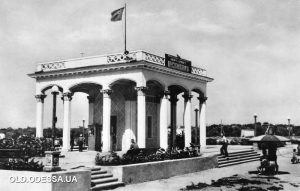
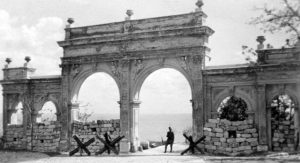
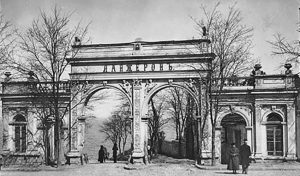
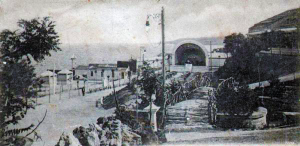
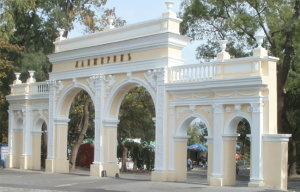
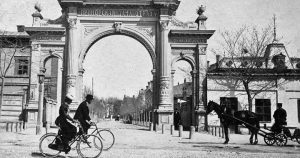
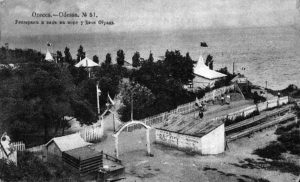
The count also owned a seaside dacha located just beyond the fortress, where the Alexander Park was later established (now the Taras Shevchenko Central Park). Balls and festivities for aristocratic society and wealthy merchants were held here. An orchestra played, and magnificent fireworks were staged. Today, only a beautiful six-span arch with the inscription “Langeron” remains from that dacha (it is located near the descent to the beach, behind the parking area). The arch was built in 1830, one year before the count’s death. Langeron bequeathed his dacha to the city on the condition that the first public city beach be established there. For some time, Odesites continued to call the area “Langeron’s dacha,” and later simply — Langeron.
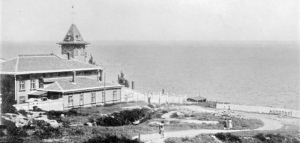
Before the introduction of the tram, Langeron remained the only popular seaside recreation area. The first line of the horse-drawn railway (konka — an early urban rail system powered by horses) was also launched here, running from Richelieu Street through Alexander Park (fare — 5 kopecks). On the descent to the sea, a bandstand (“shell”) for an orchestra was built, followed by the appearance of restaurants and summer cottages available for rent. Bathing facilities were an essential feature of the beaches, and over time free bathing facilities were also constructed for ordinary citizens, making seaside recreation more accessible and democratic.
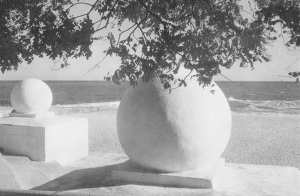
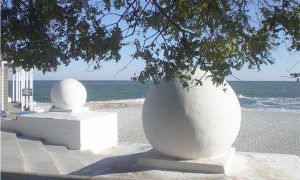
Between the beach and the port, in 1903, a lifeguard station tower (“station for rescuing the drowning”) was built, which can still be seen today. In 1920, steps and the famous white spheres — the calling card of Langeron — appeared directly at the beach entrance.
At that time, the beaches looked very different from today: they were narrow and rocky. For example, between Langeron and the Small Fontan stood a landmark rock known as “Monk,” resembling the silhouette of a hooded monk. Another serious problem was the steep slopes prone to landslides. Major landslides occurred in 1918 and 1953, when a two-kilometer stretch shifted from Langeron all the way to Tsehliannyi Lane.
In the early 1960s, major engineering works were carried out: the slopes were made more gradual, breakwaters were installed, and the beaches were significantly widened. The Soviet wave of renaming did not bypass Langeron — at that time the beach was called “Komsomol Beach,” and the inscription on the arch was even painted over. However, Odesites continued to call it by its historic name.
PRESENT DAY
To the left (when facing the sea), Langeron borders the port (there is a section of beach without sand, on concrete slabs, and therefore fewer visitors). To the right, Langeron adjoins the next beach — Otrada. In the center operates the year-round “Nemo” Dolphinarium, the largest in the post-Soviet region. In addition to vibrant shows (festive, children’s, and romantic evening performances) with dolphins and sea lions, visitors can enjoy swimming sessions and photo opportunities with these remarkable marine animals. A hotel operates within the dolphinarium complex.
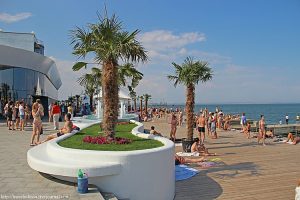
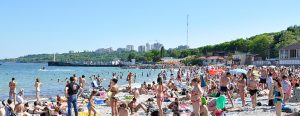
Entrance to the beach, as well as to others, is free, but services are paid — sun loungers, umbrellas, and showers. Along the seafront there are cafés and restaurants offering cuisine for every taste, as well as mini-hotels and several nightclubs. There is also a medical station and a police unit. In the summer of 2011, Langeron was recognized as the best among 11 Odesa beaches (based on criteria such as availability of sunbeds, waste bins, toilets, changing cabins, and entertainment facilities).
“Vidrada” (“Otrada”) – a Cozy City Beach
“Vidrada (Otrada) – with its four pleasant, quiet streets lined with white acacias, through the leaves of which are so romantic shone slightly greenish sky …”
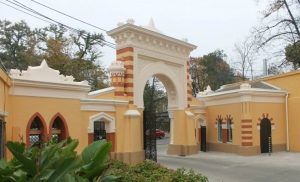
Streets that once described a resident of Odesa Valentine Kataiev – and now nice and dull, with just a pretty name: Vidradna, Iasna, Zatyshna, Morska. “Vidrada” (“Otrada”) – a small picturesque area in the center of town and the beach of the same name. Going down it can be possible in the area of the Musical Comedy Theatre, passing through back streets or down the lane Azarova. But it would be better to pass a stop (to come on the tram №5) to Pyrohovska street and go through the arch formed in the Moorish style.
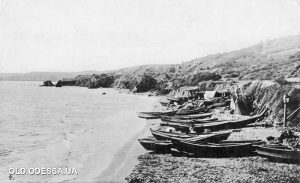
The arch was built in the early twentieth century by architect Valerian Schmidt, and led to the house of Zhdanova. Another owner of the land in this area was the Greek merchant Halaydzhoglo; Many say that it was his summer residence and it was named “Villa Otrada”, which later became the name of the whole district. Under the villas on the deserted beach it was once only fishermen huts, where they went to sea on their barges. Then, here, after Langeron, has come “beach boom” too – were built baths, recreation, holiday-trodden path.
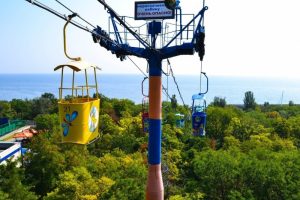
Now the passage of the stairs to the beach, as they say, it is free, but you can pay for the pleasure of the descent by cable car. It was built for comfortable movement between the French (then Proletarian) Boulevard and the beach in 1971. With a height of several tens of meters a great view of the sea and surroundings.
If you still go down on foot, you can remember that the steep slope (height nearly 40 meters) used to be a cliff and constantly bring problems in the form of landslides.
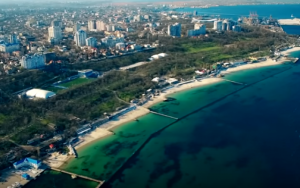
Landscaping of slope began in the 1960s, it was hard-packed and lined with trees, and at the same time there was done a concrete staircase and extended the beach and it was protected by a breakwater. Going down, crosses a trace of health – the road that runs along the sea from Langeron to Arcadia (about 7 km). It prohibited the movement of vehicles, this route, as the name implies – for athletes and outdoor enthusiasts: cyclists, skaters, joggers. Along the route are installed playgrounds. However, in summer one mode of transport still runs on the track of health – a silent electric car, which can be reached Langeron or Arcadia. If you go to the left – you can go to the training base of football club “Chornomorets”, where until late evening train Odesa boys. Nearby tennis courts.
To the right of “Otrada” beach is the Yacht Club, which features walks on yachts or lease. By the way, Black Sea Yacht Club there in Odesa since 1875.
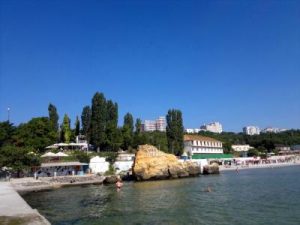
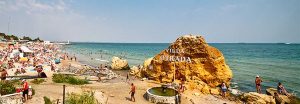
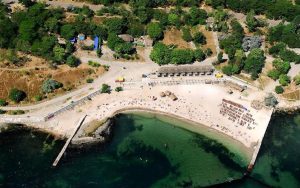
About the beach: free entrance to the beach and paid services – lounge chairs, shower. Also, traditionally – rescue service, medical center and police. On the avenue along the beach – restaurants, cafes, mini-hotels and several nightclubs (“Treasure Island”, “Villa Otrada», «Otrada Beach Club»). About the attractions on the beach is a large yellow stone, near which Odessans like to make appointments, and tourists get photos.
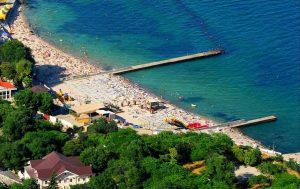
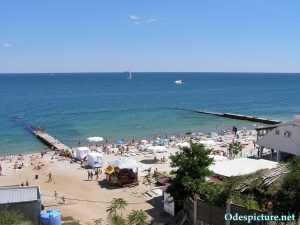
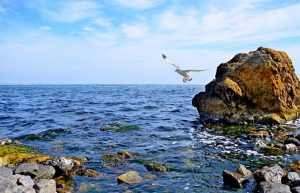
“Dolphin” Beach
Beach “Dolphin” is certainly not as popular as Langeron or Arcadia. But this does not mean that it is worse. It has its charms – wide beach, beautiful green slopes above it and less intrusive entertainment facilities (although they are also available); measured rest at the Black Sea, lapping waves under the tender rays of the sun.
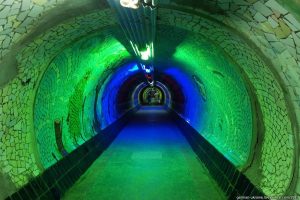
“Dolphin” can be reached if at the 5th tram ride to the bus stop “Institute im.Filatova” (Champagne Lane) and then go down the stairs to the sea, past the restaurant “Glechik.” Another option – to hang on one stop to the sanatorium “Magnolia”, where you can use a special elevator and an underground tunnel. Adorned with fabulous mosaic tunnel gallery length of about 200 meters – a bright landmark resort. “Dolphin” can be reached by own car – easy access to the beach is almost here equipped with parking.
Next to the “Dolphin”, on the French Boulevard, is the body of the Odesa University and student dormitories, so the beach is considered as a beach for young people. Here you can meet the cheerful company, marking the surrender of the session, others can walk around to pass boring lecture, someone basking in the sun.
There is also a place for fans to improve their health and keep fit in the fresh air – a few sports grounds on the way to the beach, next to the track of health. Horizontal bar, parallel bars, wall-bars are especially popular in the summer, but athletes can be seen here in winter. During the warmer months you can watch the training sections of martial arts and boxing. One of the slopes is equipped with a track climbs and descents for lovers of cycling extreme. On the beach there is a net for volleyball.
Like on other beaches, admission is free, but paid services are available: deckchairs, umbrellas, shower. Cold drinks and ice cream is not a problem to find in the nearest trays, there are a few cafes. Nightclub “Taboo” and pop restaurant “Utiosov” with a summer terrace.
Well, that there not forget the needs of all groups of the population – on the beach “Dolphin”, municipal beach is equipped for the disabled. Equipped with the descent-ramp to the sea for people with disabilities, a special changing room and shower. Gentle slope will be convenient for moms with strollers.
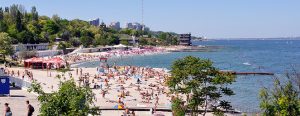
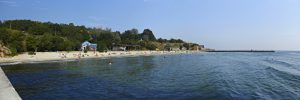
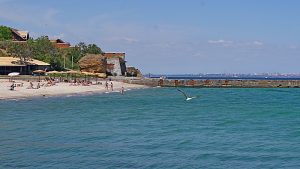
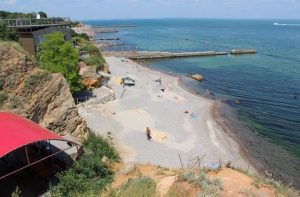
Nudist Beach (“Chkalovsky”)
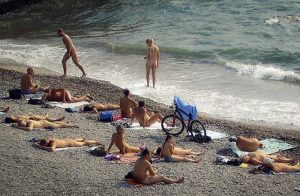
Odesa is considered the most attractive place for naturist recreation on the Black Sea coast of Ukraine. Here, even on public beaches, approximately one third of women sunbathe topless — both with men and without them, and even simply alone. However, in a resort city, topless sunbathing is natural and not regarded as something unusual. In Odesa, there is a strong naturist community that ensures the cleanliness and order of the beach.
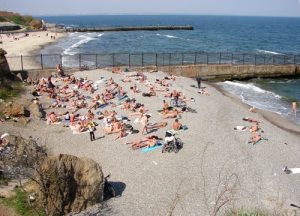
The actual naturist beach in Odesa is located almost in the center of the city, between the resort areas of Dolphin and Arcadia: it is a 15-minute tram ride from the railway station (tram No. 5, stop “Chkalov Sanatorium” on French Boulevard), and from there a descent to the sea through a park. One needs to descend to the coastal asphalt road and, bypassing on the right the fenced territory of the Chkalov Sanatorium beach (entry to this beach for outsiders is paid), proceed toward the seashore until reaching a path descending from the cliff. Another sign of the beach is the presence above of usually from two to ten men who are carefully watching what happens below. The beach itself is a strip 20–30 meters wide, covered mostly with pebbles (on average the size of a pigeon’s egg and not very smooth), although in the middle there is a small patch of sand. In good weather, even on weekdays several hundred people gather on the beach, while on weekends — more than a thousand. In general, if you like sunbathing without clothes, you will enjoy it here. However, as noted, unfortunately there is not always enough space on this beach, and on weekends it is simply insufficient.
On the beach, there is a small bar where one can buy beer, water, and cigarettes, and on Fridays, Saturdays, and Sundays, absolutely amazing and very delicious pilaf is prepared here.

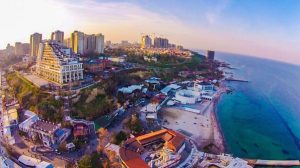
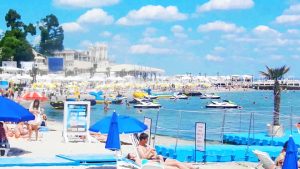
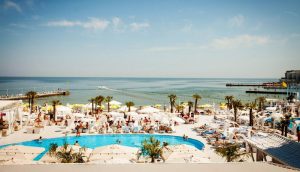
Arcadia – the Center of Resort Life in Odesa
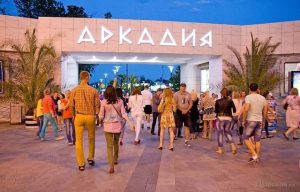
Odesa beach “Arcadia” – the most noisy and active beach of the city, the center of resort life and nightlife. During the day, numerous vacationers — find their place in the sun, and after sunset, restaurants and night clubs located right by the sea compete in the volume of music and the brightness of guest stars. Arcadia as a fashionable resting place is known far beyond the borders of Odesa.
A LITTLE BIT OF HISTIRY….
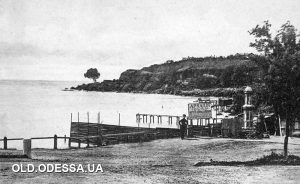
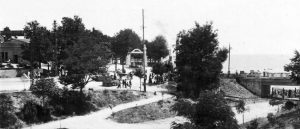
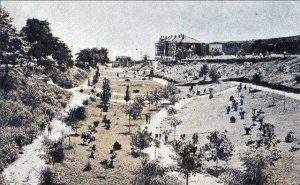
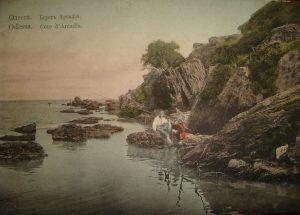
It all began at the end of the XIX century. At that time, residents and guests of Odesa were delighted by the magnificent Deribasivska Street and Prymorsky Boulevard, but on the site of the future Arcadia there was still just a rocky, unsuitable beach for rest. As the historian A.M. Deribas wrote (a descendant of the very one in whose honor the street was named) – here one could find only the shack of a poor Greek fisherman who, despite his poverty, could treat travelers with original Santorino wine.
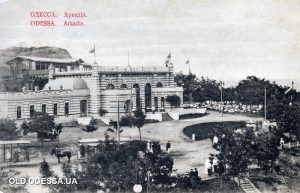
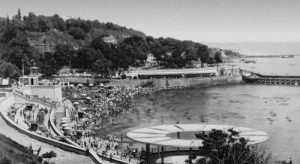
The discoverer of Arcadia is considered to be the Belgian Emile Cambier, director of the Odesa agency of the Belgian equestrian railways (or “horses”). When he had some business nearby, in the stables on the Malyi (Small) Fountain, he noticed a wide seaside beam convenient for walking. The fact is that steep cliffs and slopes lead to most of Odesa’s beaches, and here it was possible to reach the beach along a natural gentle descent (ravine). The slopes of the beams were covered with a lilac immortelle, and a trickle murmured nearby. The energetic Cambier decided to extend the horse-drawn railway to this beautiful place, and built the first restaurant on the beach. In V.Katayev’s story “A White Sail Gleams ”, Arcadia of those times is mentioned: “And here is Arcadia, a restaurant on stilts, a sink for an orchestra … colorful umbrellas, tablecloths along which the wind runs ..”
Then the name “Arcadia” appeared. As is known, this name was carried by the place in Greece, which, thanks to poets, was perceived as a fertile locality, a nature paradise; Arcadia in Odesa supposed to become such an ideal place to rest following the example of the Greek. Her references are found in 1893 in Odesa newspapers: “The Directorate of the horse-drawn railroad presented to the city government a project to draw a line from the Malofontanskaya road to a place called “Arcadia”.
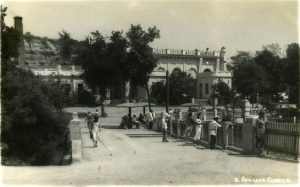
Cambier’s enterprise was rewarded, Odesans liked a new place of rest and Arcadia quickly became popular. They opened the baths, began to build new restaurants and places of entertainment for the richer citizens, and small pubs for those who are more modest. An interesting contrast is that Arcadia leads like an elite French Boulevard, where the cottage of the Odesa nobility and wealthy people (Marazli, Mavrokordato, Papudov) were located, and the Novo-Arkadiyskaya Road (now Shevchenko Avenue) located nearby, where the poor people settled in slums and at that time crime flourished.
After the October Coup of 1917, the cottages of Odessa magnates went to sanatoriums, but cottages and party workers’ houses appeared around Arcadia. Hotels were built. In Arcadia, Soviet workers from different republics rested in numerous sanatoriums (in honor of the friendship of the republics, sanatoriums were given the names: “Ukraine”, “Moldova”). The popular Odesa beach has appeared several times in Soviet films.
In the 60s, shore protection works were carried out, the beach was significantly expanded.
PRESENT DAY
After the difficult period of the 90s, Arcadia again went through a period of boom and active development – new summer venues and fashionable nightclubs appeared, where guests from other cities of Ukraine and foreign countries came to hang out. Arcadia, like Odesa itself, remains popular in any weather and under any authority…
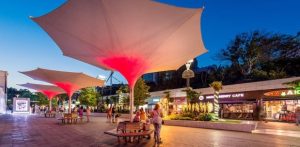
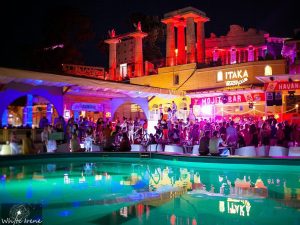
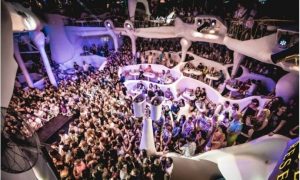
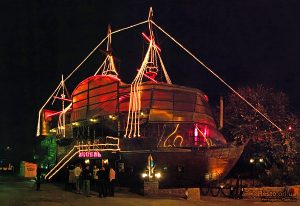
It is here, in Arcadia, the club life of the Southern capital begins. Here everyone will find something to their taste, because Arcadia is rich in places for recreation. Here and cozy cafes, and restaurants, and elite clubs. Even the beach here is not just a beach: with the sunset it turns into a dance floor, and the best DJs make every party incendiary and not similar to the previous ones.
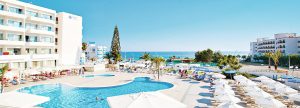
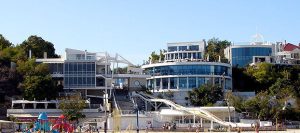
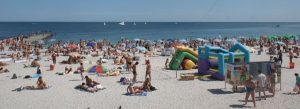
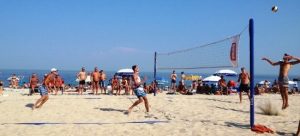
Beaches of the Big Fountain
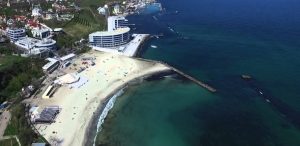
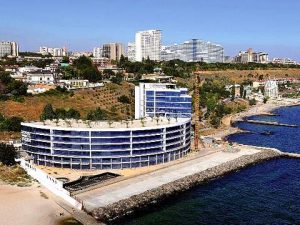
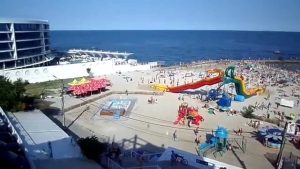
The beaches of the Big Fountain are located immediately behind the beach of Arkadia (if you look from the side of the city center). Until recently, from Arcadia you could easily walk, along the sea, to the beaches of the stations of the Big Fountain. But Odessa is expanding and expanding, in particular as a resort city. Every year, on holiday in Odessa on the Black Sea, they come, more and more willing to soak up the seashore. Due to the construction of new boarding houses, hotels and recreation centers along the coastal zone, the passage from Arcadia to the Fontan beaches is temporarily closed.
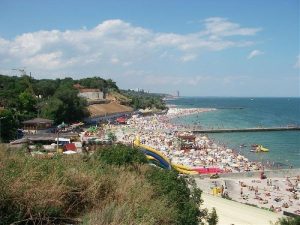
The name of the Big Fountain is due to the presence of a large number of streams flowing from the catacombs along the entire coast. At present, the shore of the Big Fountain is a wide strip of sandy beaches from the 8th to the 13th stations of the Big Fountain.
Recreation on the Fountain sanatoriums and recreation centers can offer in Odessa, located on the coast. A place quite popular around Odessa residents and guests of the city of Odessa. This is also adjacent to the private sector of Odessa, where many tourists rest by the sea on a holiday in Odessa. The beaches of Odessa in the area of the Big Fountain are sandy, separated by breakwaters.
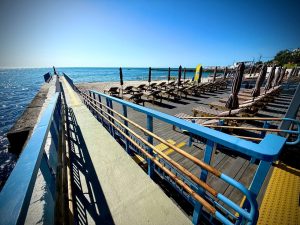
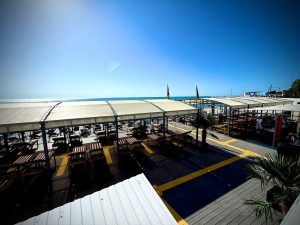
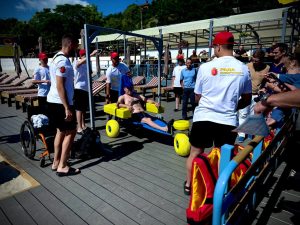
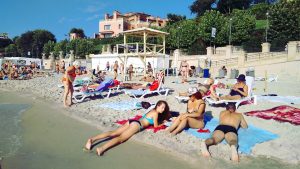
On July 1, 2025, in Odesa, a renovated inclusive beach was opened at the 11th Station of the Big Fountain, which meets international standards of accessibility, safety, and ecology, and has been awarded the “AES Standard” certificate (a document that confirms the compliance of the beach with international standards of quality, safety, and environmental sustainability).
The inclusive beach is equipped with special ramps, modern toilets, and shower cabins designed to meet the needs of people with disabilities. There is also a medical station and a shelter. In addition, after major renovations, the inclusive beach at the 11th Station of the Big Fountain now features convenient routes and elements of accessible infrastructure, verified by experts and users.

Beach “Golden Shore” (“Zolotyi Bereh”)
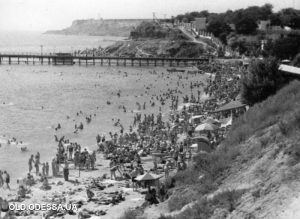
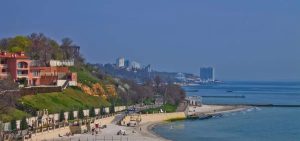
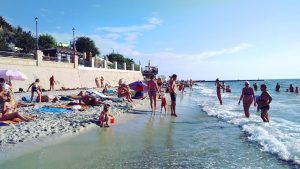
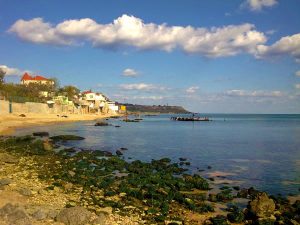
“Golden Shore” (“Zolotyi Bereh”) – so beautifully called the beach at the 16th station of the Great Fountain.
A LITTLE BIT OF HISTORY…
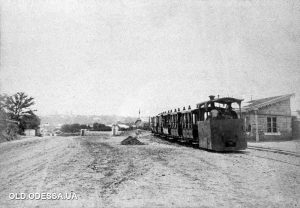
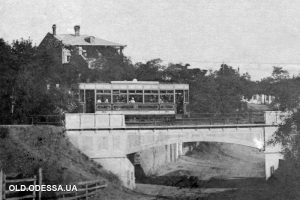
Stations of Fountain – connected with the first Odesa tram, that’s how his stop was called. Before the advent of electricity, horse-drawn carriages went to the Big Fountain, the so-called “konka”, in Babel’s time it was already a tram on steam traction (“steam engine” – by the way, appeared in Odesa first in the country in 1881). Since 1910, electric tram started up. And the route did not change: from the 1st station of Fountain (Kulykove field) to the last, 16th (Golden Shore).
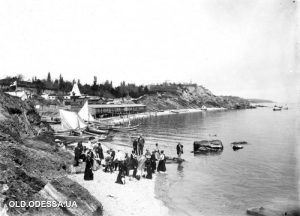
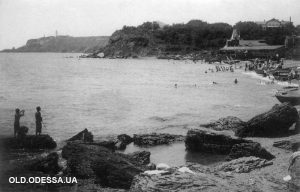
And they went, of course, to the beach, and Golden Shore was always considered one of the best. The origin of the name was lost in the depths of the centuries, but, as always, there are several interesting legends. According to one of them, here was one of the few natural beaches, with the cleanest, “golden” sand. According to another version, by underground passages abducted young girls were smuggled to the 16th station and here they were exchanged for Turkish gold and sent to harems. Another version related to the Turks – here in 1811 a Turkish vessel allegedly crashed, carrying a fabulous amount of gold coins, everyone rushed to look for them on the beach and each Odesan got a few. In general, no one will say for sure what happened here 200 years ago, but today to every citizen of Odesa and a city visitor who came to the beach is guaranteed gold of a bright sun and the brilliance of a playing sea wave.
Around the beach, the suburban area grew and gained prestige. Villas on the Fountains were initially cheaper than on French Boulevard, so the people settled here in the summer more unpretentious, diverse and interesting. Station 16 eventually became a commercial and cultural center of resort life. In 1892, the first Odesa summer theater of Sergeiev, on the outskirts of Odesa was opened here. On the small stage, the actors acted out comedic plots, and the “little trainer” passing by then still drowned out their remarks with a loud whistle. Later the theater was rebuilt and expanded, Bagritsky, Fioletov, Kataev recited poems on its stage.
There were restaurants, buffets for resort visitors with any thickness of the wallet. One of the attractions were “Establishment of warm sea baths.” There was a summer cinema in which after the war trophy films were spinning – “Tarzan” and other blockbusters.
Landslides have always been a problem in the coastal zone of Odesa, we even had to change the route of the tram when the rails were on the edge of a cliff. Therefore, Golden Shore, like other beaches, was reconstructed in the 1960s – sand was washed in, shore protection works were carried out, concrete blocks of breakwaters were installed, the slopes became more gentle, comfortable slopes and stairs appeared. There are no landslides anymore, but the sea still periodically takes part of the beaches, especially during the winter storms. If the spring does not return the sand itself, then the periodic alluvion helps.
PRESENT DAYS
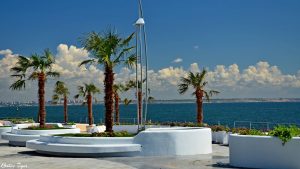
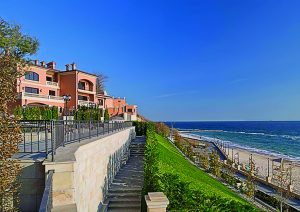
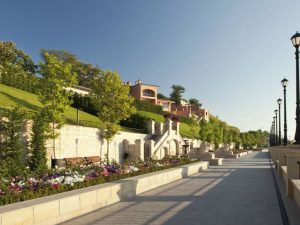
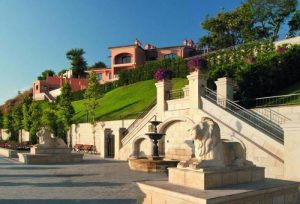
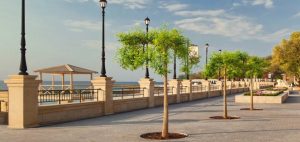
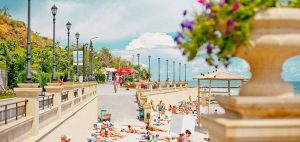
A new sight recently opened at the 16th station is a new embankment. The area along the sea is lined with granite stone, lights are installed, comfortable beautiful benches, an observation deck, planted trees. This fountain of oasis is crowned with elegant fountains and picturesque flowerbeds. The walks are especially good here in the summer evening, with night lighting, under the whisper of the waves.
The beach itself provides entertainment for children of any age. For a smaller one – a playground, a pool, water slides, a shooting gallery and so on. For older – scooters, water parachutes, beer bars, restaurants, cafes and clubs. Every whim for your money. Oh yeah, even the sea with the sun in the load, so as not to forget.
Beaches of the “Cottage (Dacha) Kovalevsky” Area
The beaches here are located along the street of the same name, as well as, the Memorial 411 Battery.
A BIT OF HISTORY…
Strangely enough, the history of the Cottage Kovalevsky is connected with the history of the Odessa water supply system and, as you will see later in the story, is rather tragic. But, everything is in order….
Odesa, since its foundation and in the first decades of its rapid development, has been seriously confronted with the problem of water supply. In those days, Odessans were forced to collect rainwater to meet their needs. However, in the late 18th and early 19th centuries, three settlements formed on the coast, south-west of what was then Odesa, in the hamlet. Their occurrence is due to the fact that abundant sources of drinking water were located in these places. Odessans called such sources the French word “fountain” (“fontaine”). Accordingly, the farms began to be called the Big Fountain, the Middle Fountain and the Small Fountain. All three Fountains became the main sources of water for Odesa at that time. Later, for the delivery of water, from the farms to the city began to ply the railway equestrian train with several cars, and the farms themselves began to be called “stations”. Further, horse-drawn wheel barrels were transported through the city. Agree, the system is quite cumbersome and time consuming. The problem could solve only the plumbing….
One of those who tried to solve this problem was the French émigré Stephen Pichon. However, this large-scale task was not solved, and a rich merchant from Taganrog, Tymofei Kovalevsky, who in the late 40s of the 19th century at the Big Fountain Station built an underground stone water intake gallery, steam pump station, water tower with a height of 45 meters and water supply 12 kilometers long. Water was supplied to the intersection of the current Staroportofrankіvska and Velyka Arnautska streets. It was there that the reservoir was installed (a large metal tank), from which water was transported by horse-drawn water carriers around the city. The first water supply by water pipe took place on February 15, 1853. This day can be considered the birthday of Odesa water pipeline…
For services to the city, Kovalevsky was awarded the title of Honorary Citizen of Odesa, which was passed on to his descendants through the male line. Next to the water tower, the Kovalevsky family built a house for themselves.
However, the amount of water in the springs of the Fountains gradually dried up, and the Kovalevsky enterprise fell into decay …. Significant debts brought the creator of the Odesa water pipeline to suicide: in the late 60s of the 19th century, Kovalevsky rushed from the water tower he had built. Attempts by his eldest son, Andrii Kovalevsky, to restore matters did not succeed, and in 1873, to meet the growing water needs of the city, they began to pump water from the Biliaivka water pumping station from the Dniester River. It was noticeably worse than spring water from the Kovalevsky water supply system, and Odessans began to say about its quality, that it was “not a fountain”. Thus, the characteristic of the low quality of something popular nowadays in Odesa was born – “this is not a fountain”…
After the seizure of Odesa in 1920 by units of the Red Army, the descendants of Timofey Kovalevsky emigrated abroad. In the 30s of the last century, the water tower was dismantled, since the USSR believed that it could be a good reference point for sighting enemy artillery during possible hostilities.
So ended the history of the first Odesa water pipeline, but the area where the first water supply station and street along the Black Sea coast was located, and later, the coast itself, with time, became known as the Cottage Kovalevsky..
PRESENT DAYS
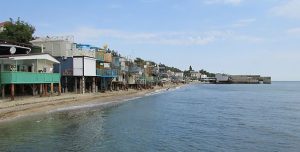
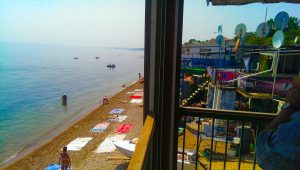
The coast near the Cottage Kovalevsky is a unique place … This is the area of the so-called Odesa fishing “kuren”, which are small dachas of amateur fishermen. Almost every owner of such a cabin has at least one fishing boat. These smoking cottages stretch along the coast, practically, up to the Black Sea and are divided into “moorings”. Today, many “smokers” have lost their original purpose – their owners rent their guests to the city for the summer season…
The Monastic Beach (“Monastyrskyi”)
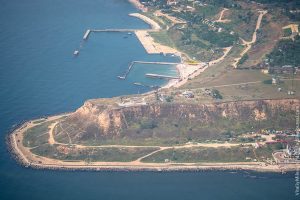
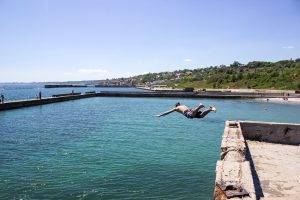
The beach is located near the cape of Big Fountain – pleasure for introverts, lovers of taking pictures, talking one-on-one with the sea and climbing hills. Landscapes of wild and incredible beauty! The cape makes your head spin, and in the spring you have a chance to transform at Alice from Wonderland and lie in a chamomile field. Here is the spirit of a dear, old, cottage and not vulgarized Odesa. All this non-elusive beauty is located next to the male Assumption Monastery. Obviously, this is why the beach is called the Monastic Beach (“Monastyrsky” or “Popovsky”).
Perhaps this is one of the few places in Odesa where diving from the shore can be interesting. Due to the cascade of breakwaters and the neighborhood with the Cape, the bottom in this place is not smooth as a platter. Concrete blocks and granite stones along the breakwaters create an excellent environment for marine life. Further from the coast there are small fragments of thin-bedded limestone with imprints of marine shellfishes.
Beaches of the village Chornomorka (Lustdorf)
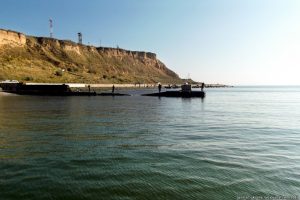
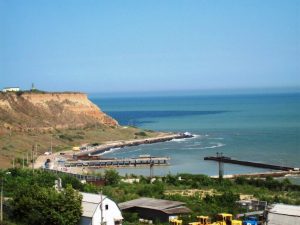
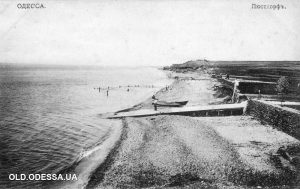
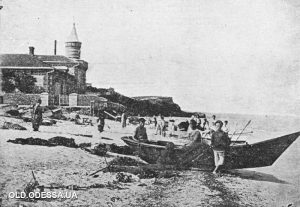
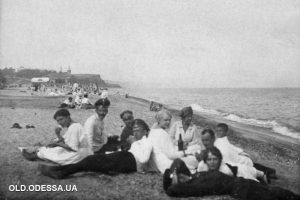
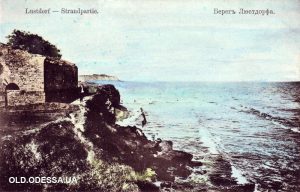
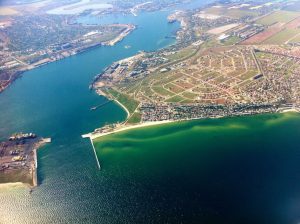
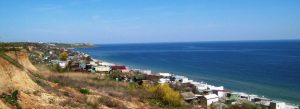
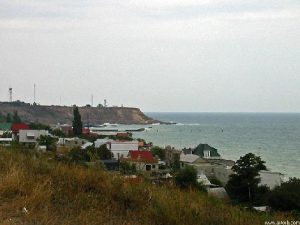
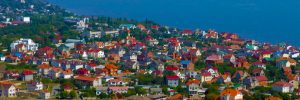
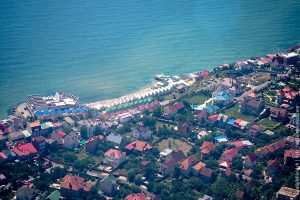
Chornomorka is the surrounding Odesa uptown, with its beach, what today hassome advantageous features. Unlike other beaches located in the water area of the Odesa Bay, Chornomorka is located on the coast of the open sea, Here the sea breeze freely walks over the expanses of the Black Sea steppes. The unique combination of sea and steppe climate between Odesa and the Ovidiopolsky district, picturesque surroundings with flowering gardens and vineyards made it possible to create excellent conditions for rest and treatment here.
A BIT OF HISTORY…
Sanatoriums, boarding houses, and recreation centers are signs of a bygone Soviet era. Some of them managed to survive difficult times, and now they are work and they are ready to receive guests. The name Chornomorka – also from the Soviet era. Before the revolution, the village was inhabited by the Germans and it was called Lyustdorf (that is, “Merry Village”). And if you dig into history even deeper – in 1805, when the first 40 families from the glorious city of Württemberg appeared on this coast – then they called the new town on the hospitable Black Sea coast the Kaiserheim. The Germans, as demanded by strict Ordnung, built all the colonies according to the traditional pattern – with the Lutheran church in the center, school, building of the government. By the way, houses that was built by German colonists you can find in many villages and towns of the Black Sea coast. The settlement with industrious citizens flourished – the rich Ukrainian lands gave good harvests, the trade went off with a bang, the theater worked, which staged plays in several languages and successfully toured.
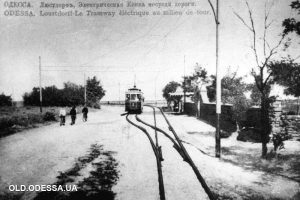
According to rumors, the name Lustdorf appeared after the visit of the Odesa mayor Duke Richelieu, who liked the German “cheerful village” very much. True, getting there from Odessa was long and inconvenient, for example, capricious Odesa women could say about Paris: “This is far away, somewhere behind Lustdorf.” Therefore, practical Germans were the first to draw to themselves a line of an electric tram, from Lyustdorf to 16 station of the Big Fountain – this is when the “little train” was still running in Odesa. On the tram going through the coastal steppe, you can get to the place even today .However since those times, the building has become considerably thicker, as is the density of passenger traffic (and that’s mean when you`re entering the tram, don’t yawn with your mouth and do not clap with your ears, otherwise you will pass your stop and find yourself, if not in Paris, then without a wallet).
The problems of the Lustdorf Germans began after the revolution, with the beginning of the dekulakization, repression and the fight against religion. Kirkha was destroyed, only a wing was left. And then the war broke out, after which all the Germans were evicted, someone ended up in Germany, and someone ended up in Siberia or Kazakhstan. Such a sad story of the “marry village”. Interestingly, the old German name of the uptown is used a little, but returned to Odesa street leading to it, so the Lustdorfska road is the way to Chornomorka.
PRESENT DAYS
Let’s go back to the beach. On the left you can see the Big Fountain cape with the lighthouse and the domes of the Holy Assumption Monastery, on the right – the satellite city of Odesa – Chornomorsk. In Chornomorka there was no shore protection and installation of the breakwaters, as in the beaches of the city limits, so the coast is freely washed by the waves of the open sea. What is good for lovers of swimming in the waves, but not always good for sand washed into the sea. As already mentioned, the beach of Chornomorka felt best in the heyday of the Soviet sanatoriums, in the 70-80s. Today, the coastal zone is being tried to reanimate and restore its former glory, to ennoble the adjacent territories.
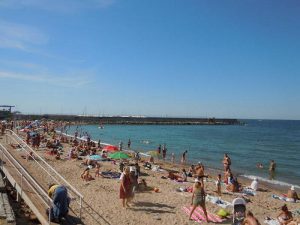
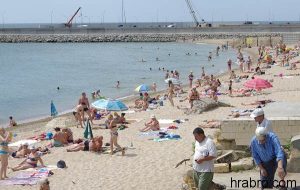
There are lovers who do not change themselves and rest only here, including as the “savage”; if you worry a little ahead of time, you can easily rent a room / house / hut on the dock from local residents or summer residents. Fishermen catch here flounder, gloss, this is in addition to the traditional Odesa bulls. Nearby is Fishport. There are large number of cafes and summer playgrounds. There is a traditional set of beach activities, such as sun loungers / umbrellas, volleyball, scooters, beautiful tanned girls, a “hooot-heeeeel” and a “cooold pepsi-cola”.
Beaches of the village Sauvignon
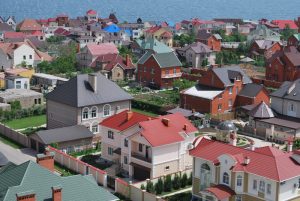
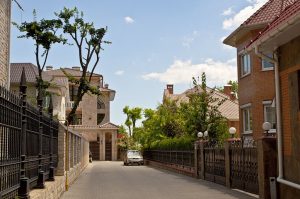
Sauvignon is one of the most beautiful and at the same time prestigious areas of Odesa. Named after one of the French grapes used to make wines. Sauvignon is located 18 kilometers from the center of Odesa. Or rather, in Odesa district, although it’s not a long way to go there. Sauvignon is located in a beautiful area, it is characterized by a large length of the sea coast. Especially village distinguish by the pomp and wealth. Here you can get acquainted with the wealthy and cultural half of the Odesa population.
Sauvignon also offer a combination of steppe and sea air. It will help in the treatment of many diseases. Thanks to the warm and mild climate, you can relax in the area at any time of the year. The infrastructure of Sauvignon is well developed. There are a kindergarten, a school, various shops, restaurants, cafes, saunas, a swimming pool, a wellness center, a SPA center with various procedures and artesian water, bowling, a billiard room, a bank, a nightclub, a travel agency and many others enterprises.
A LITTLE BIT OF HISTORY…
The history of Sauvignon begins in 1997. When you have a desire to get closer to nature, but you don’t want to leave the city – the country cottage town is a compromise solution. This was noted by the founders of the project “Sauvignon”. After adopting the experience of developed countries, they developed a construction program, the essence of which was to develop approximately 450 hectares of land and create a residential area, which was supposed to have the same name. Historians note that the land of Sauvignon is inhabited not for the first millennium. This is evidenced by various finds that were discovered on the territory.
There are rumors that a renowned winemaker Vasyl Tairov has been searching for appropriate climatic conditions for growing grapes for almost ten years. And he has chosen these lands. That is why Sauvignon is the most favorable name for the residential area, which is associated with the name of the eponymous French province and the well-known grape variety. Over time, the first buildings began to appear, then the streets and even neighborhoods. Now there are nine of them. Each is different from each other both in terms of the number of residents, as well as in the size of the plots, and architecture. Now Sauvignon is a kind of brand, the name of well-being, prosperity and success.
PRESENT DAYS
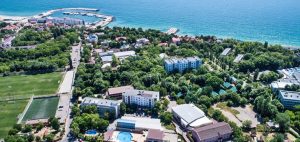
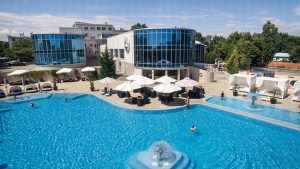
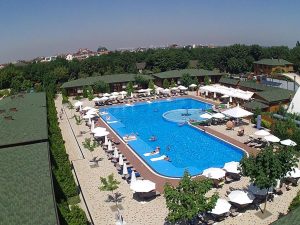
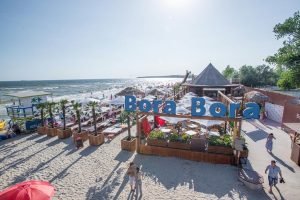
“Bora Bora Paradise” and “Voskhod” are two coastal Sauvignon complexes, which correspond to the world standards of the resort rest area. There are also public beaches: “university”, small and large public beaches on the southern slope. The sandy beaches are clean with many piers that go far into the sea. It is characterized by shallow water, which allows you to have a good time, both for adults and children. One of the main advantages of a public beach is free admission. There are no beach chairs, umbrellas, but there is a sea and sand – the main thing you need for a beach holiday. The Bora Bora Paradise and Voskhod complexes are characterized by a wonderful view of the sea, a multitude of establishments and first-class service.
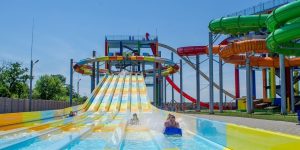
Children can have fun in the beach town with a water park and inflatable slides. They can also be attracted by a playground in a pine forest, they will be pleased to relax and play next to the fountain “Dolphins”. Sauvignon has several restaurants, a café-bar, clubs that can make interest for the older generation. Tennis courts will contribute to a good physical condition and will not let you get bored. The close distance to Odesa will allow you to get to South Palmyra at any time when you wish, and spend your leisure time there.
Sauvignon is a calm and prestigious area. Here you will forget about all your problems, the bustle of the city and you will want just to enjoy your vacation! A lot of entertainment will add variety to your holiday. A lot of interesting things both adults and kids can find here for themselves. Every vacationer can choose a beach for their needs – a public or beach complex. But, in any case, you will never forget your rest in Sauvignon!
Beaches of the city Chornomorsk
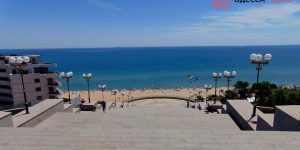
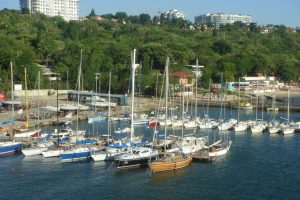
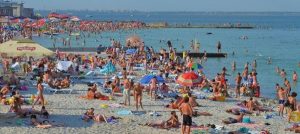
Chornomorsk is located in 30 km from Odesa on the Black Sea coast. The area around the city has many healing properties. The mild natural climate favorably affects the health and well-being of tourists. In the Chornomorsk the Black Sea will meet you. Velvet, well-equipped sandy beaches are stretched along the sea. Here you will find everything you need – changing rooms, showers with fresh water and more. On the coast there are recreation centers, hotels, motels and children’s camps. The air in Chornomorsk is clean, mixed from the steppe and sea, and this attracts many tourists, both from Ukraine and from other countries. In addition, you will love to sunbathe under the rays of the generous southern sun! The beach season here begins in April and ends only in October. The average monthly air temperature in July, the hottest month of the year, ranges from 25 to 30 degrees. It is important to say that the summer heat here is slightly weakened due to the close location of the sea and estuaries.
A LITTLE BIT OF HISTORY…
Chornomorsk is a relatively young city, but, despite this, it is very beautiful and extremely clean. In the period from 1928 to 1951, Chornomorsk was known as the Bug, in 1952 it was already called Illichivsk. Since 1973 – Ilyichevsk. And in 2018, the city gets its current name. The land on which Chornomorsk is now located in the 18th century was settled by refugees from Ukraine, Russia, and Moldova. They settled on separate farms, which at that time called the Bugovs in honor of the first immigrant to these lands, the Bug. By 1924, the population of farms significantly increased, and after the Second World War, even the village of shipbuilder arised.
PRESENT DAYS
Chornomorsk has everything you need for a wonderful holiday: a lot of services provided and, what is very important, a wonderful atmosphere! On the beaches of the city you can ride on scooters, boats, “bananas” and so on. If you are a sports lover, then all the conditions for playing beach volleyball or football are created here.
For those who prefer fun leisure activities, there are many restaurants, bars, cafes and night clubs in Chornomorsk. In addition, there are various excursions. Fans of a quiet and relaxing holiday can spend their time walking around the city, because there is something to see! Chornomorsk is famous for the beauty of the numerous fountains. The most famous of them are the Big Fountain and the Little Mermaid Fountain. Modern parks, alleys and incredibly beautiful flower beds decorate the city.
For the little guests of the city there is also a lot of interesting things. Throughout the city you will find children’s arbors, playgrounds, attractions, where your child can spend time. There is always something to do in Chornomorsk, it is beautiful and interesting at any time of the day.
One of the advantages of rest in Chornomorsk is its proximity to Odesa. Whatever resort in the Odesa region you would choose, you just need to devote one day and go to Odesa. There are so many interesting things to do here that you will remember your trip to this city for a long time!
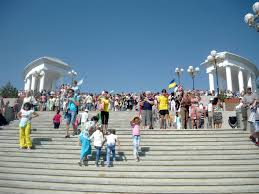
In Chornomorsk you will find a lot of entertainment, clean beaches with all services and an incredible atmosphere.
Beaches of the Estuaries of Odesa
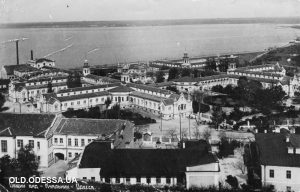
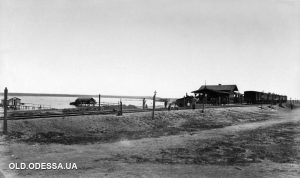
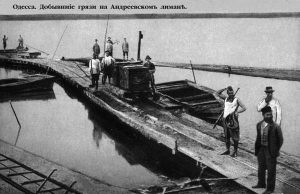
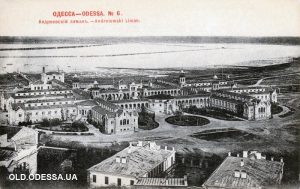
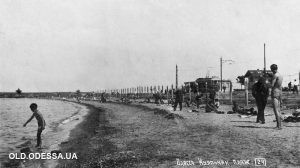
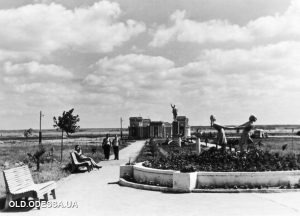
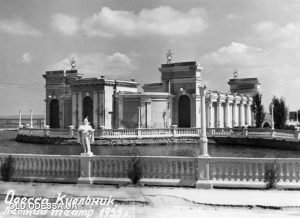
The Kuіalnyk Resort – one of the oldest mud resorts in Ukraine
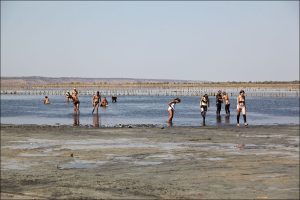
The Kuіalnyk resort is one of the oldest mud resorts in our country, located 13 km from the center of Odesa at the foot of the Zhevakhova Mountain on the right bank of the Kuіalnyk estuary.
A LITTLE BIT OF HISTORY…
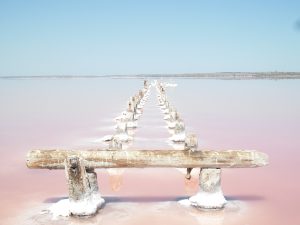
According to opinion of some researchers, the name of the resort is associated with a high concentration of salt in the water of the estuary (from the Turkic “Kuyanlyk” – thick). It is no coincidence that in the literature of the Slavic peoples the present-day Odesa estuaries were called “Salt lakes”. Not only salt was mined in the estuary. In the book “Description of Ukraine” by Boplan, it is stated that the Kuіalnyk Estuary (“Jezero Kujalik”) abounded with fishes. Carps and pikes of “incredible size” were found here. «Whole caravans from places defended by 50 miles or more» came for this place to fishing them.
In the past, the Kuіalnyk estuary, like the Khadzhybei estuary, was a bay of the Black Sea. It is believed that there was an ancient settlement on the Zhevakhova Mountain adjacent to Kuіalnyk, and on the estuary shore was one of the piers of the busy trade route along the Ros river – Southern Bug river – Kodyma rivers – Kuіalnyk to the shores of Bulgaria and Greece. This path had the advantage that the loaded boats was going to the Black Sea, bypassing the Dnieper rapids. Even today, on the shores of the estuary, numerous fragments of various dishes from the period of the 6th-2nd centuries BC are found. These are traces of an ancient warehouse item. And in the village of Kuіalnyk already in Soviet times, found the remains of the settlement, the foundation of which belongs to the beginning of first millennium before christ.
Once on the site of the Khadzhybei and Kuіalnyk estuaries were the mouths of the rivers – Small and Big Kuіalnyk. “Capturing” these mouths, the Black Sea has turned them into its bays. Then, sediments of river and sea sand formed the embankment (Peresyp), and the bays became estuaries. By the way, the word “liman» (estuary) means in Greek “harbor”, “port”. Despite the abundance in Greek of the names that define the bay, anchorage, backwater, the ancient Greeks had a special word for the definition of stops at the mouth of the rivers – “liman”
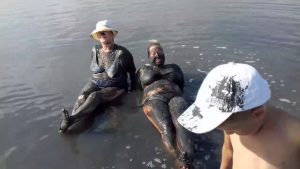
The salty waters of the estuary, “breaking away” from the sea, were condensed into brine – a saturated salt solution. The peculiarity of the Odesa group of estuaries is also in the fact that layers of silt mud are laid at the bottom. It contains many different mineral particles and organic matters. The complex chemical processes and the “work” of various bacteria gave silt mud priceless healing properties. As if in a giant laboratory, or rather, an underwater chemical-pharmaceutical factory, this dirt is continuously produced at the bottom of the estuaries. Especially large reserves of mud are in Kuіalnyk. And in terms of quality, healing properties, it has become a kind of world standard. Kuіalnyk is one of the oldest mud resorts in Ukraine. Sulphide-silt Kuіalnyk mud according to its therapeutic properties recognized as reference. They help to reduce inflammation, strengthen the immune system and restore the function of damaged organs and body systems. The estuary brine also has healing properties, and the mineral water “Kuіalnyk” helps with diseases of the gastrointestinal tract.
The first miners of salt and chumaks, who transported the extracted salt of the Kuіalnyk Liman across empire in the past centuries, unwittingly experienced the healing effects of brine and mud, and rumors and legends about miraculous healings spread around the world It began to attract sick people to the shores of the Kuіalnyk estuary, hoping to alleviate their suffering. Following the suffering ones, inquisitive doctors stretched here; the most decisive of them, as it was more than once among medicine, checked the effects of brine and mud on themselves, and then tried to treat their patients.
In 1833, a young, erudite, energetic doctor of medicine Erast Andriievsky arrived in Odesa. After learning about the healing power of silt and the waters of the Kuіalnyk estuary, he managed to convince the city government of the need to create a medical institution here. The retired Major General Prince I. Zhevakhov, the owner of the land between the two estuaries, Khadzhybei and Kuіalnyk, later called Zhevakhova Mountain, the city bought the land for the hospital construction, where architect Koshelev began to work in June 1833. Two months later, a “greenhouse” was built – for taking mud procedures and a “cold bath”, where it was convenient to be exposed to brine. So, thanks to the initiative of E. S. Andriievsky, the first page of the famous resort was opened. Gradually, the resort was rebuilt. Since 1841, on the slopes of the Zhevakhova Mountain along the shore of the estuary, by order of M. S. Vorontsov, land plots for the construction of country houses are donated. In the short term, a village grows up, in which a thousand visiting patients could stay in the summertime.
In 1851, Andriievsky moved to the Caucasus. Odesa highly appreciated the services of the progressive doctor and erected a monument to him at the resort (the authors are architect I.Tolvinsky, sculptor B.Eduards). One of the Peresyp streets is named after Andriievsky.
For many years Kuіalnyk resort dragged a miserable existence. How the city authorities were interested in them can be judged by the following fact. The well-known Odesa businessman N. A. Novoselsky rented Kuіalnyk for 25 years “with various privileges” and turned the estuary into salt-fishing, extracting 3-4 million poods of salt annually. The Duma, which approved Novoselsky’s rights to the estuary, also transferred to him some of the resort buildings for storing products. In 1866, Novoselsky sold the salt-mine not belonging to him to the Ministry of Finance, and it broke Kuіalnyk into seven plots and leased them to different persons. Then salt extraction here was organized by a special joint-stock company. Only at the end of the 19th century, the cheaper Crimean lake and Donetsk rock salt began to oust Odesa from the market, and this saved the resort. The memory of the “salt epic” is still preserved in the name of seven lanes, which are called “Salt”.
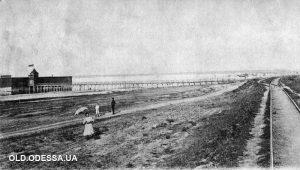
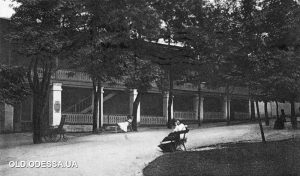
A new page in the history of the resort Kuіalnyk entered the appointed head of the hospital in 1868, Dr. A. Bertenson. Then a new clinic for 15 cabins, seven houses with 80 furnished rooms, a restaurant was built, a park was planted and, thanks to his urgent requests, in 1873 the estuary was connected with a seaport and railway station by hospital was connected by the hospital connecting the estuary to the seaport and railway station by railways.
In 1890, in connection with the increased popularity and attendance of the resort, construction of a new water and mud baths was started according to the project of academician of architecture N. K. Tolvinsky. On May 8, 1892, a new hospital, one of the most beautiful, the most highly mechanized and with the highest carrying capacity, received the first patients. Until the revolution, of course, in the current understanding of the word, Kuіalnyk could only conditional be called resort, even despite the fact that mud baths were built here in 1892.
Only in Soviet times, Kuіalnyk became a truly popular health resort. During the war years he suffered greatly. Having blown up a protective dam, the Nazis flooded a park of 18 hectares, destroyed the mud baths, destroyed almost all the sanatorium buildings. After the war, the resort was revived. New, more effective treatments have been introduced. The capacity of the mud baths has significantly expanded. The resort was famous for its table-type mineral water. A factory was built here that annually produces up to 30 million bottles of healing “Kuіalnyk”.
PRESENT DAYS
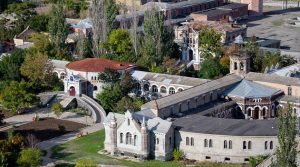
Today Kuіalnyk is a large association of sanatorium-resort institutions. There is a general resort mud therapy center and a resort hospital where the therapeutic and diagnostic facilities of the resort are concentrated; sanatoriums, including of the name of Semashko, N. Pirogov; Palace of Culture resort.
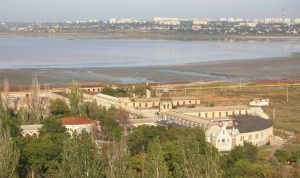
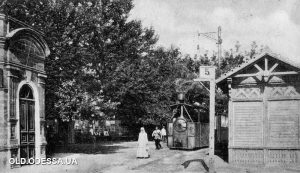
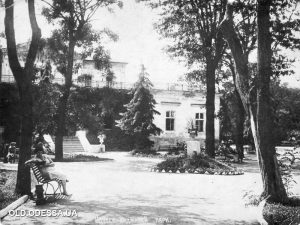
The Khadzhybei Resort
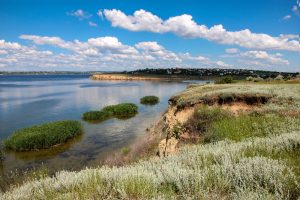
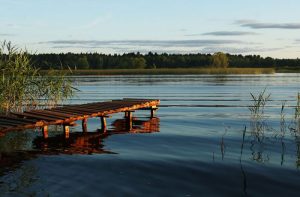
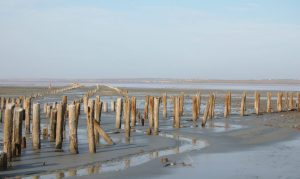
Khadzhybei estuary is the estuary on the Black Sea coast and its located at 7 (9.5) kilometers by north-west of Odessa. The estuary length is about 31 km, width is 0.5-3.5 km (average – 2.5 km), square is about 70 km², depth is up to 15 m (average – up to 2.5 m). The salinity of the estuary is 5-6 parts per million. The estuary is separated from the sea by a sandy-shell recess, 5 km long and 4.5 km wide, and has no connection with the sea.
The estuary is a bay in the northwestern part of the Black Sea. It was formed by separation the mouth of the Small Kuialnyk River from the sea. The bottom of the Khadzhybei estuary is covered with a layer of black mud, which has medicinal qualities. On this base Khadzhybei resort was opened. A number of settlements are located on the bank of the estuary – Usatove (there is a sanatorium “Khadzhybei“), Great Balka, Cold Balka and summer cottages.
The Khadzhybei resort – one of the oldest mud resorts in Ukraine; along with Kuialnyk resort, he was widely known in the first third of te 19th century. The main natural healing factors are mud and brine of the Khadzhybei estuary. Compared with Kuialnyk, Khadzhybei estuary is much more abundant, and the salt concentration of its brine is lower. On the chemical composition, the brine of Khadzhybei estuary is chloride sodium-magnesium. The reserves of estuary mud are estimated at 13 million m³. It`s sulphide sludge mud and is widely used for mud therapy. On the shore of the estuary, a large sandy beach is used for climatotherapy. The resort also organizes the treatment of iodine-bromine and other baths, artificially prepared on the brine of the estuary; conduct physiotherapeutic procedures, physical therapy.
At the village Usatove sanatorium ( 200 places) for children with diseases of the motion and support organs as well as with the consequences of certain diseases of the nervous system, water and mud baths are functioning. On the basis of the sanatorium – children’s neurological clinic of the Odesa Scientific Research Institute of Balneology is located. The resort Cold Beam is also based on the mud of the estuary. Nowadays it is included in the structure of the Khadzhybei resort as a building (complex) № 2. Complex number 3 of the resort “Khadzhybei” is located in Odesa at the address: Karkashadze Lane (Kirpichny), 2 (French Boulevard district, 2nd station of Big Fountain).
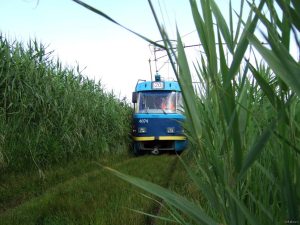
The so-called “reed” tram goes to the Khadzhybei estuary (route № 20) – is another attraction of Odesa.